II. Rome
...To understand the war in Iraq as a component of the “global war on terror”, we must understand the historical material being alluded to by the war on terror, what is being referenced by the war on terror and what that says about the war on terror itself.
This exploration is necessarily theological as well as historical, which may present a learning curve that alienates some readers or it may not seem inherently interesting to some readers but I encourage anybody reading to bear with me and not just gloss over it. It is a subject that has far-reaching relevance to the matters studied in these threads.
The act being referenced by 9/11, and the broader sequence of actions being referenced by the global war on terror, are the ‘false flag’ burning of Rome during the time of Nero and more broadly the Roman empire’s war against the religion of Allah, which at that time was Judaism – characterized by the worship of Allah alone, and the refusal to take statues or human beings as lords beside Allah.
This period has great relevance even in a vacuum to any student of modern psychological warfare or counterinsurgency, but for many reasons it is more ‘personal’ than this to our current ruling class.
In the early Common Era, the province of Judaea and the surrounding areas were fraught with insurrection against the Roman empire. To give some context, I will uncritically copy and paste the explanation from a source that I will explain subsequently -
That does not mean you the reader need to ingest it automatically, uncritically, but it is a good starting point to understand the nature of the conflict between the Roman empire and the Jews.
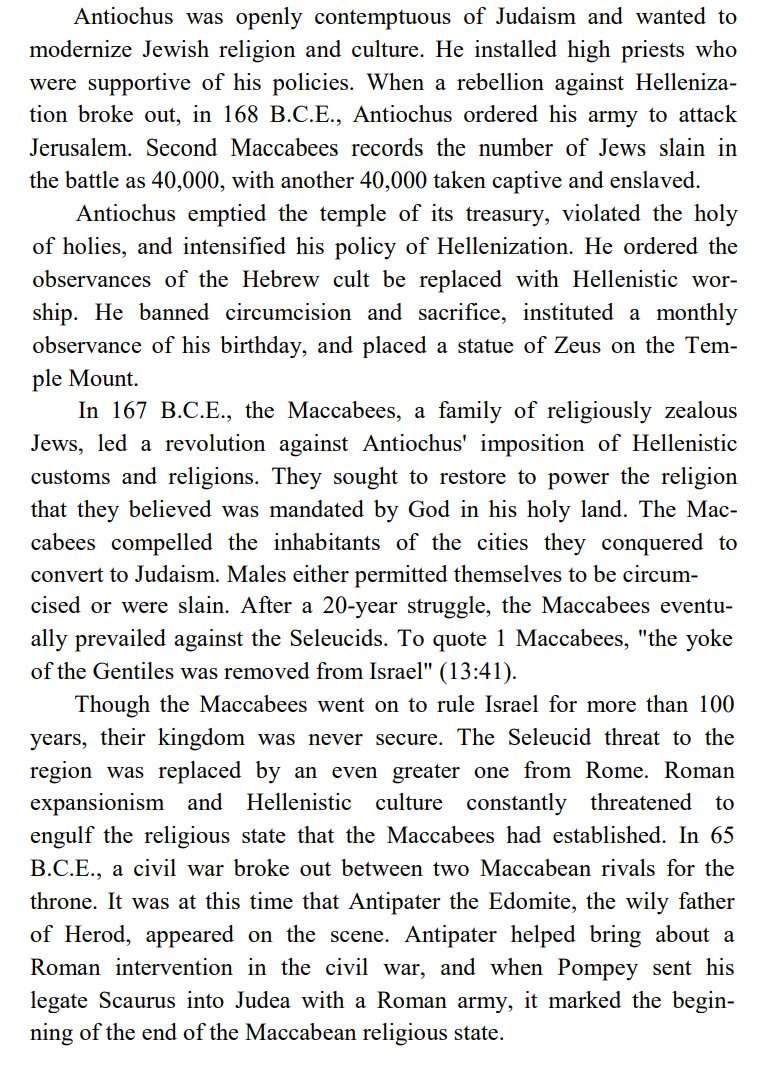
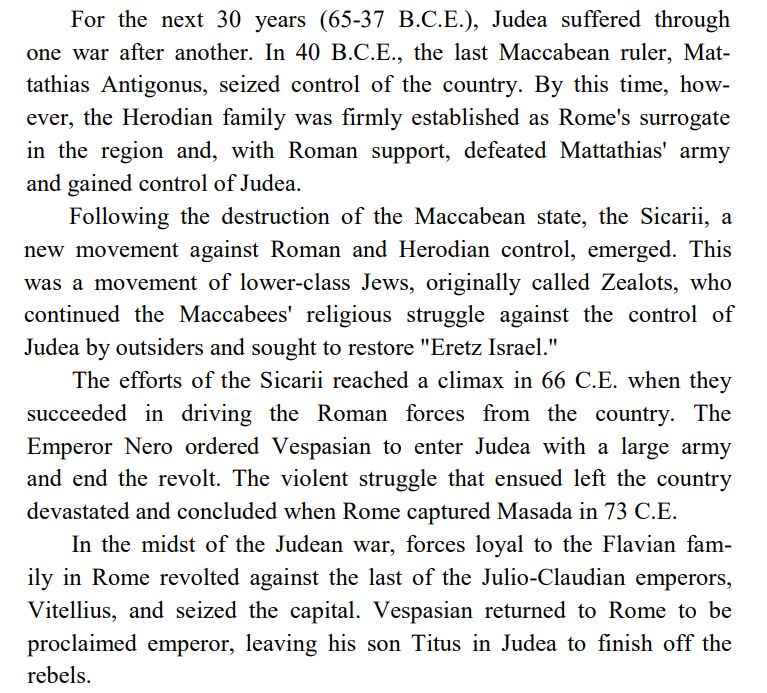
A pause here, who are the Flavians? I am not sure how many readers will already know, most of this period of history is entirely new to me. The Flavians were a Roman dynasty – the second imperial dynasty – during a critical period of the first century CE, following the reign of Nero.
Another thing to take note of is the obsession that the polytheistic empires have with desecrating the holy places of Allah, with the prototypical episode of Antiochus’ placing a statue of Zeus in the temple mount being a worthy focal point for us -
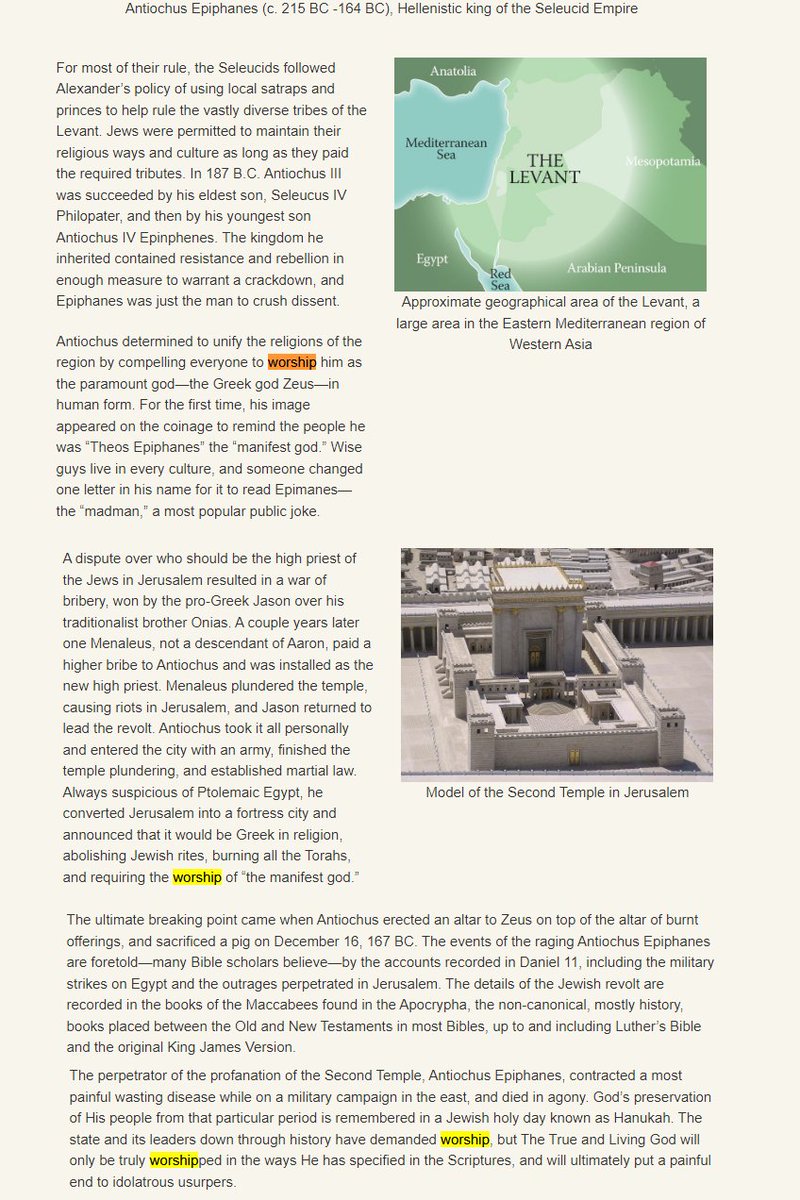
The experience of tyrants demanding the worship of statues and human beings is of course foundational to the religion, but I think it is worth taking a moment to reflect on the motivations behind this act in this era specifically.
As the image states, Antiochus wanted to unify the disparate religious beliefs of his kingdom under one religion. This gets to one of the common political and organizational problems of running a polytheistic empire and ruling over polytheistic peoples – there is no real way to achieve a deep cultural harmonization, to deeply standardize and enforce limits on human behavior, via the mechanism of religion. There is also, in my opinion, no way to really use religion to wield a meaningful sense of authority.
At least in terms of the Greek and Roman empire as far as I've observed, it just seems like a hollow ‘might is right’ means of taxation and a pretext for demonstrations of subservience.
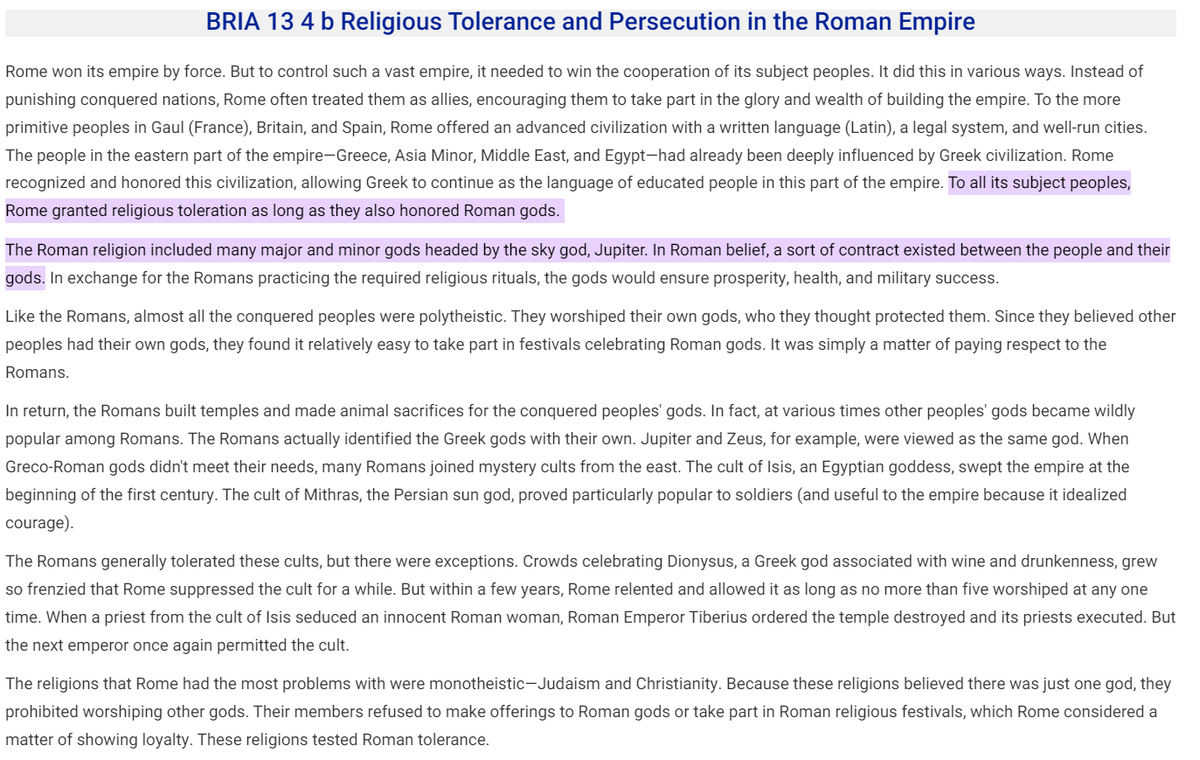
Though I take a lot of the above with a grain of salt, particularly regarding the ‘benefits’ of being under the Roman empire, this demonstrates what I've found to be the general narrative regarding religious flexibility under the Romans and reiterates the difficulties posed by monotheistic faiths. The conviction of the Jews in the true religion of Allah, their rejection of polytheism and idolatry, in my opinion pushed the limitations of polytheism to a breaking point.
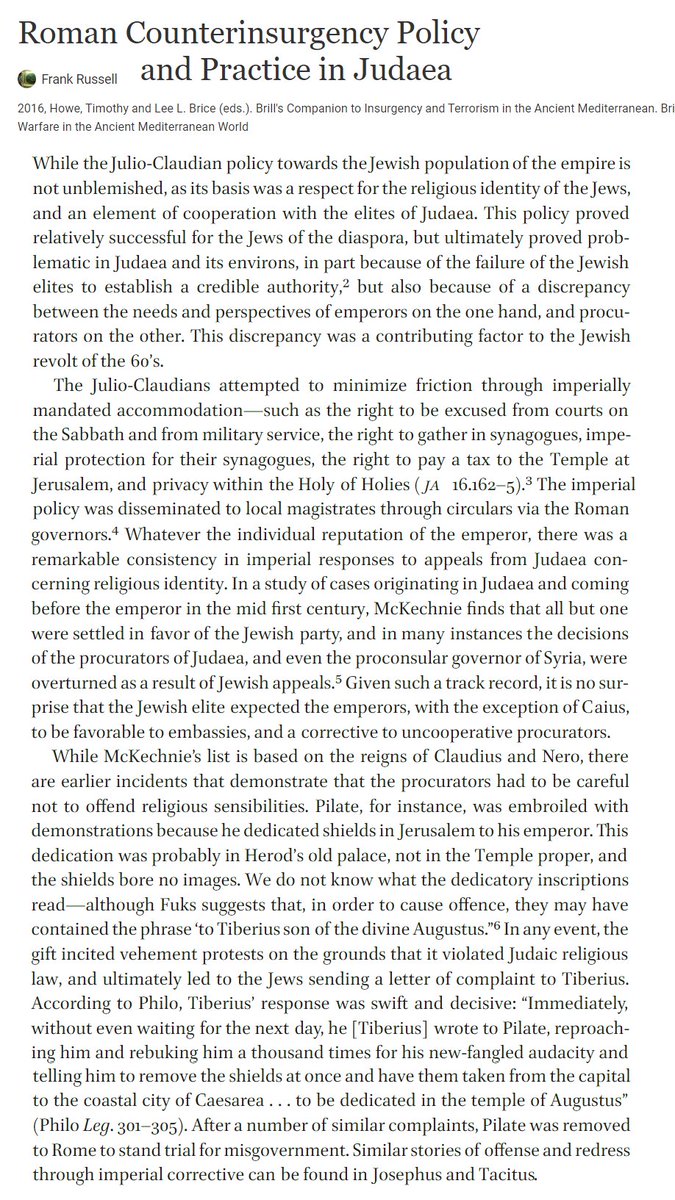
Here is an example of more accomodative ways of dealing with the problem, though I will state upfront that the integrity of this history – the timelines and viewpoints – are problematic and I will address the problems more fully later.
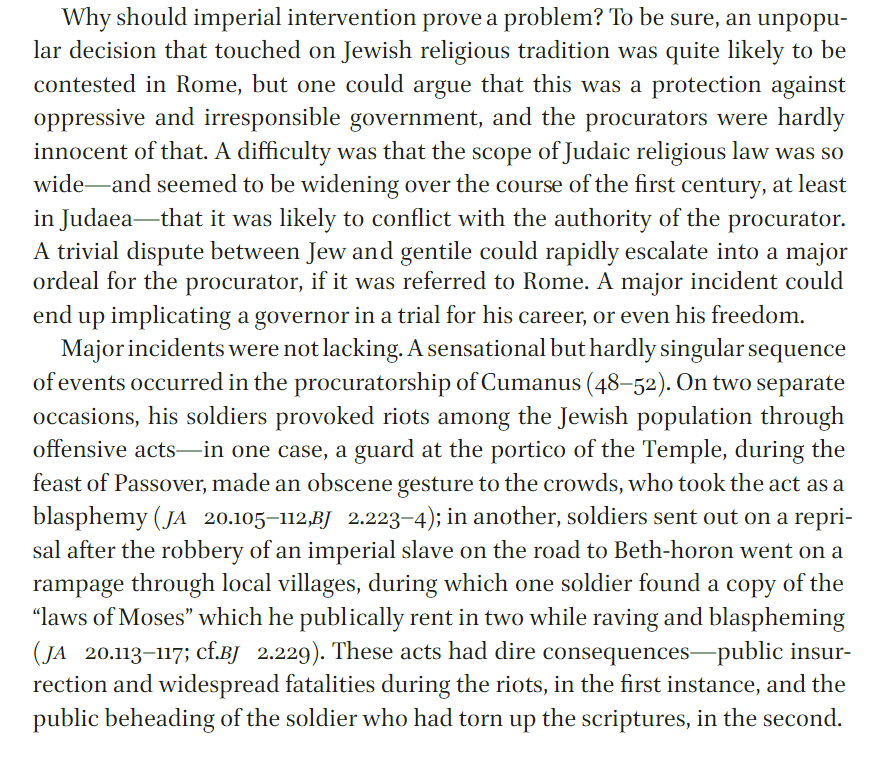
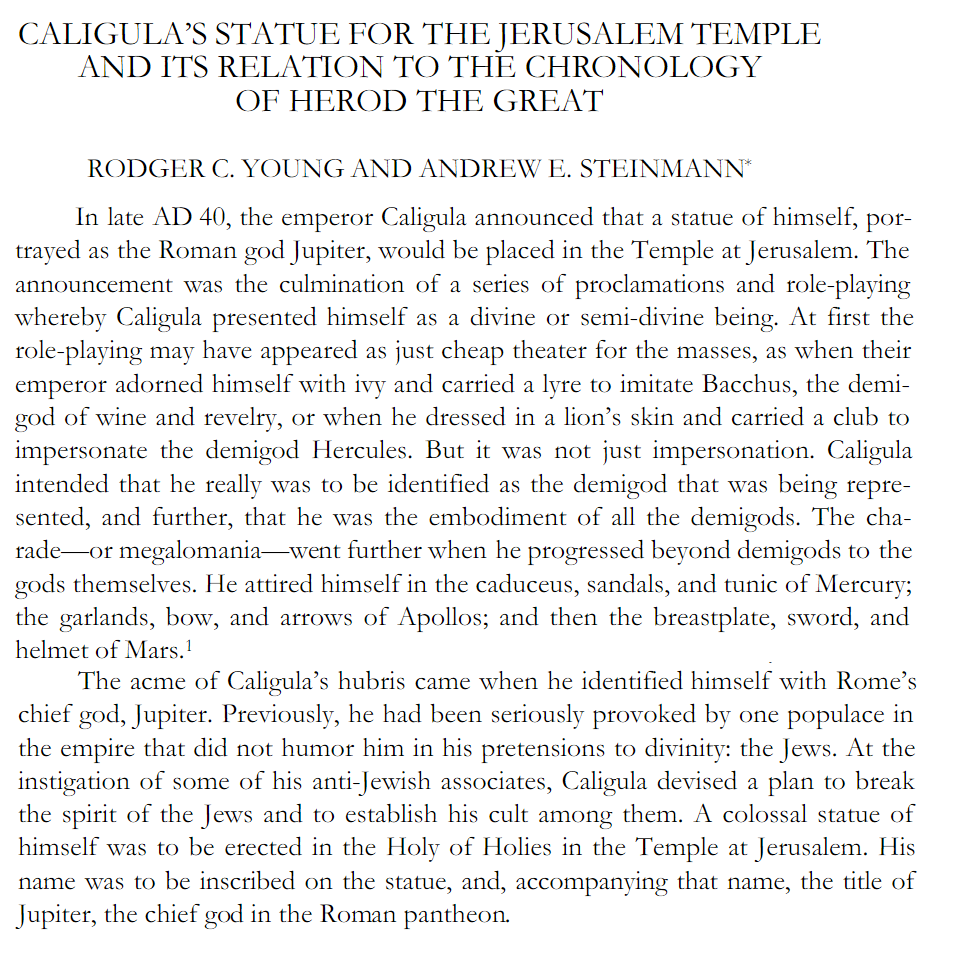
And on the other hand at times the Romans were more provocative, triggering unrest and retaliatory killings. Whether it is the “subtle” incident of the shields, or more combative actions of individual soldiers, or the famous story of Caligula and the statue, the polytheistic obsession with desecrating the religion of Allah led to an inevitable escalation of conflict. Though only one restive province and people, there was a special nature to the problem posed by the Jews and the worship of Allah alone that produced an extreme degree of ire from the Romans and necessitated an extraordinary solution.
The Jews were tasked with a long and difficult history of defending the religion of Allah against polytheists – often in an insurrectionary capacity, as the weaker party against large imperial powers. But this era of this struggle, from the arrival of Hellenism until the destruction of the second temple and eventual calamity of expulsion, marks a period of darkness for the followers of the religion of Allah that lasted for centuries. So then, what was the Roman program to achieve this?
To both solve the Jewish problem and radically reshape their own relation as an empire to religion, they carried out a centuries-long project to extinguish, change, and replace the religion of Allah with a doppelganger monotheistic religion that enshrined the pagan principles, the precise principles that the true religion of Allah rejects, and codified their contempt of and “victory” over the Jewish people.
The timeline here will be somewhat murky – and I will on some level analyze why, later on. But forgive me if the following components are somewhat out of chronological order. For example I will address the fire of Rome after the Flavian counterinsurgency supposedly predates it. I think the conceptual order I have chosen makes sense, but this is a complex subject and the timeline and history is deliberately obscured.
Going back to the first source, recall:
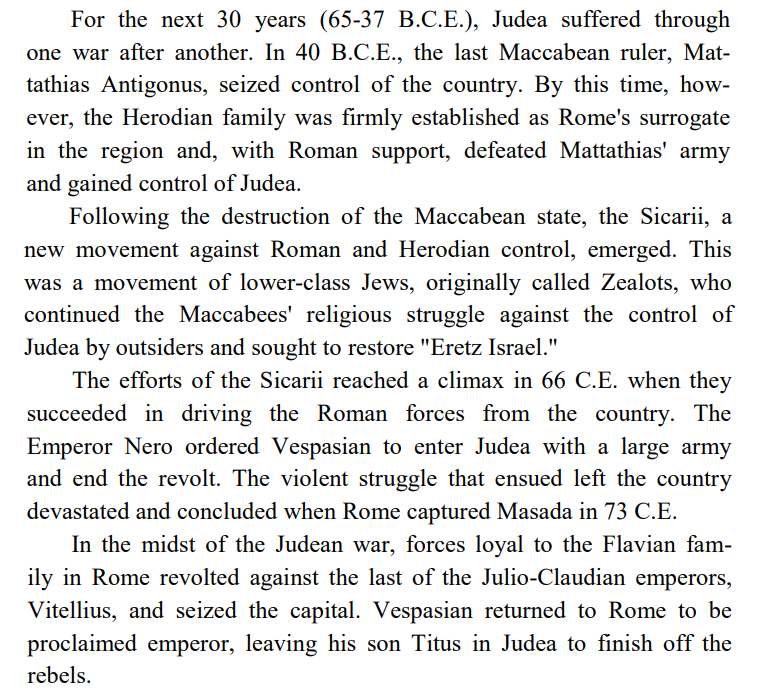
The focus now is what is mentioned in the second half of this image, the counterinsurgency of 66 CE led by Vespasian (the founder of the Flavian dynasty).
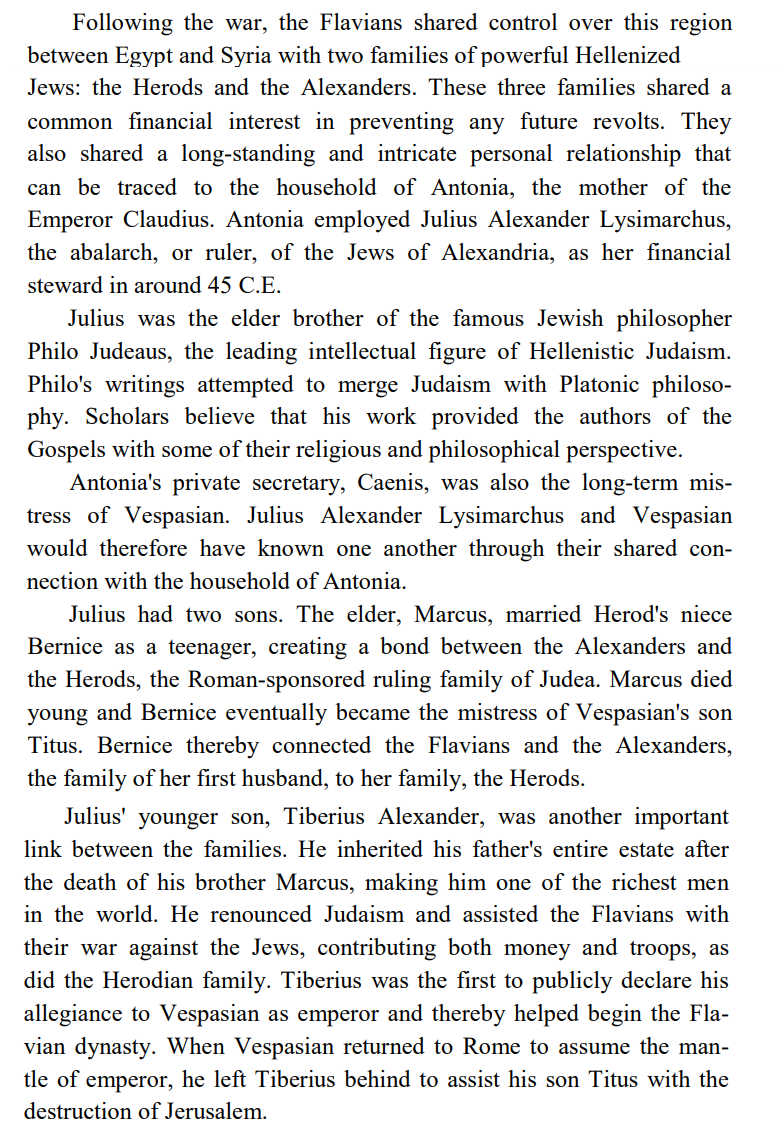
The intricacies of the families involved are unimportant to the casual reader, but at minimum one should understand:
The dynamics of support for Vespasian among the Hellenized Jews
Vespasian’s being tasked with putting down the revolt in Judaea, and his ascendance to the role of emperor
That his son Titus remained in Judaea to complete the counter-insurrection, eventually succeeding his father as emperor and thus establishing the Flavian dynasty
Nonetheless, the conviction of those they wished to suppress and their religion that enabled such conviction remained a problem –
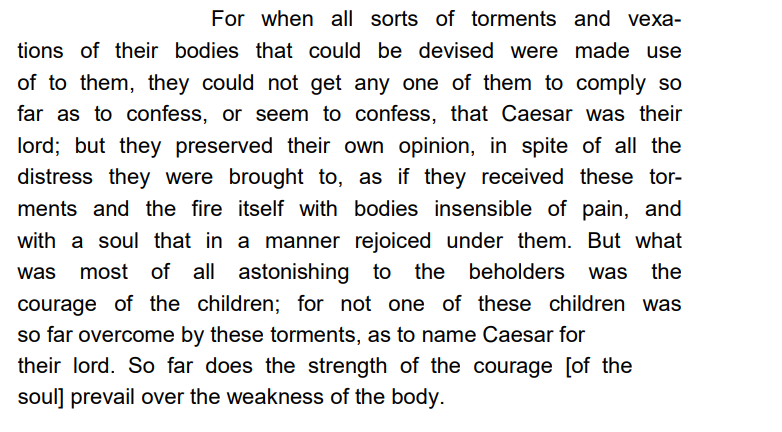
The imperial cult, the worship of the Caesar, is really at the heart of all of this. And this is why I have bothered with a great deal of context and introduction before getting to the main thesis of the source, a thesis which I by and large agree with and believe I can support with additional context not included by the author himself.
And the thesis of this work is:
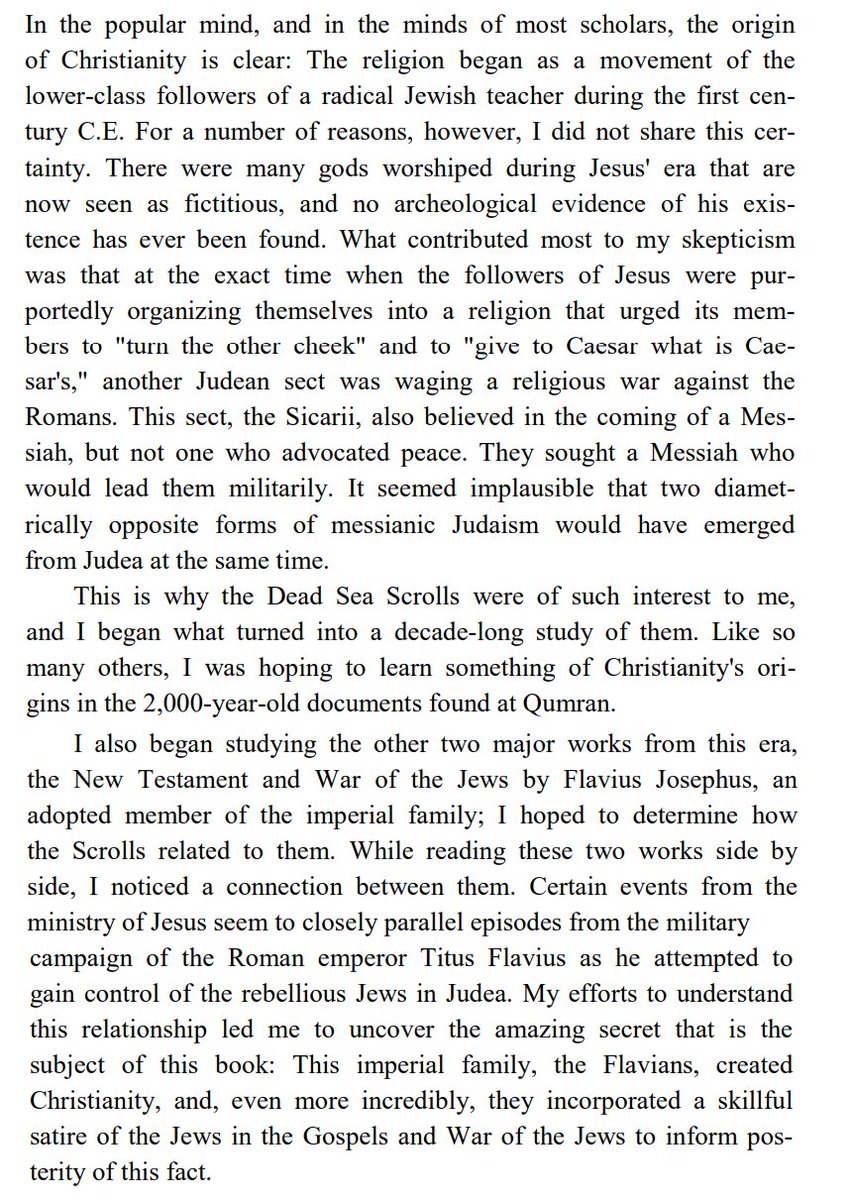
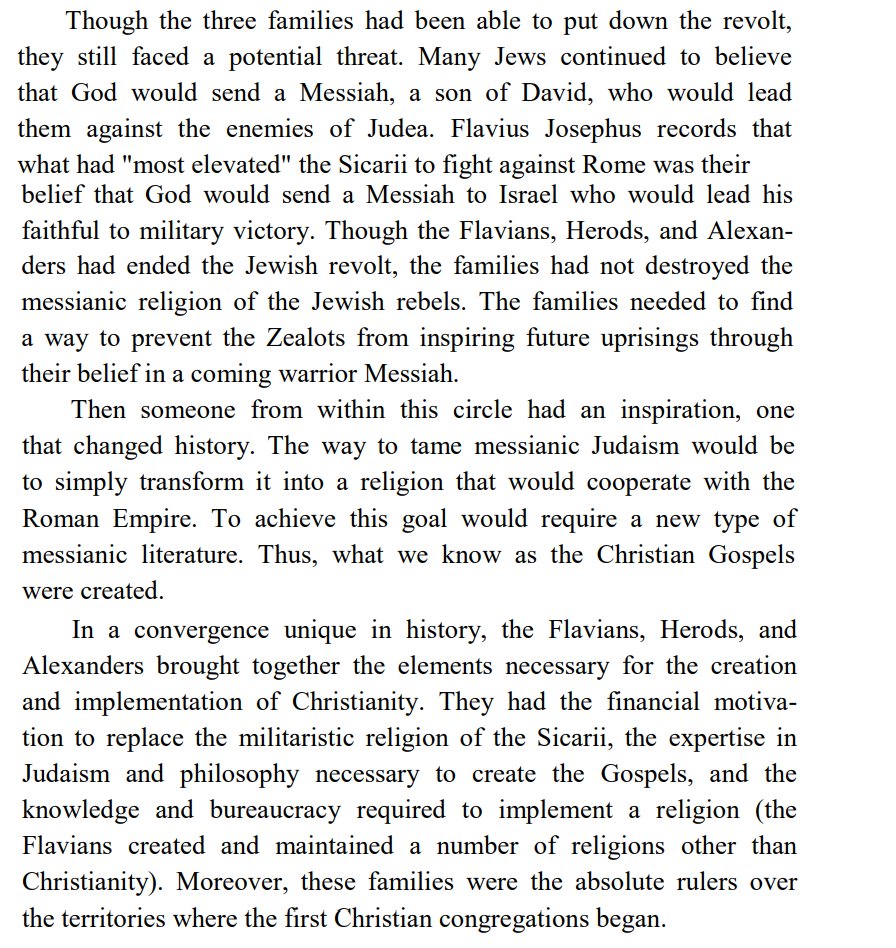
We are probably due for a big pause here – a lot of people throw around theories about this era, to the point where it is I think a somewhat poisoned subject.
But this, in my opinion, is a summation that – by and large – truly explains the Roman response to monotheism. In Islam we of course believe Jesus, ‘Isa ibn Maryam, alayhis salaam, was a real person, a real prophet, and al-masih -
So while I think Atwill's personal viewpoint on the historicity and nature of the prophet ‘Isa is incorrect I do not think that this renders his broader thinking and analytical line also incorrect.
Naturally I've read extensive amounts of commentary on this and closely related subjects and much as can be expected most of the errors are due to a lack of understanding of what has been understood by Islam since the beginning –
Christians reject the corruption and alteration of their religion by the Romans, or they try to “read in” the truth from these corrupted texts or seek ancient fragments of the truth, non-Christians fail to understand that what is being corrupted is authentic.
Side-note, bizarrely I have been able to find zero commentary from our body of scholars or even lay-folk like myself among the Muslims on this subject or other related subjects despite its relevance to us and the context it provides to the our understanding of Christianity and the Roman empire within our tradition. I am sure that the audience here will be a mixture of all three of these categories, and so it is my sincere hope that – as with other historical subjects covered – this subject will be of benefit regardless of one’s personal standpoint and that we can approach it critically.
If this is “flyover country” for you, then you have missed the point of this entire body of threads and need to reflect on how it relates and why you are here to begin with.
With that out of the way, I will now post from the source directly with minimal commentary –
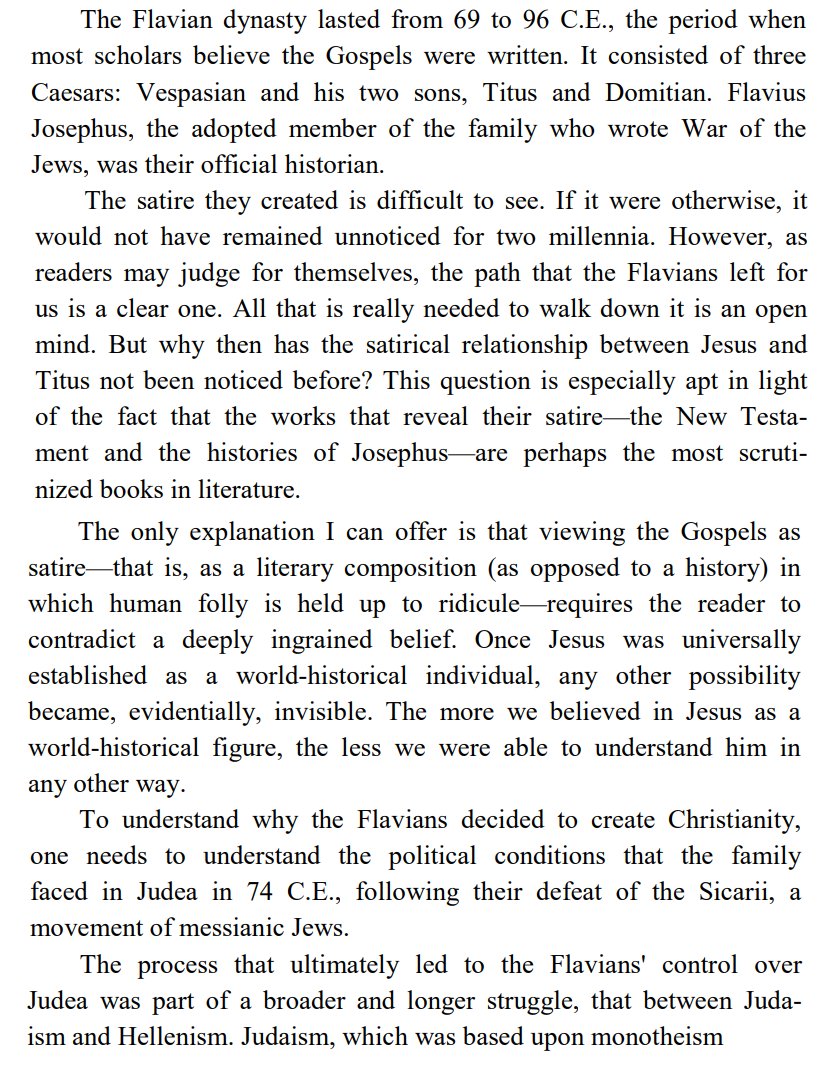
[here we circle back in the text to the explanation of Hellenism etc leading up to the campaign of 66 CE]
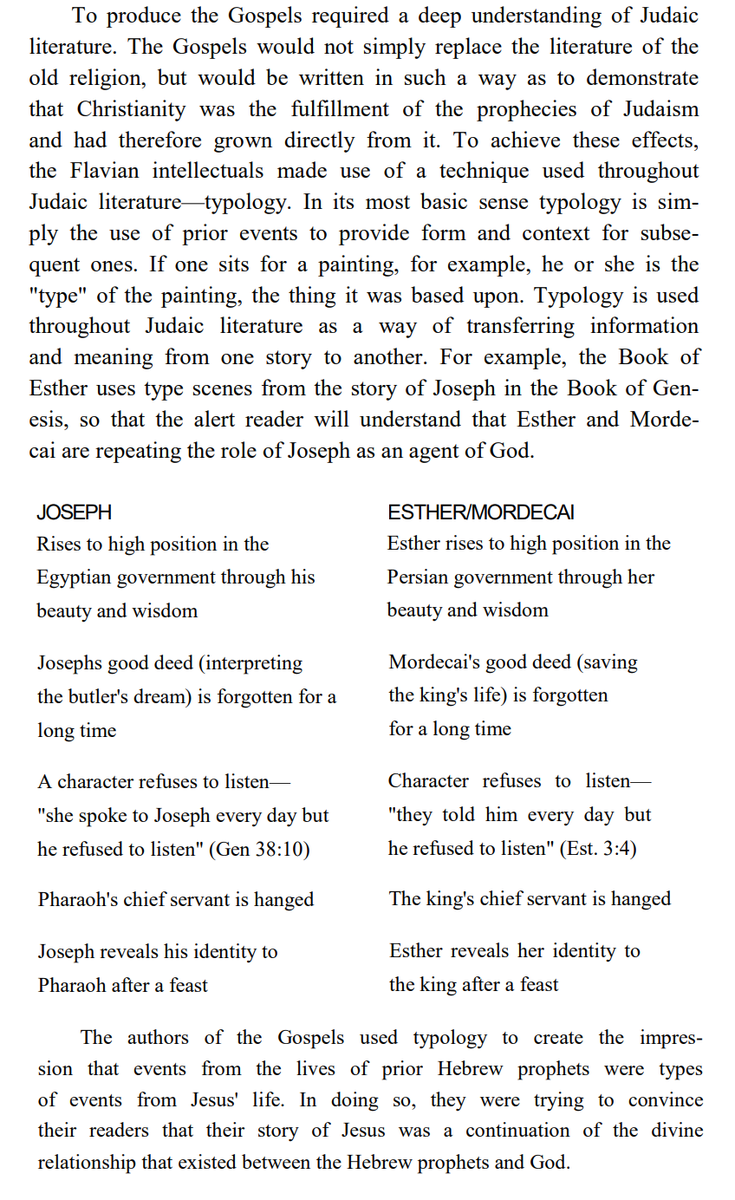
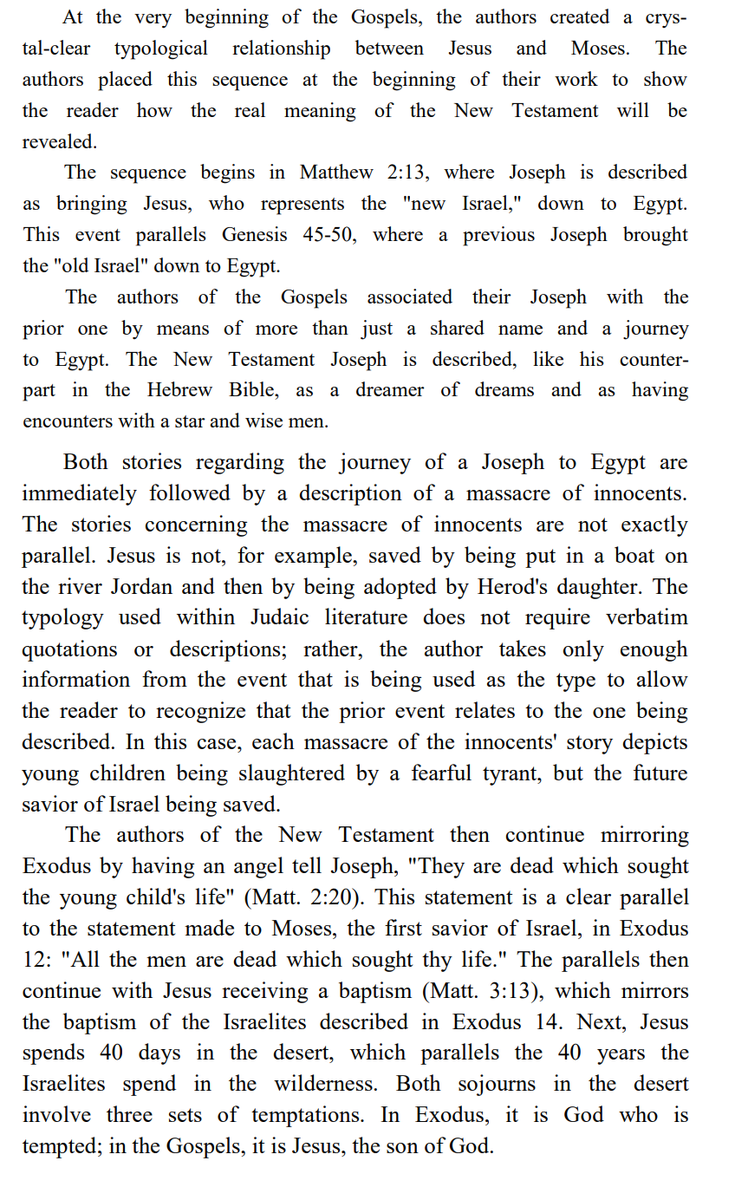
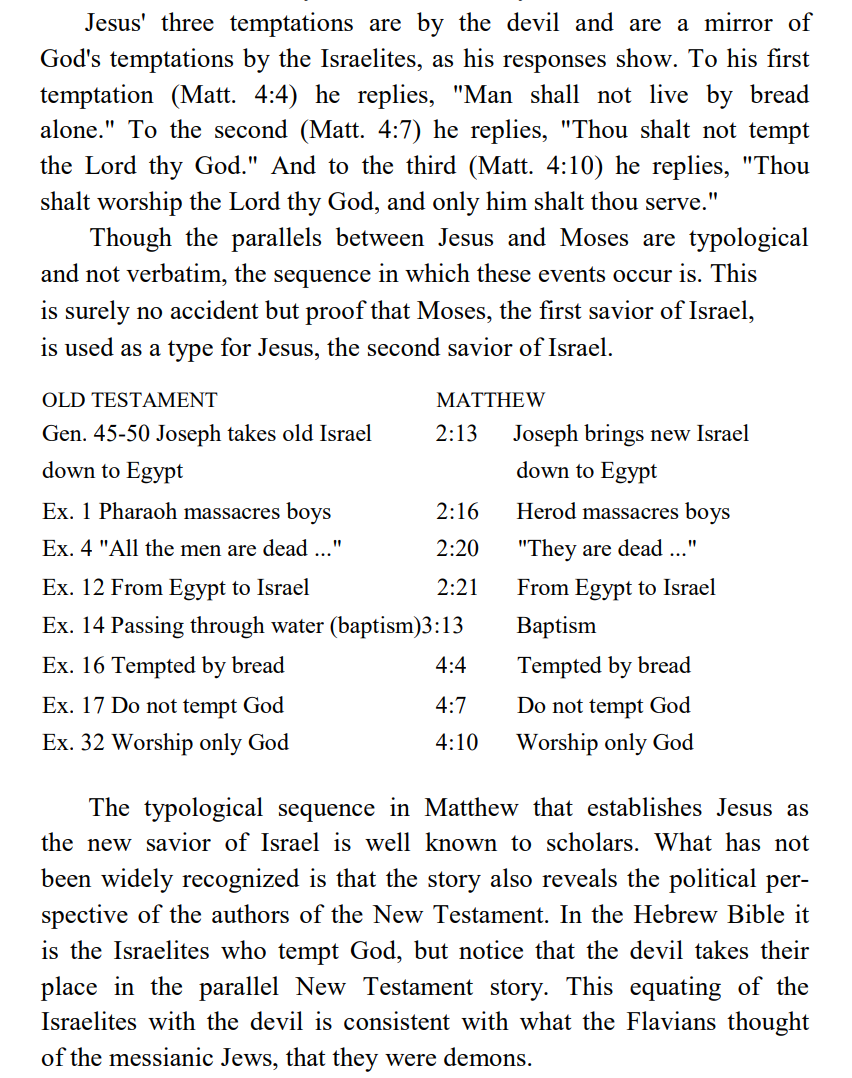
Here the author is belaboring the point of intertextuality in order to introduce the concept, but what I want to draw attention to is the swap between Satan and the children of Israel. This is the heart of the entire Roman project -
The Romans were not content to simply continue military dominance over the Jews, or even to merely expel them from their land and defame their holy places, they wanted to ‘humble them ideologically’.
I put quotes around the phrase because I don’t think it conveys the full significance of what I mean – but I think by the end this will make more sense what I am trying to say here.
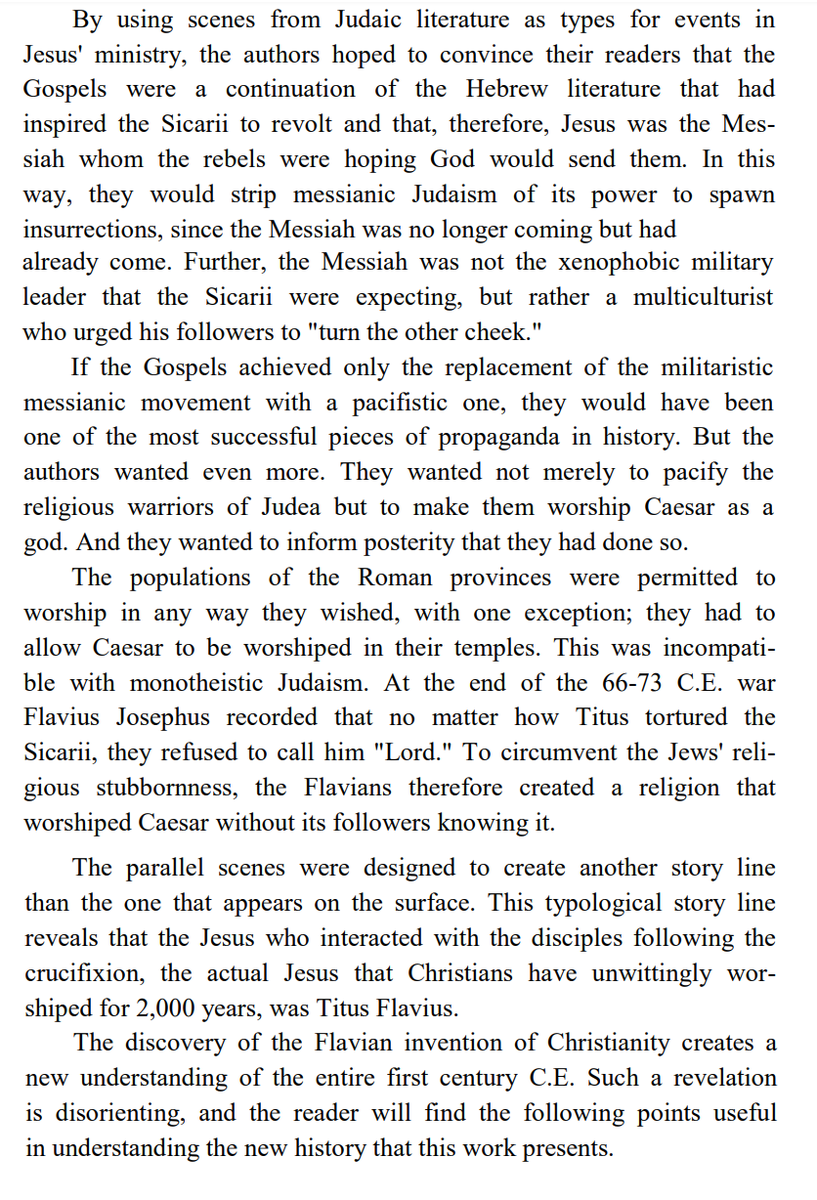
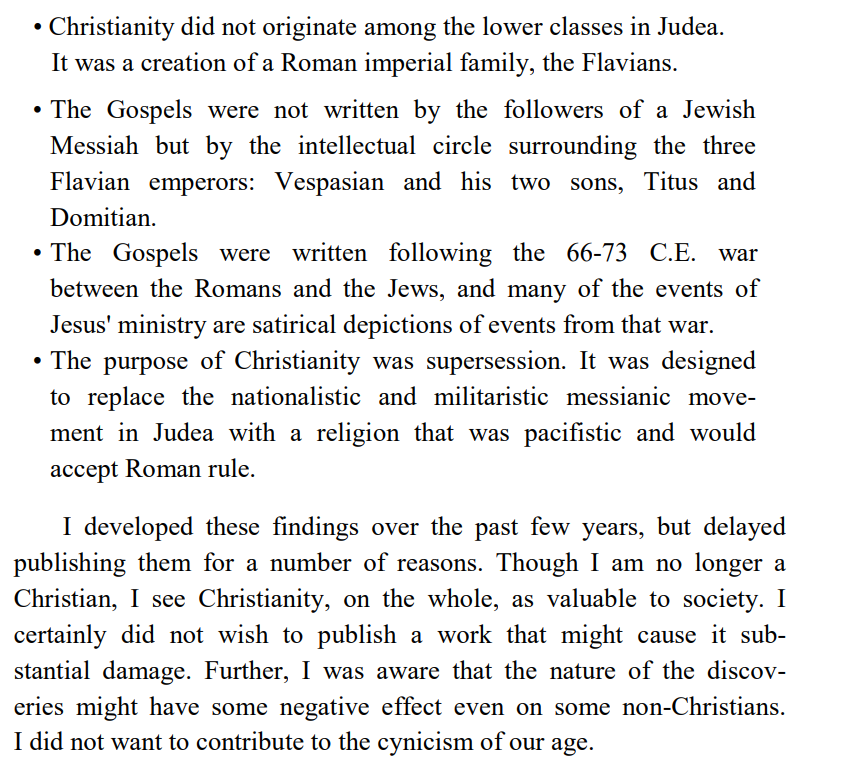
And here I think this point has begun to be made. This was not simply a replacement of the militant messianic movement or a mere pacification, but a way to enshrine what the Romans believed was their “ultimate” humiliation of the Jews and victory over the religion of Allah – and make that the basis of their false replacement.
This is the idea that will be explored by this source, and I think it will be worth our time to simply read a few selections from the work to illustrate this point enough for our purposes.
What we are exploring with this source is a textual analysis of the gospels against the historical work ‘war of the Jews’ which documents the counterinsurgency campaign of Vespasian and Titus that ultimately led to a massive defeat and the destruction of the second temple. After examining this source, we will support this analysis with more historical context, and then work our way back to the global war on terror and then further work our way back to the main subject of this thread.
As for the last paragraph of the second image, this is the kind of thinking of people who are so tied to Christianity that they cannot even conceive that Allah would send another prophet, restore the religion, after the Romans’ trick – even when the stunning and beautiful victory of this religion, of Islam, is a matter of historical record, staring them in the face. For any Muslim readers, this should very easily square with the very common knowledge in our tradition.
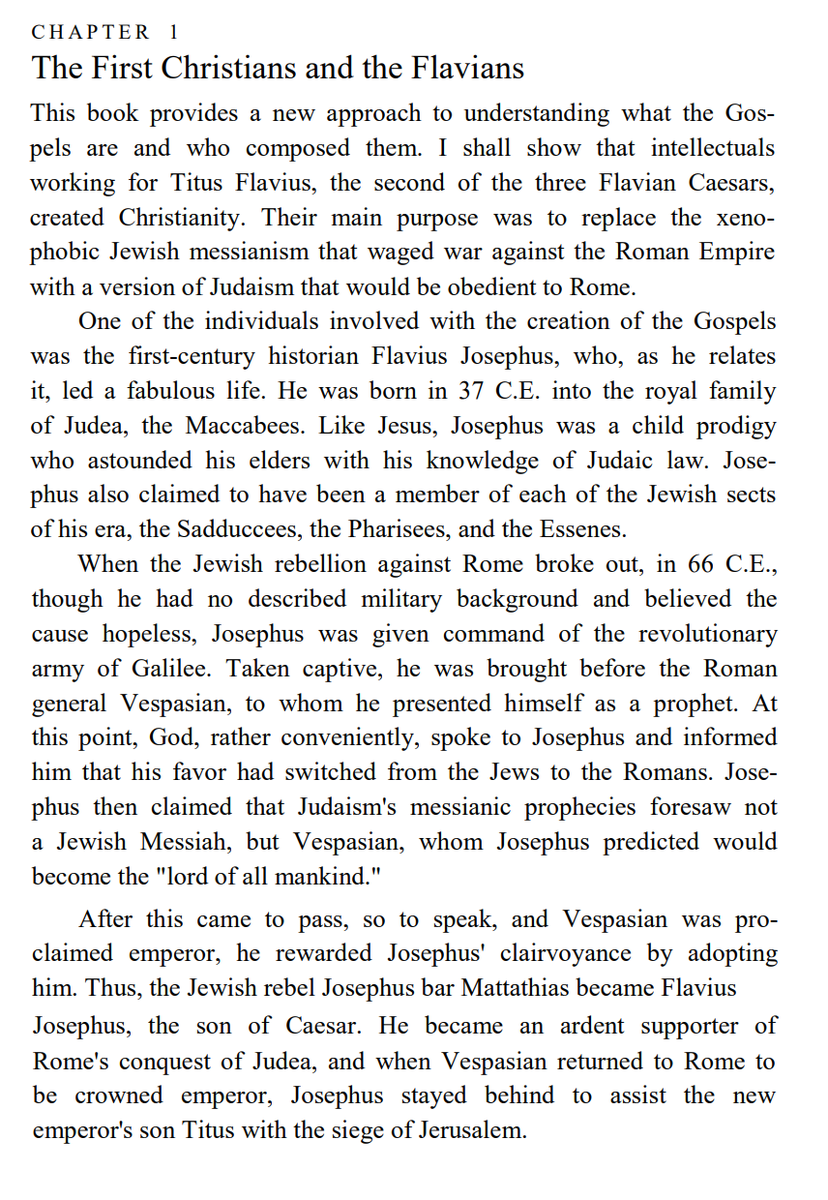
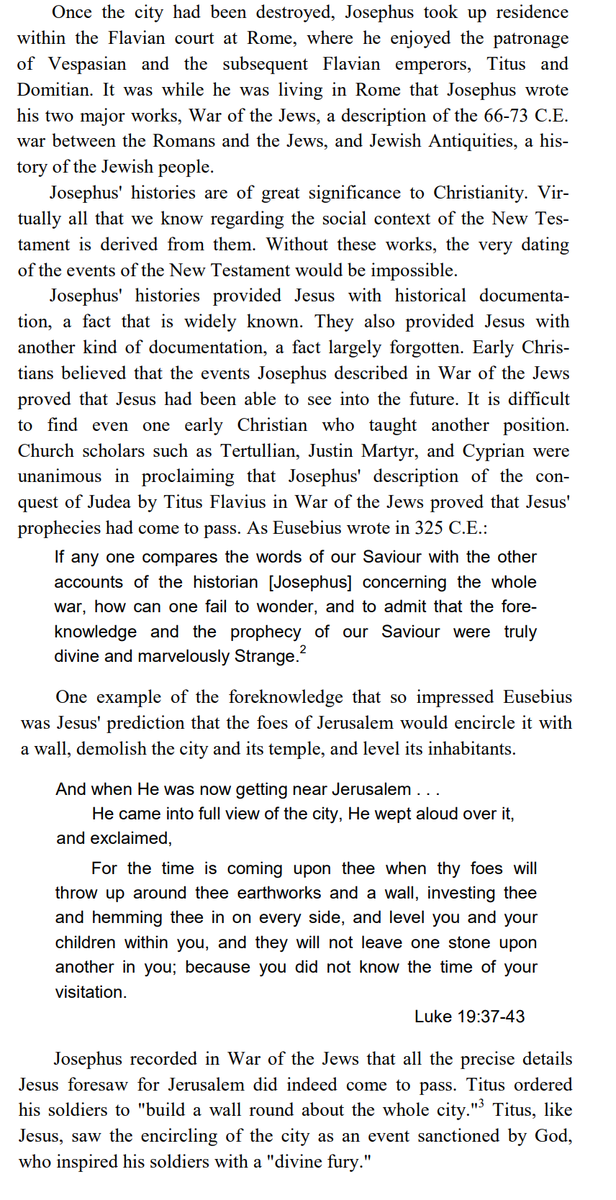
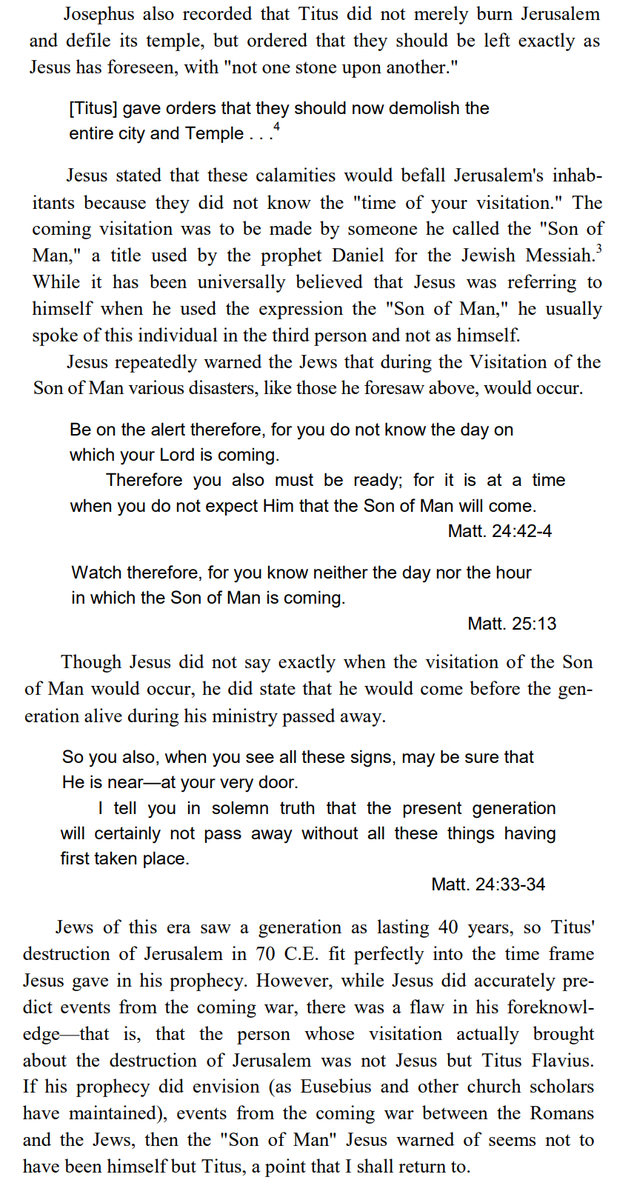
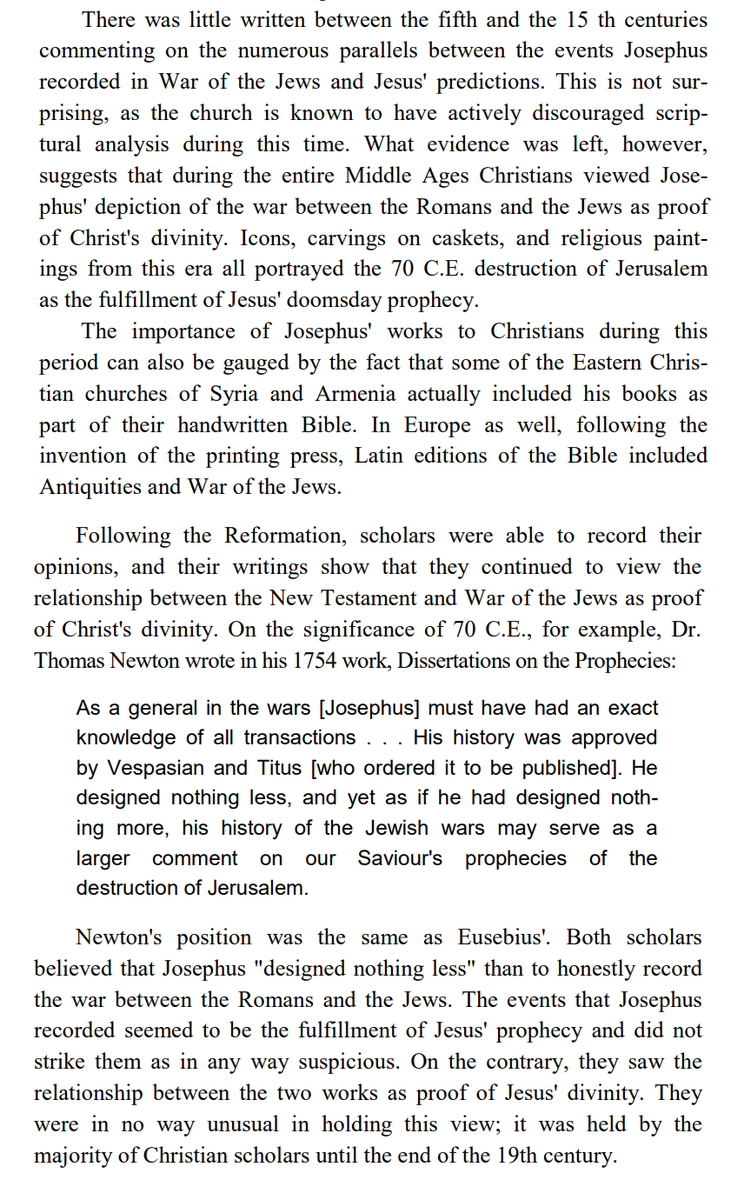
Even if we take a less absolute position than the author, a few things I think are clear. The historical works of Josephus have a strong explanatory relationship to the early gospels. They document the campaign of Vespasian and Titus against the Jews of 66 CE.
They were sanctioned by the Flavians, and Josephus became one of the Flavians.
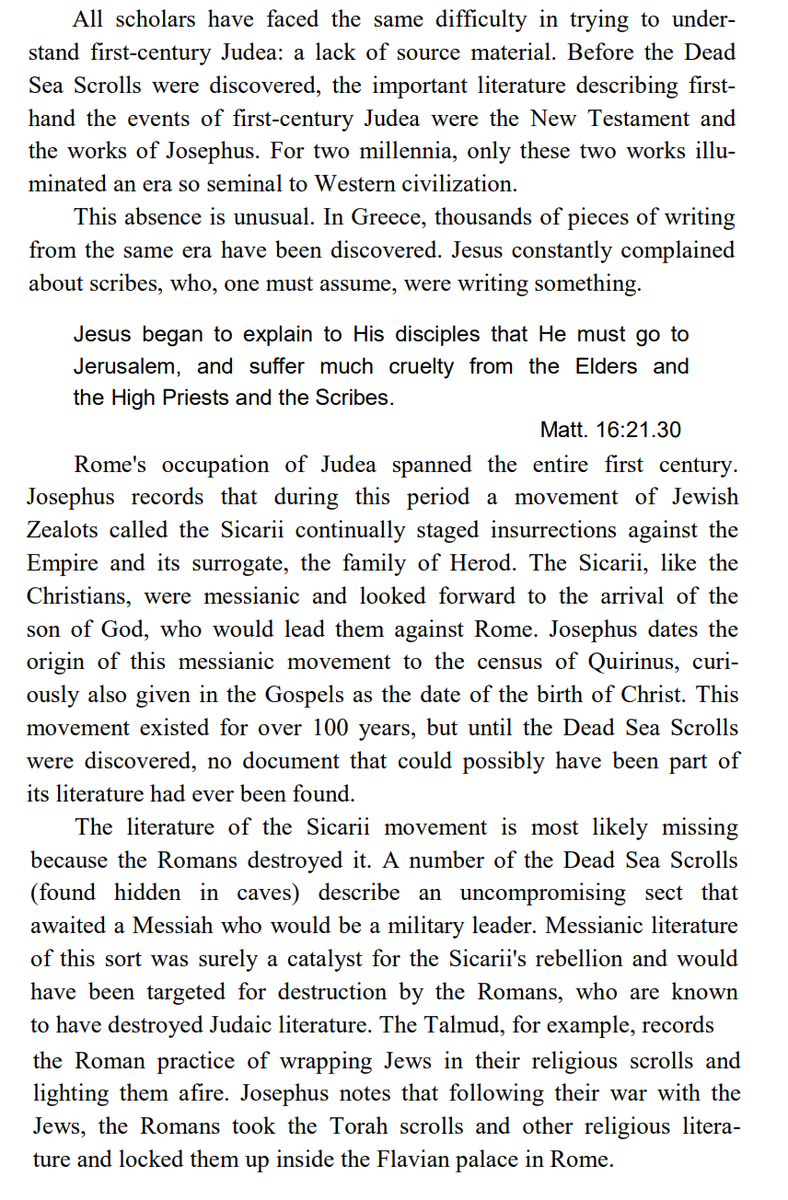
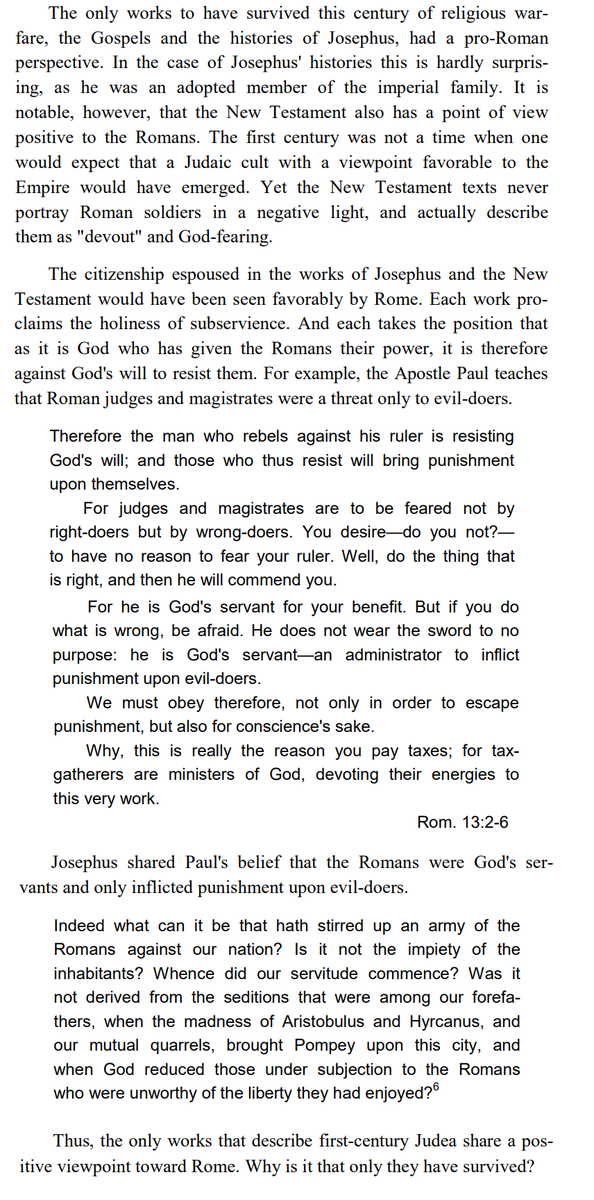
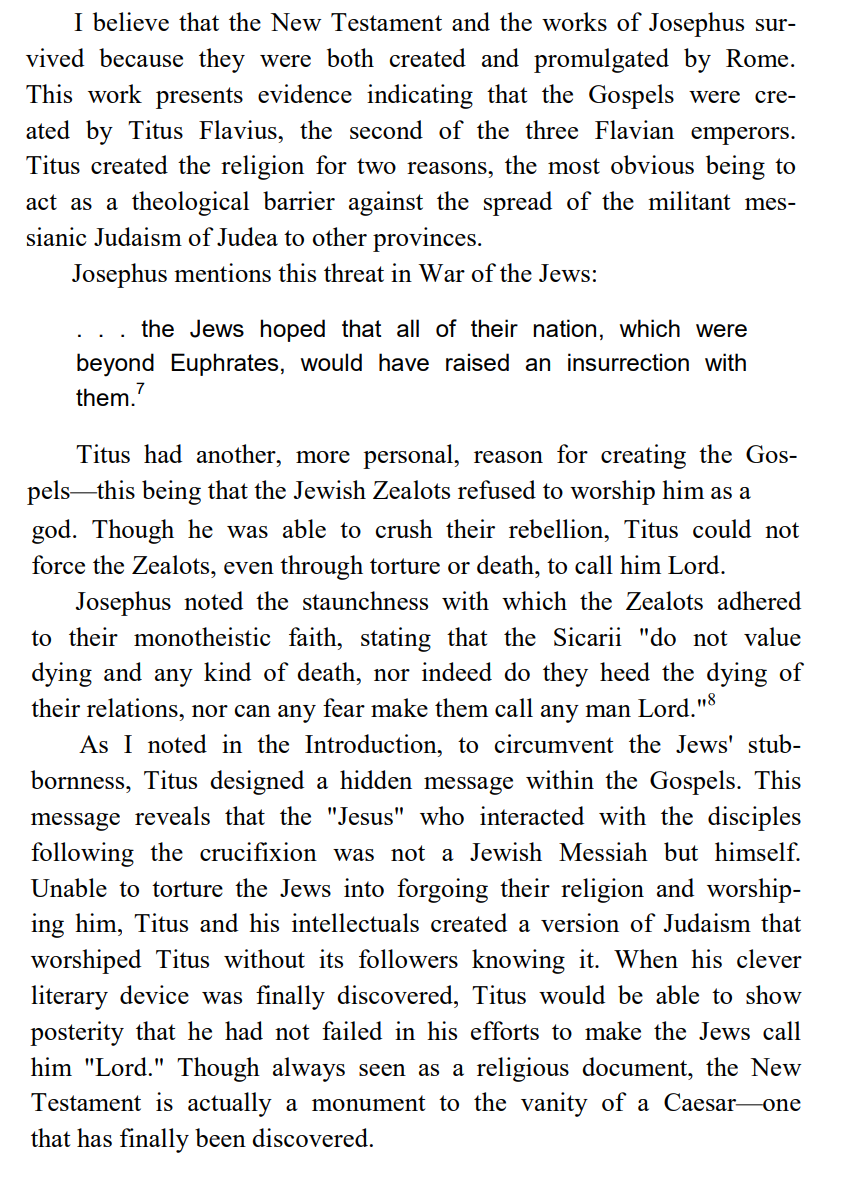
Point belabored, but I wanted to highlight that all other sources from this period have been destroyed. The other important thing to note before we get into the intertextual analysis is that the two sources are interactive and there is a puzzle between them that requires the reading of both to intuit information encoded by the author. I also want to introduce a point of criticism that I have with this source –
Notice that Atwill's thesis heavily emphasizes that this is personal to the Flavians, and emphasizes the personal benefits that they and specifically Titus would reap from this entire project. This I think undersells the level of buy-in from the broader Roman ruling class, and undersells the degree of longer-term planning that both extends backwards and forwards on this timeline.
I think it is undeniable that: the Romans twisted or fabricated the gospels in conjunction with the production of war of the Jews in order to frame Titus – astagfirullah – as the messiah. And that by extension the father-son language of the gospels, which we in Islam regard as one the worst corruption of Christianity, refers to Vespasian and Titus. But the broader level of buy-in, premeditation, and continuation of the project after the Flavian dynasty to its ultimate conclusion of becoming the official Roman religion.
Number two is an extension of the above, but – if we know that our “historical” sources are fabrications designed to meet a non-historical objective, how can we be so certain about the surrounding history of the Flavians, Flavian intrigue, their intellectual circle etc?
Here I am not saying to throw out any notion of historical documentation but simply that a level of skepticism must be preserved.
Another thing I will mention, *I believe that prophet ‘Isa, Jesus, alayhis salaam, was the messiah and performed miracles and a portion of the Jews followed him*. I believe indeed there is a genuine historical figure being covered up. I also think this makes more sense than that they simply backdated an invented false messiah.
Rather, and this will may be a touch too far for non-believing readers, I think that the arrival of ‘Isa – a genuine prophet and messiah – was probably a push-come-to-shove moment for the Romans that forced a broader plan into motion. The curiosity here is that – the timeline then becomes VERY obscured, if we try to untangle it into a reasonable cohesive history:
We have events that “must” postdate the arrival of ‘Isa, alayhis salaam, such as Nero's persecution and the fire. And we also have the events of the counterinsurgency in Judaea which seem to happen completely independently, and this is what I am tempted to reject – how could this have nothing to do with ‘Isa, alayhis salaam? Plus what we know of this comes from a source that we can demonstrate intentionally fabricated to redirect messianic belief.
I keep fretting that people will not understand why I'm including this subject at such length on a thread ostensibly about the modern war in Iraq. It is relevant because I think no matter where you stand, this is a critical moment of counterinsurgency where:
A false set of historical events was created to replace the genuine history of the insurgency
This fabrication was executed in a way where the ruling class had a ‘key’ to properly read between the pieces of media in question, identify the fabrications, and understand the motivations behind them
This ‘key’ was in a form of a very unusual connection between two disparate forms of media
Meanwhile on the ground a campaign of extreme violence was carried out to erase any people or documents that contradict the fabrication, while a psychological campaign across the entire empire was carried out to replace the true understanding with the doppelganger
And the sophistication of the Roman effort, particularly with regards to the two primary pieces of media we will be focused on, is not just informative but I think reveals that many of our hunches about modern media, modern history, are correct:
That our forays into what could be meant or encoded by various movies or even television commercials, our questioning of if they are somehow meant to ‘key’ into history in a way that provides an exclusive meaning for the ruling class, are justified.
Because we know that even in the first century CE this was a known practice of empire and we further know that the current empire is aware of and well-studied in this specific campaign.
I will continue with some brief excerpts of direct textual comparison and then we will wrap up this source and move on.
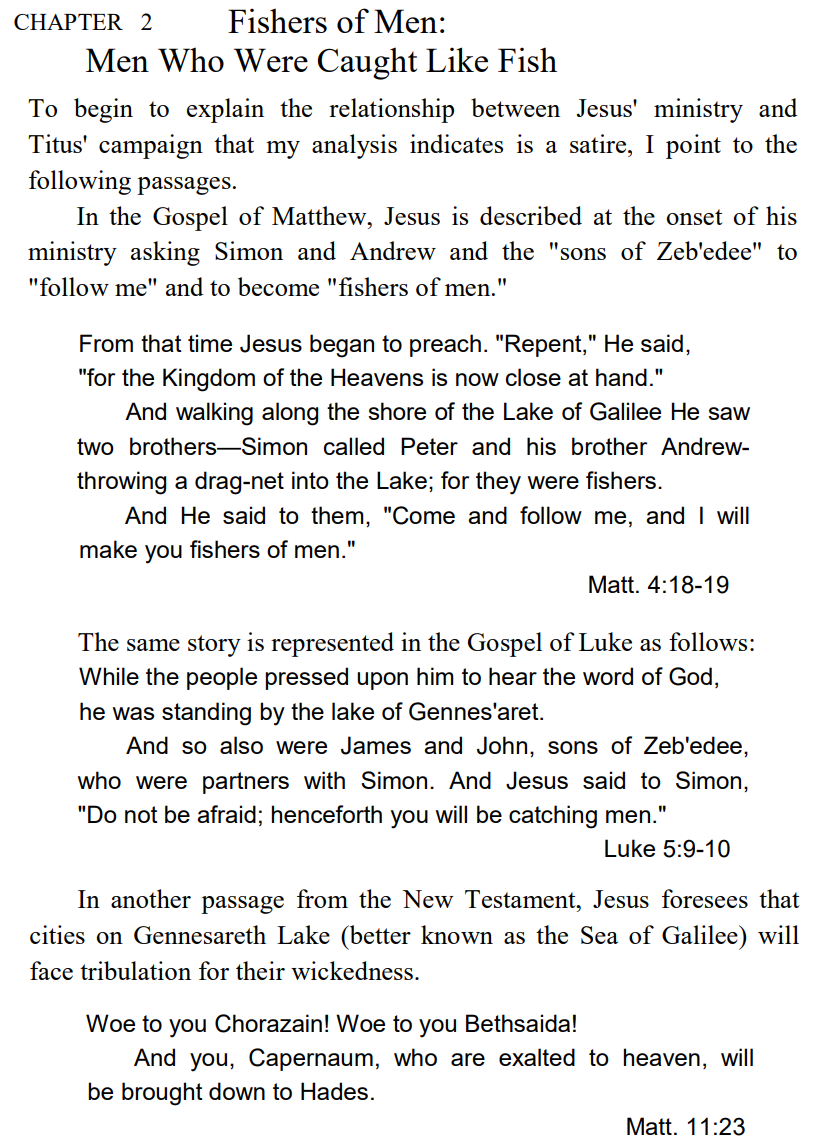
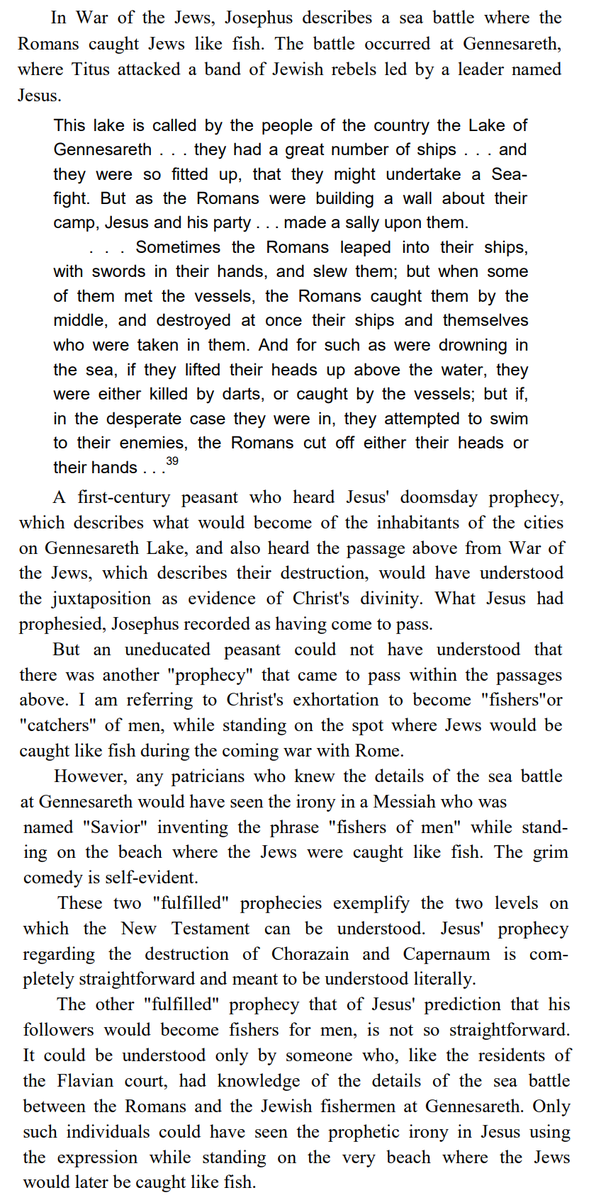
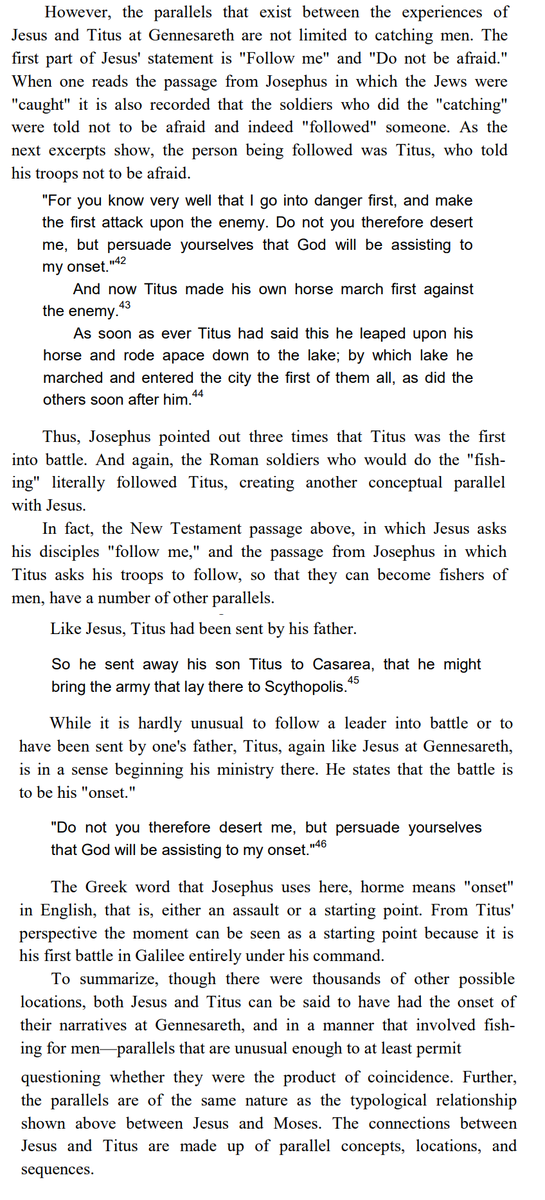
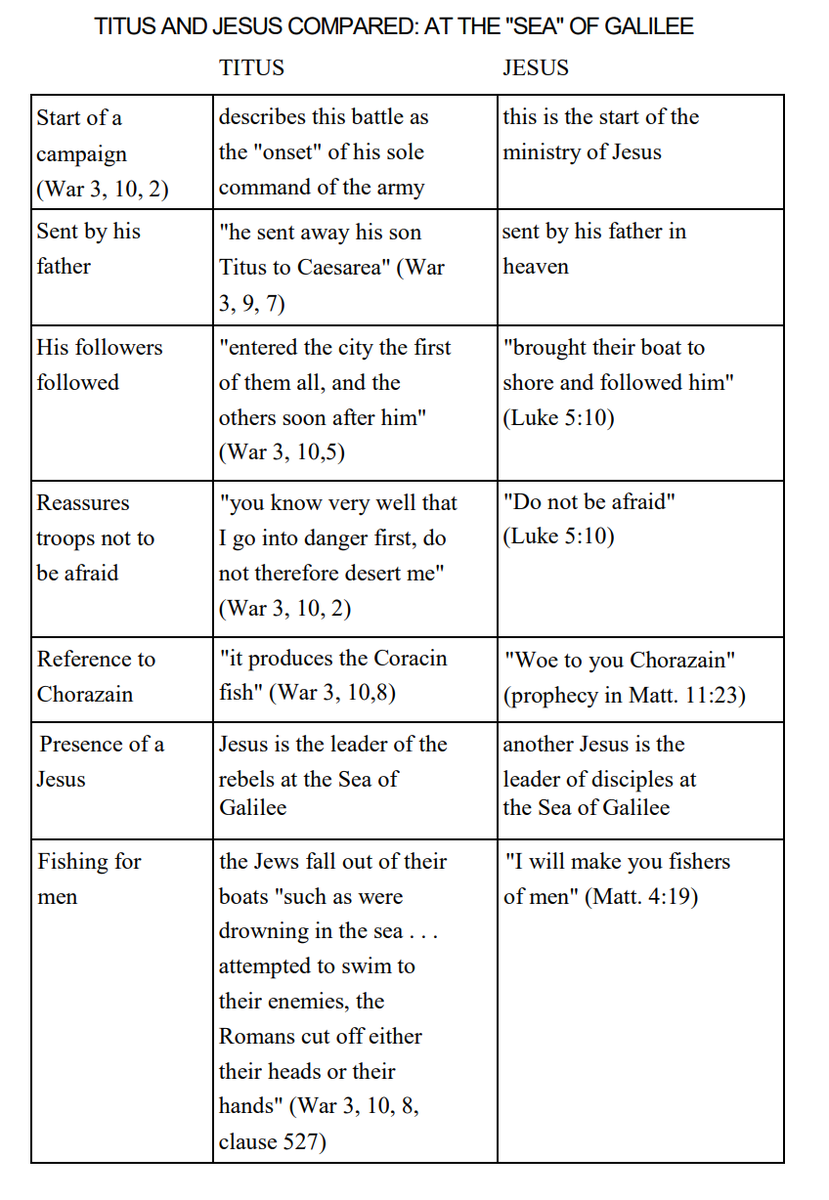
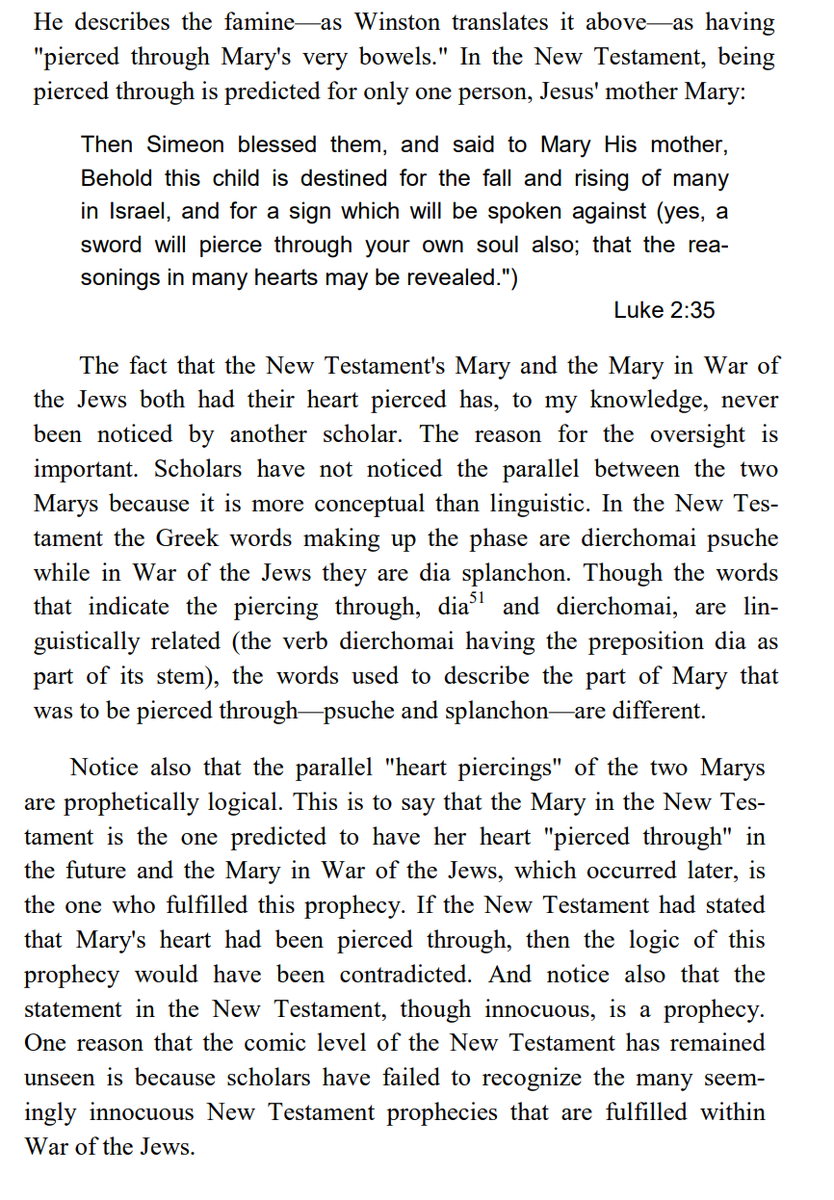
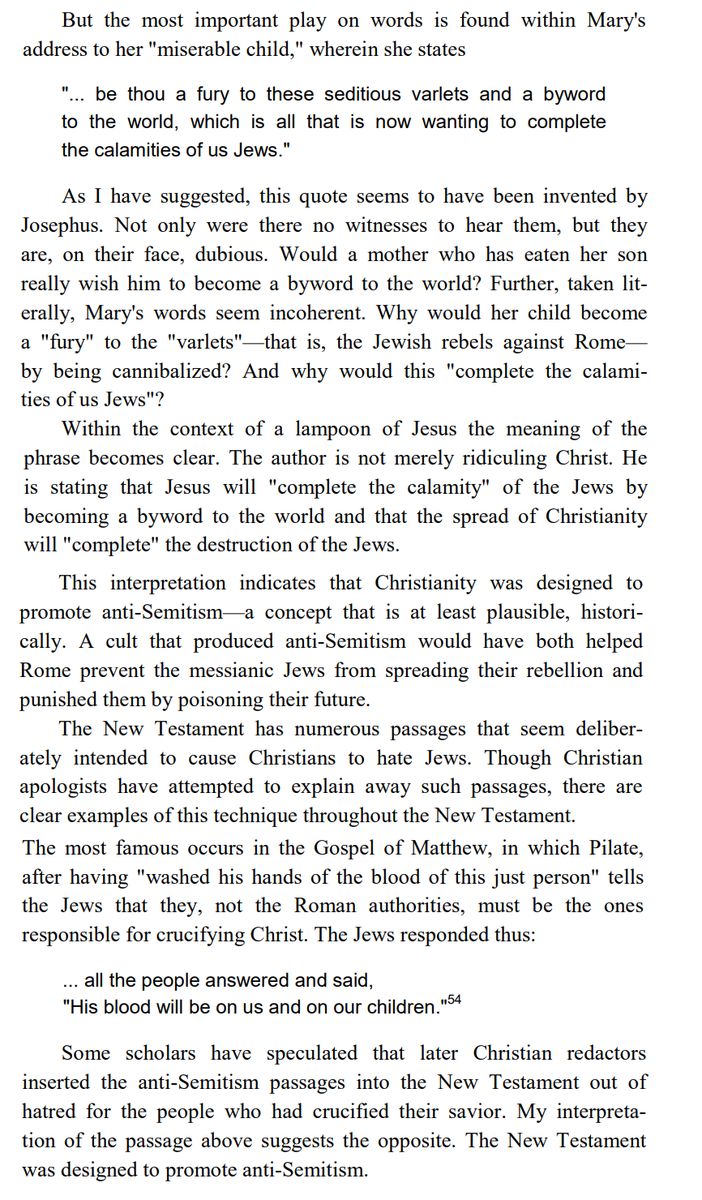
I’ll try to avoid adding my own commentary but since this is introducing the concept of the substitution of Jesus the messiah for Titus the Roman, I will say that the “son of God” concept in Christianity is one of the arch corruptions from our perspective (in Islam), and for obvious reasons this is a Roman-origin concept –
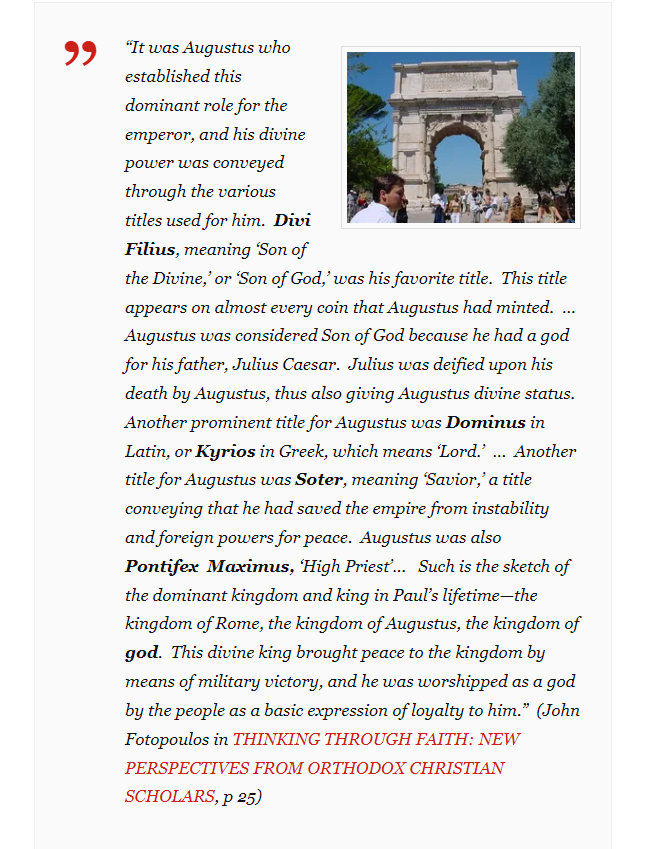
and one that applies to Titus specifically, as the son of Vespasian.
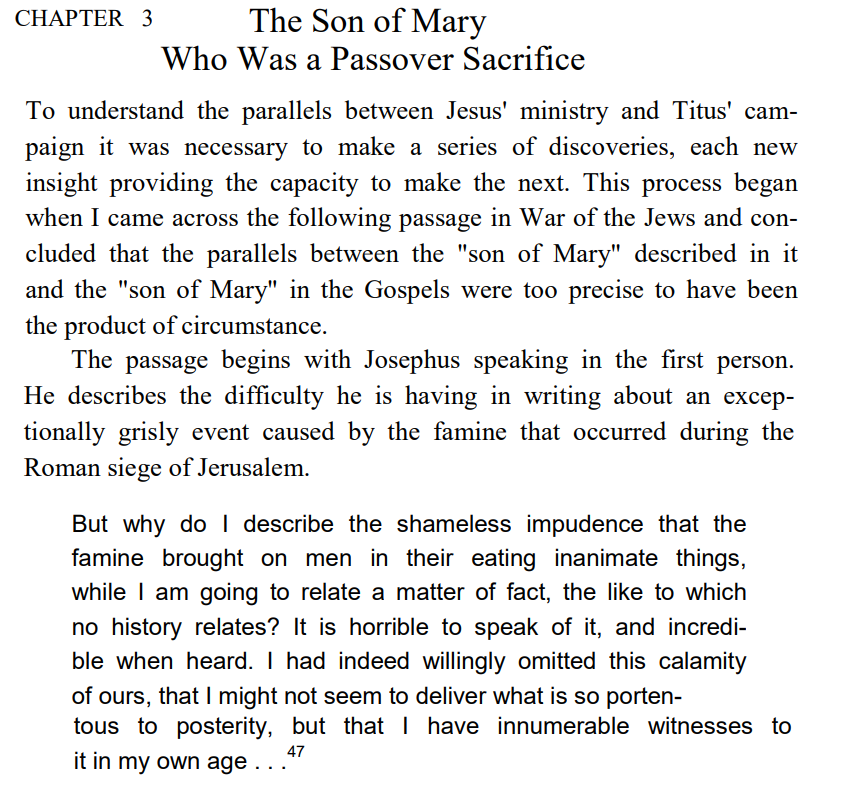
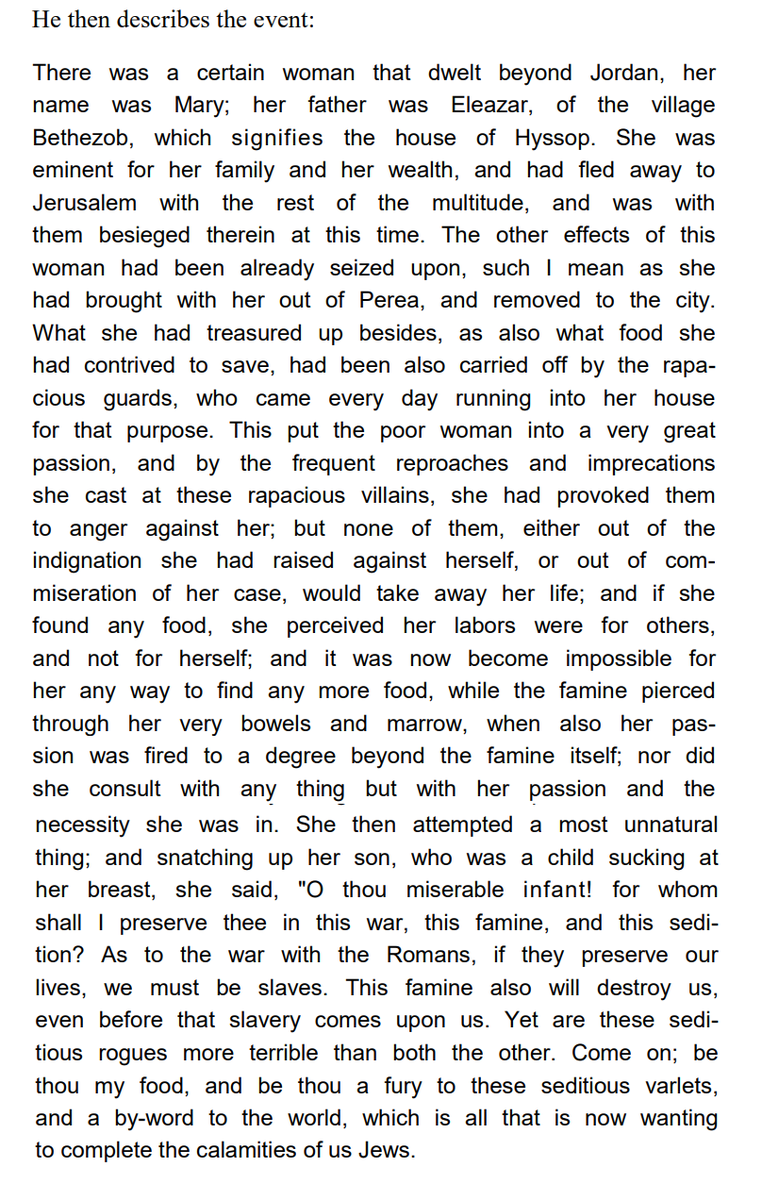
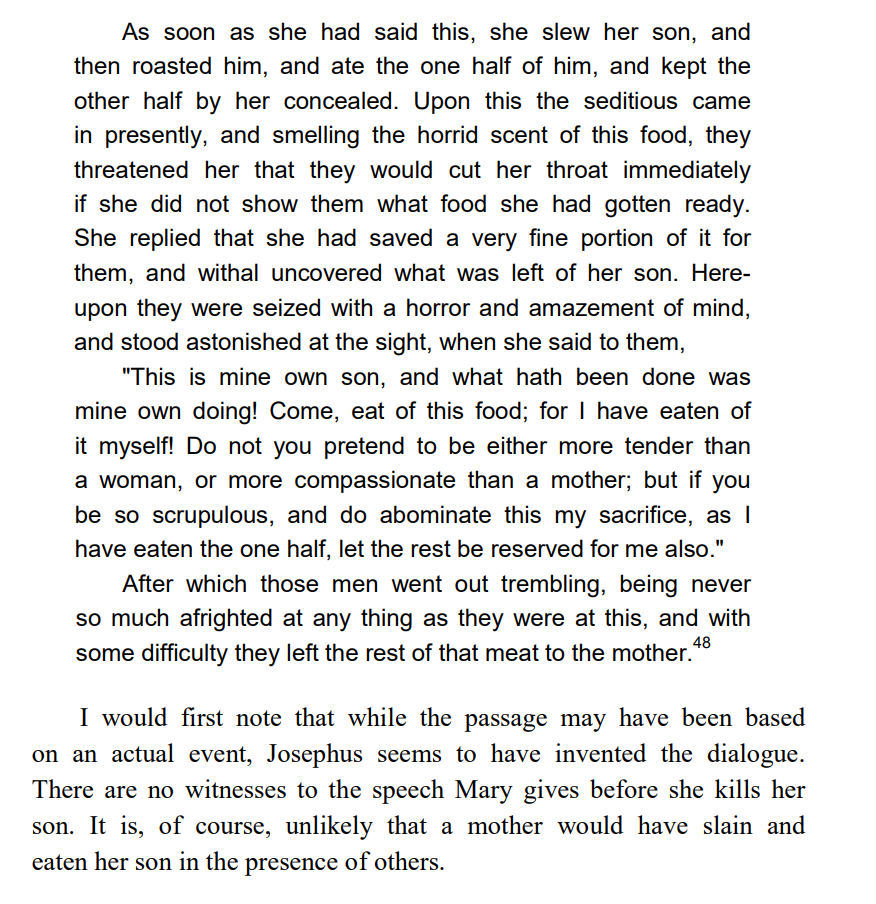
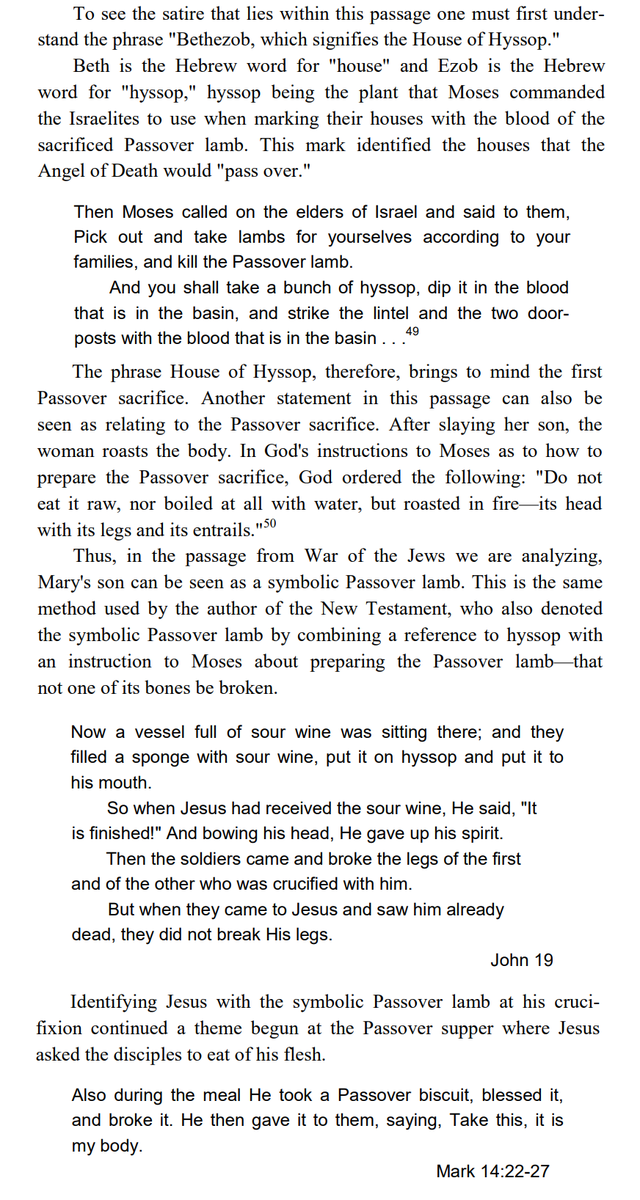
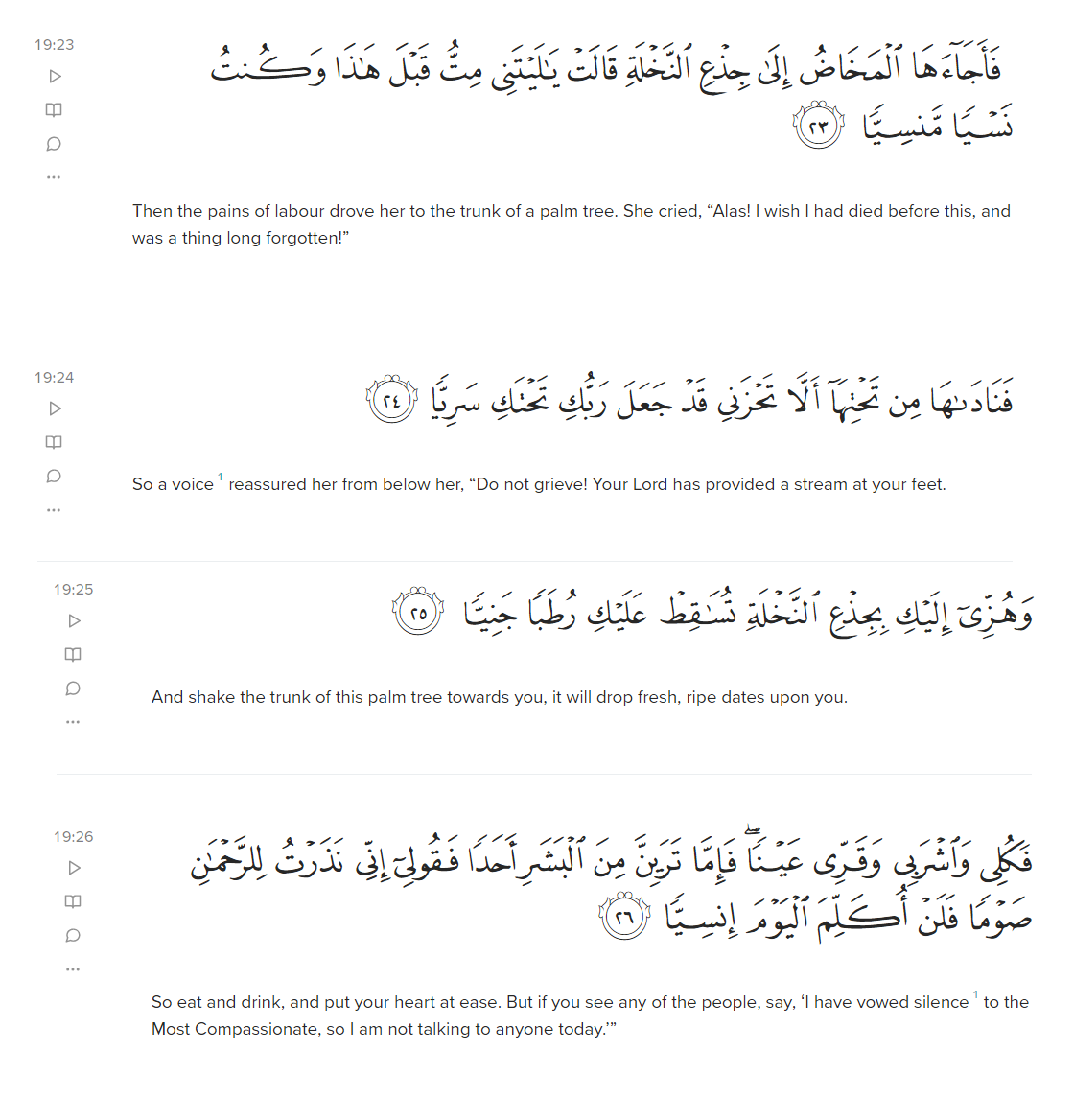
A another brief pause, Muslim readers will no doubt have a special reaction to this story – one of the curious aspects of Maryam, alayhas salaam, related to us in the holy Quran is that she receives a special food from Allah that surprises Zakariya, alayhis salaam.
Allah knows best but it is almost as if against this mockery, this blasphemy from the Romans, that Allah is reiterating the honor of Maryam – that in fact she was such a person as was fed with a special provision directly from Allah Himself.
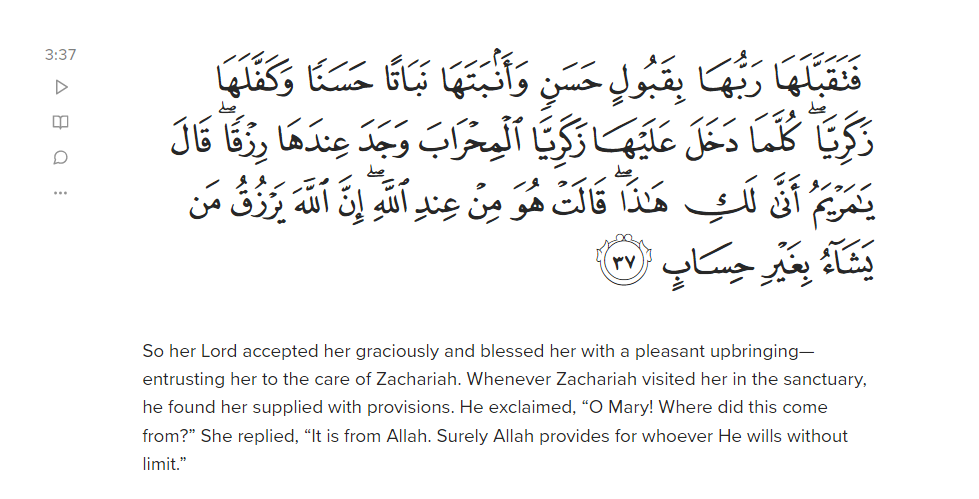
This occurs not just in one story, but two – the other being when she gave birth to prophet ‘Isa, alayhis salaam.
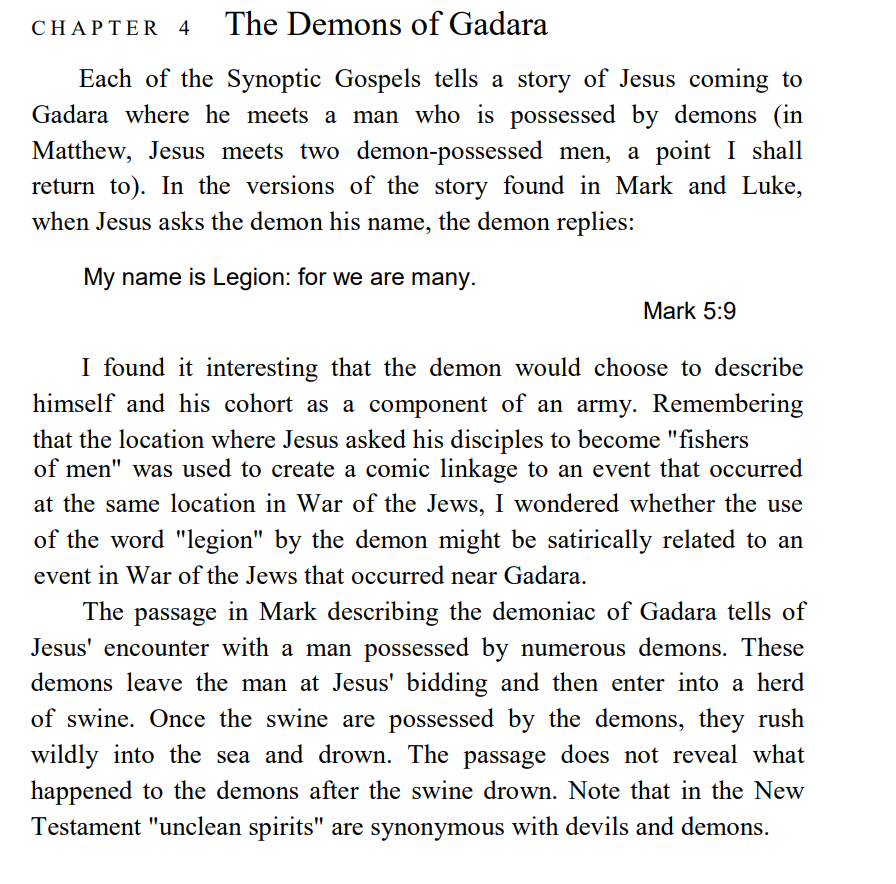
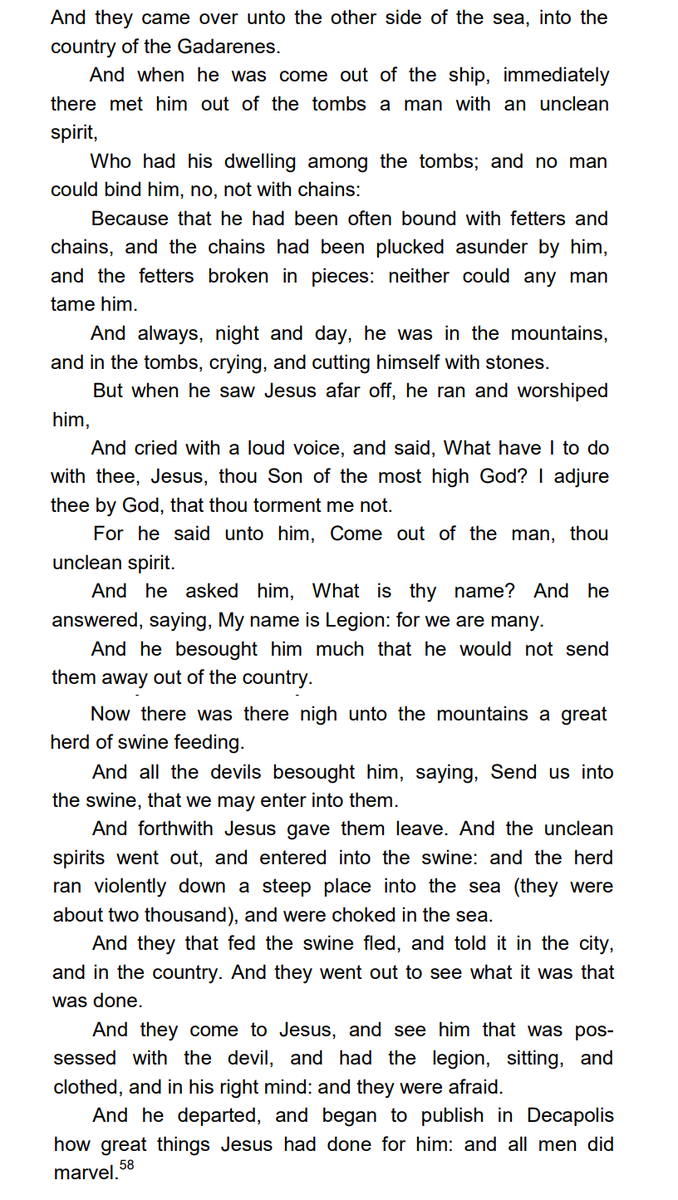
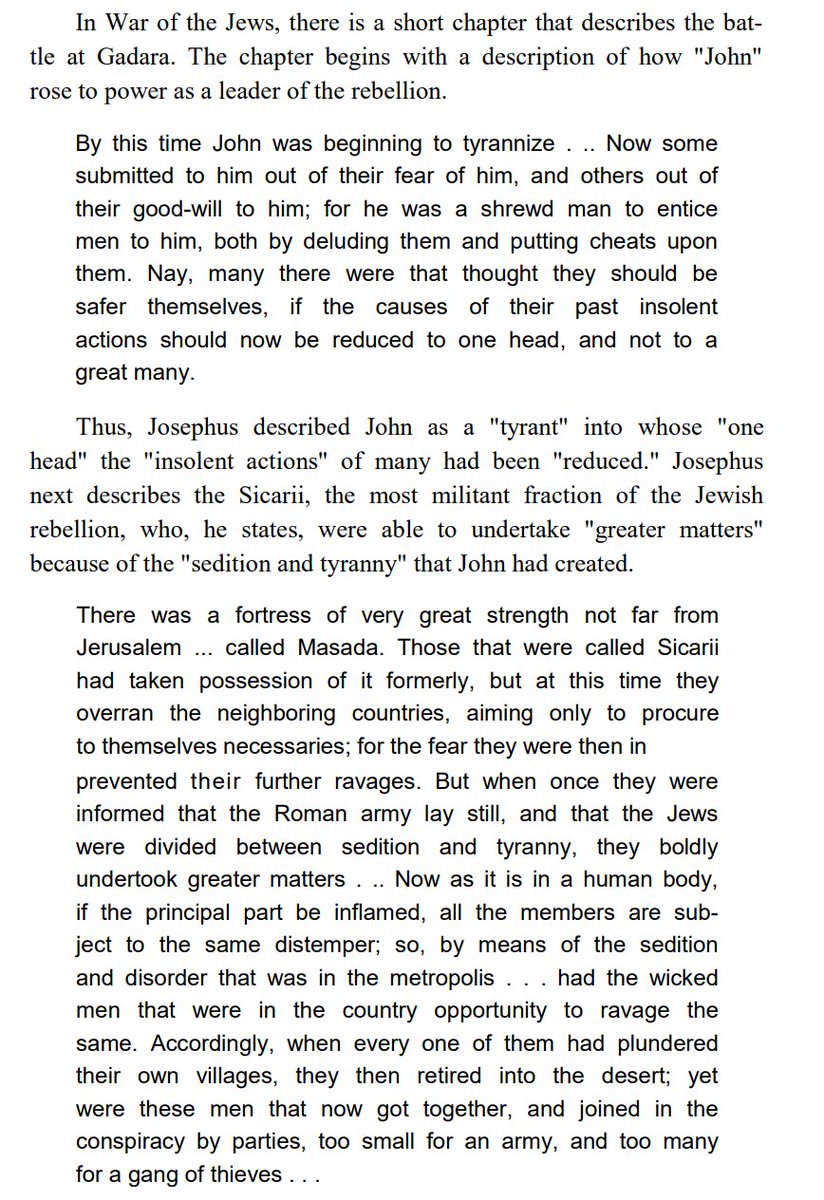
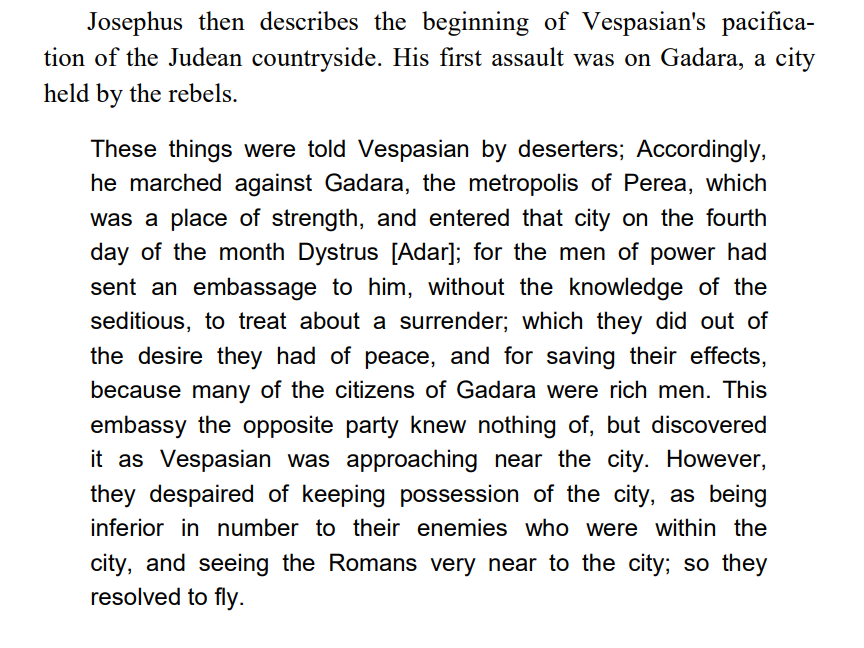
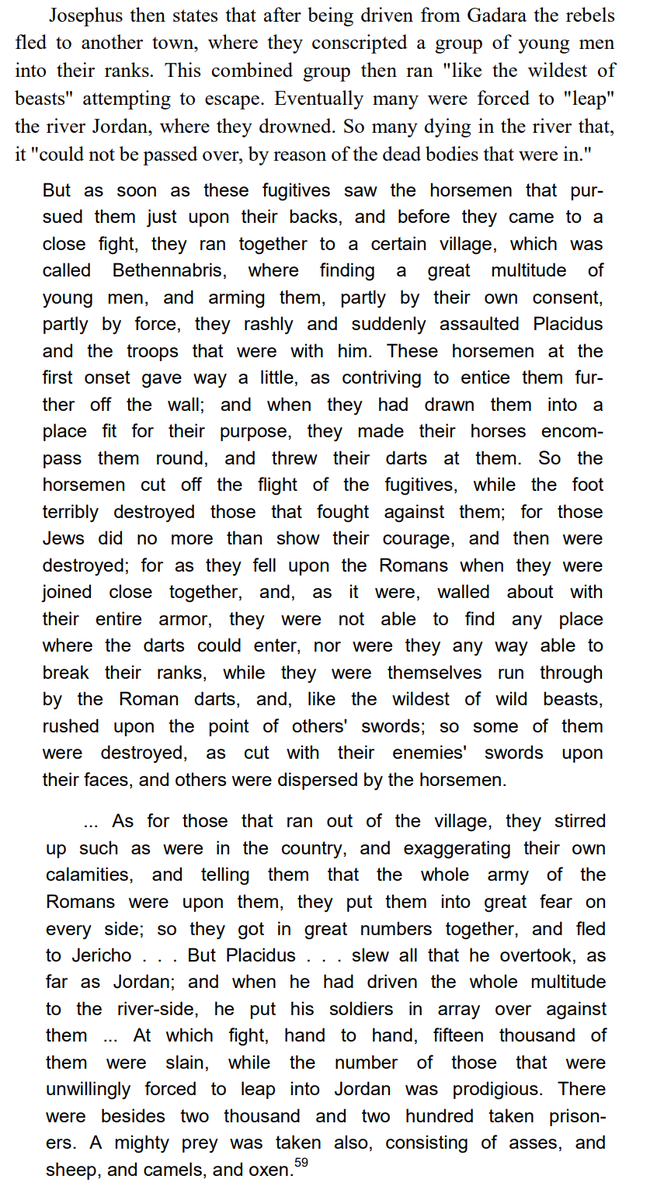
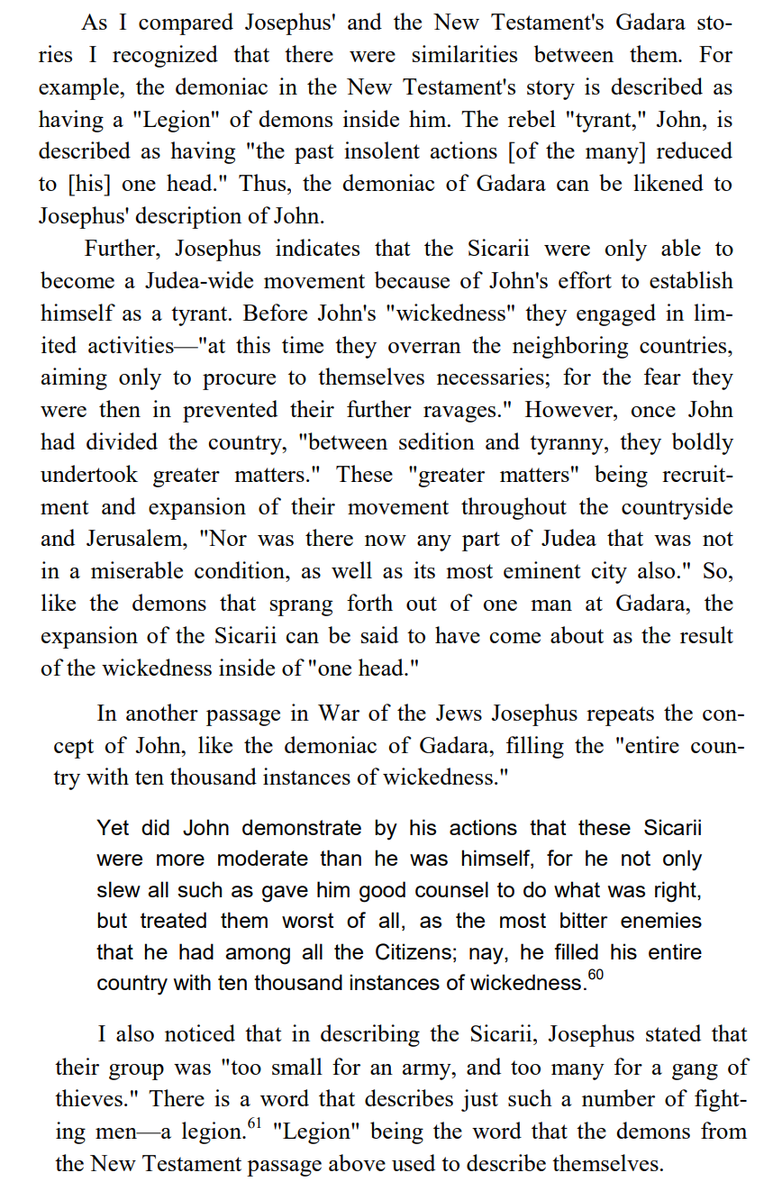
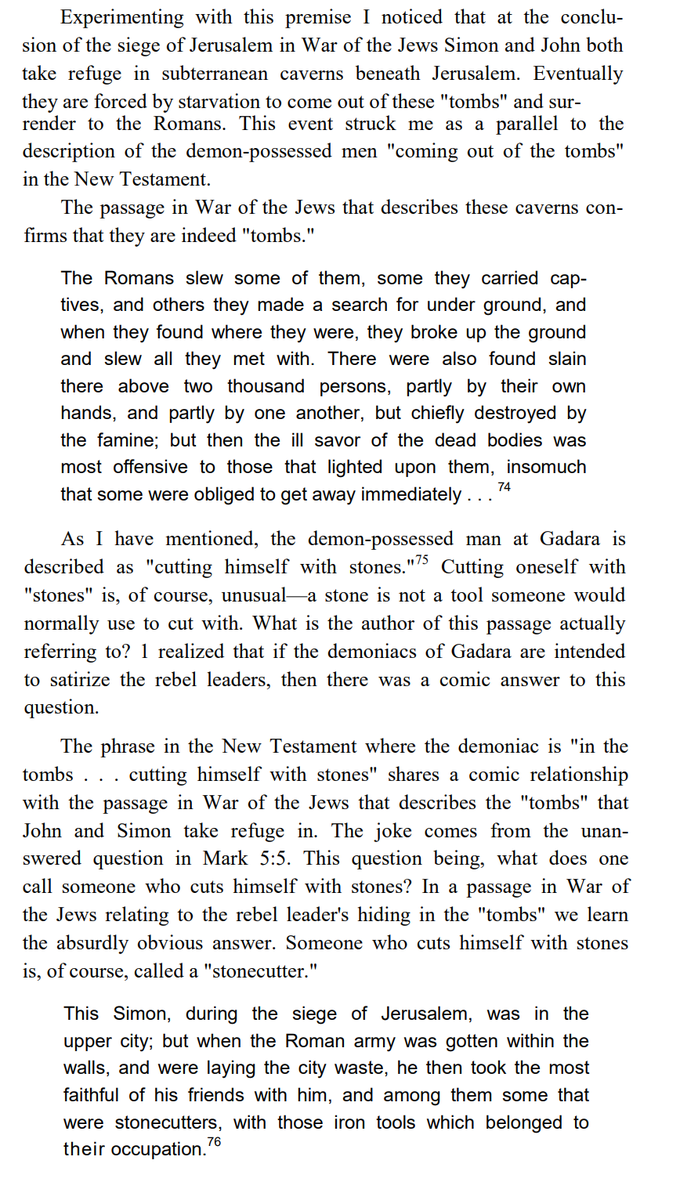
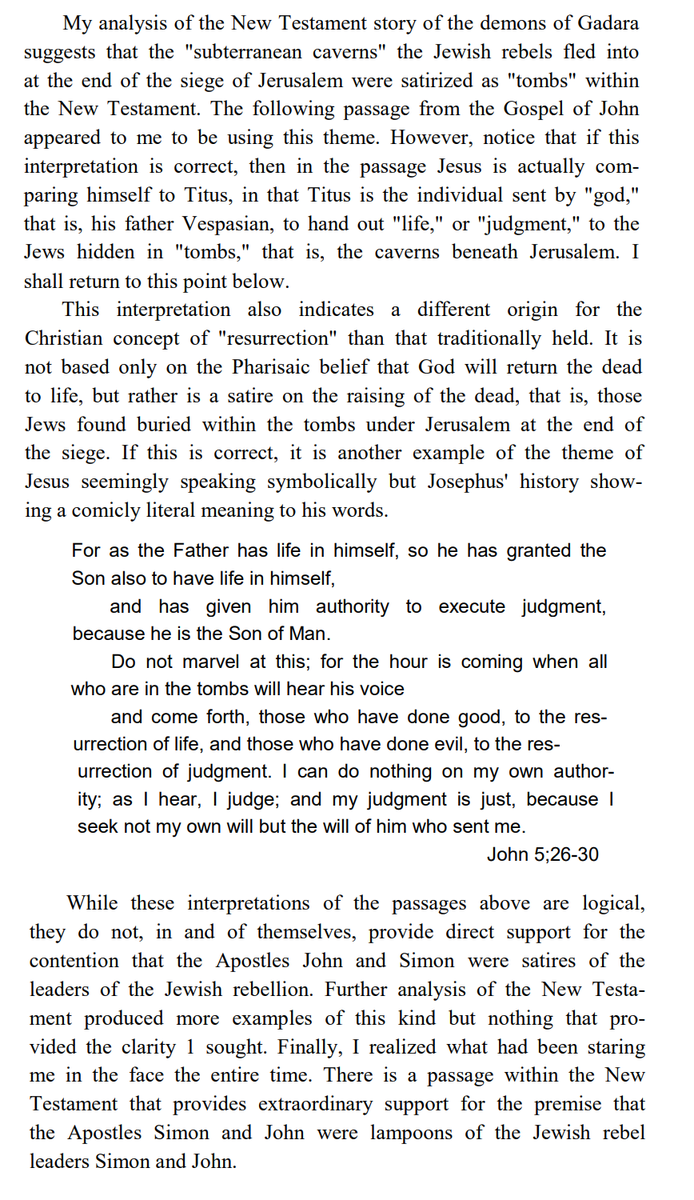
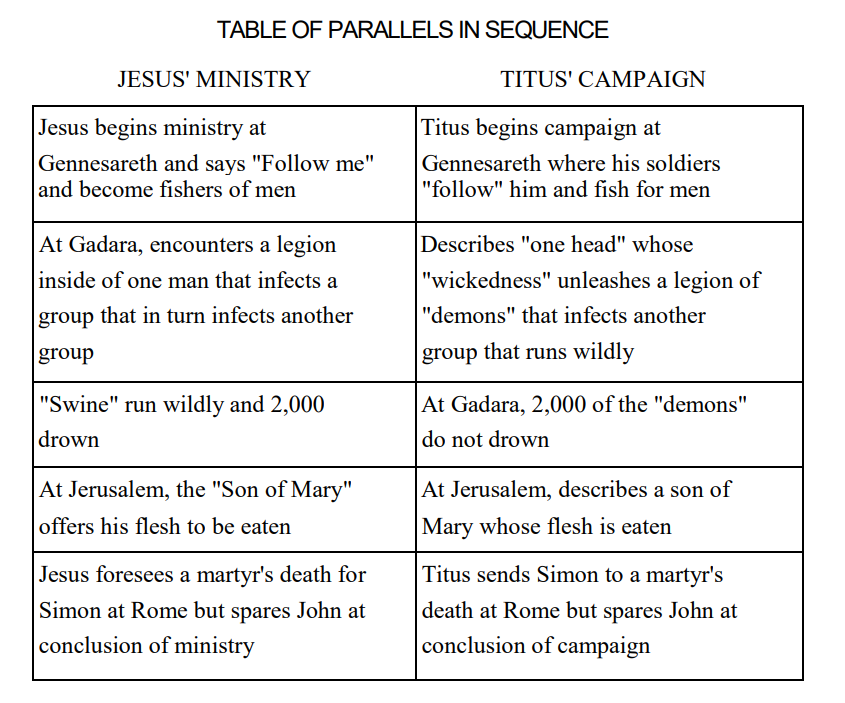
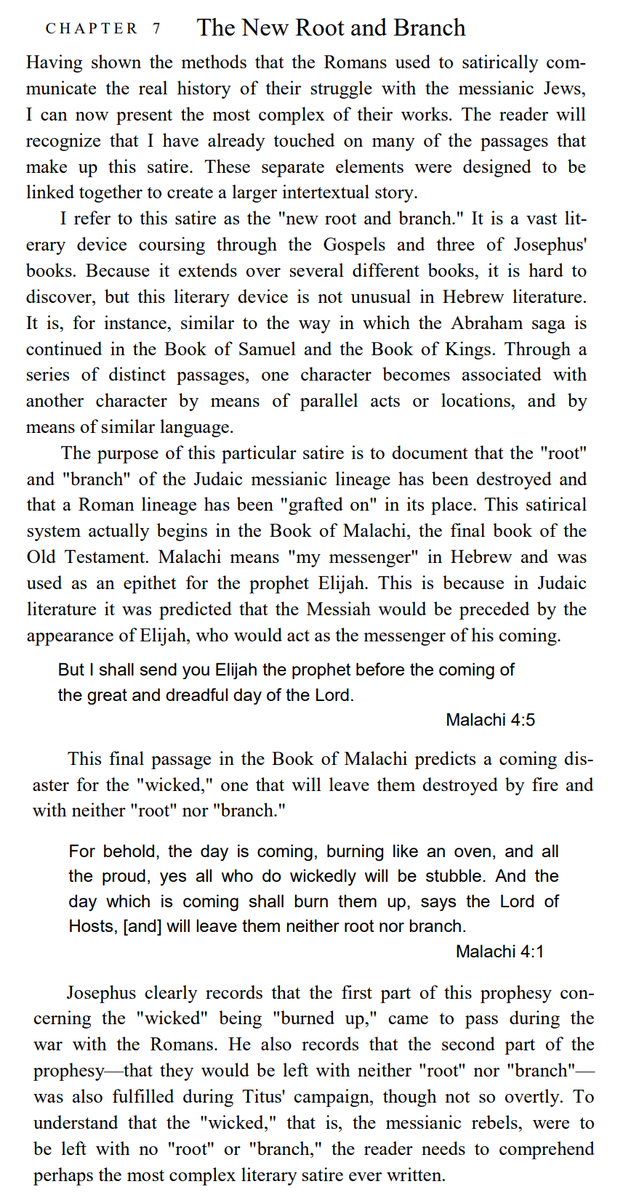
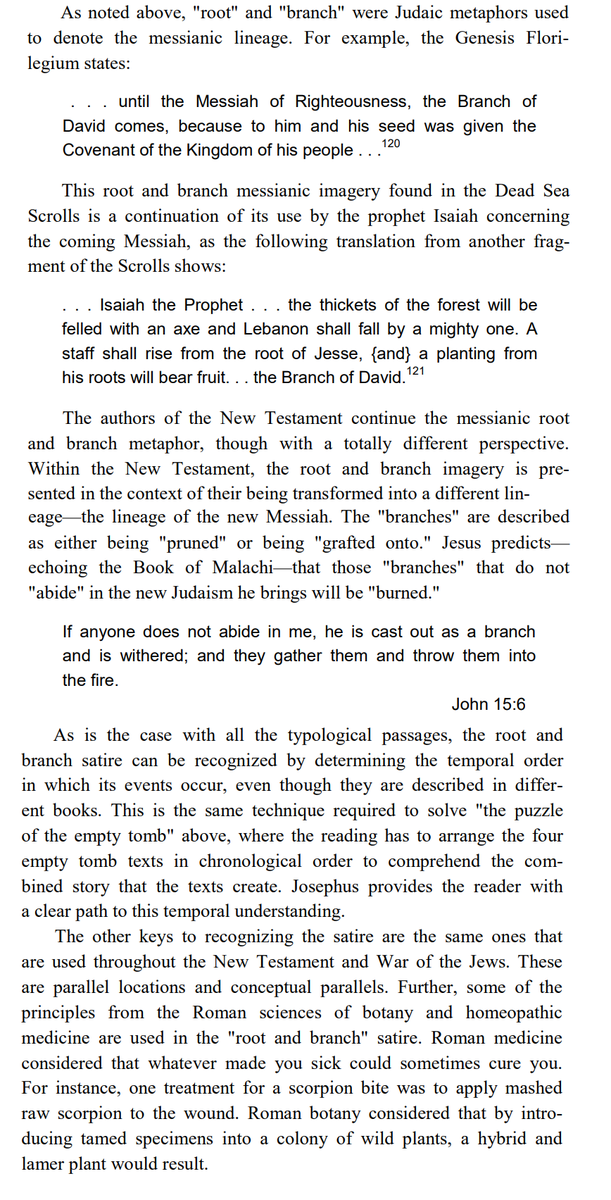
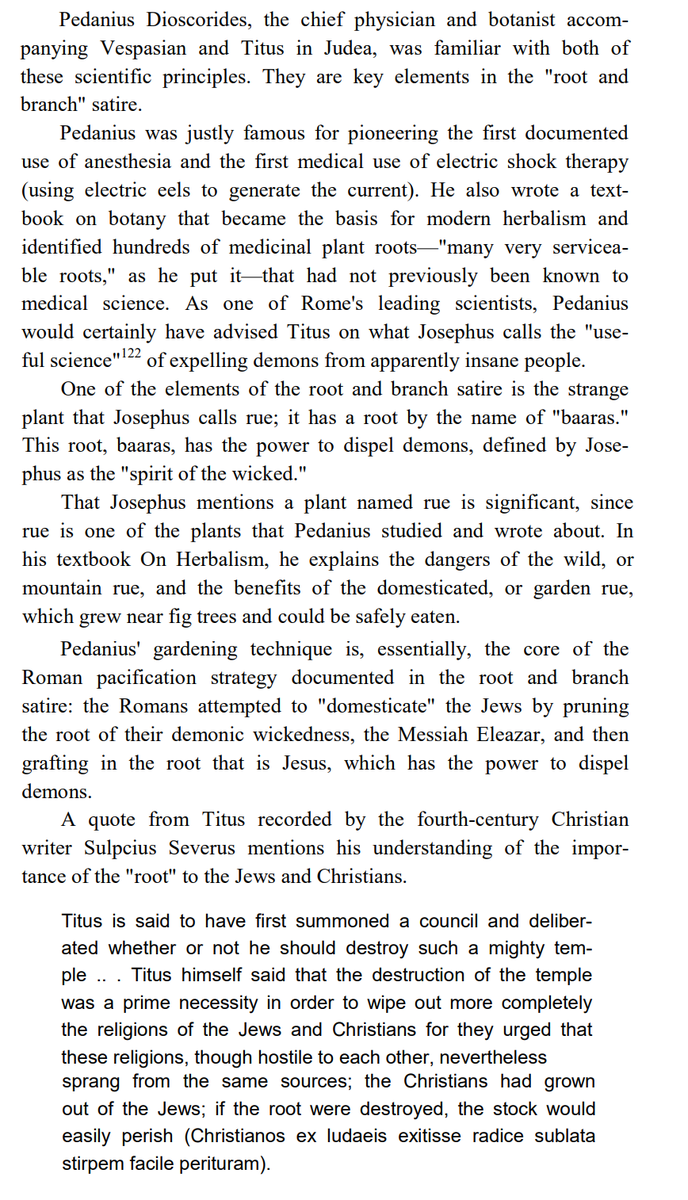
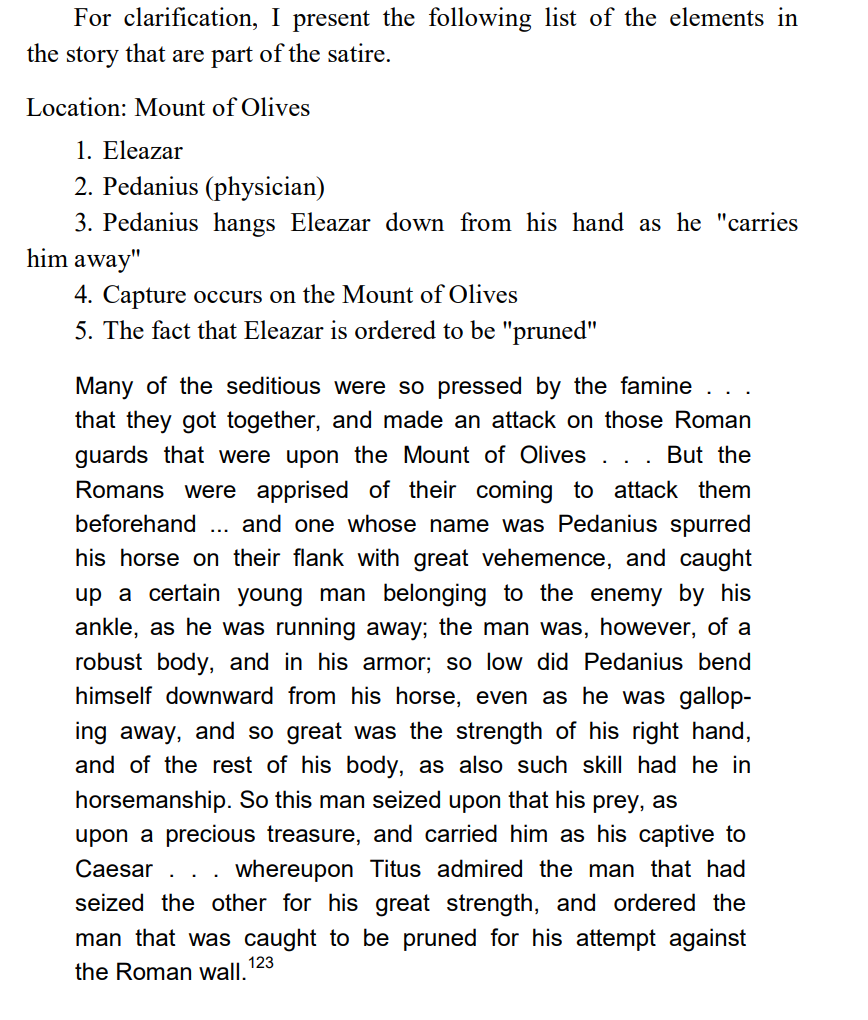
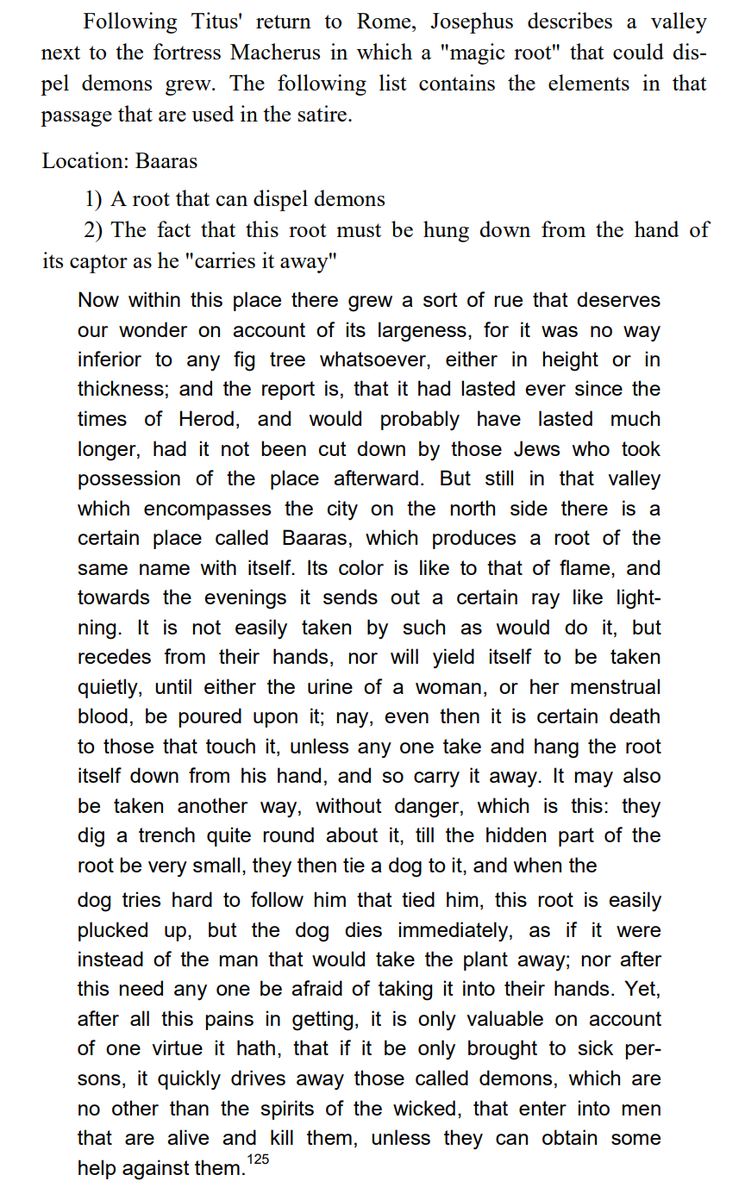
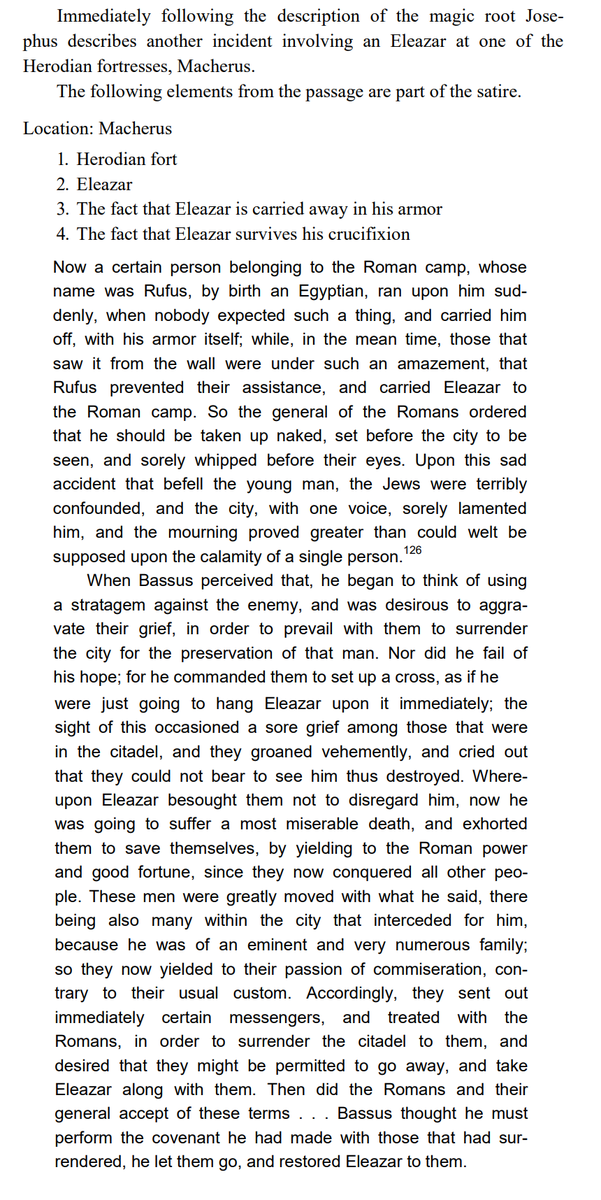
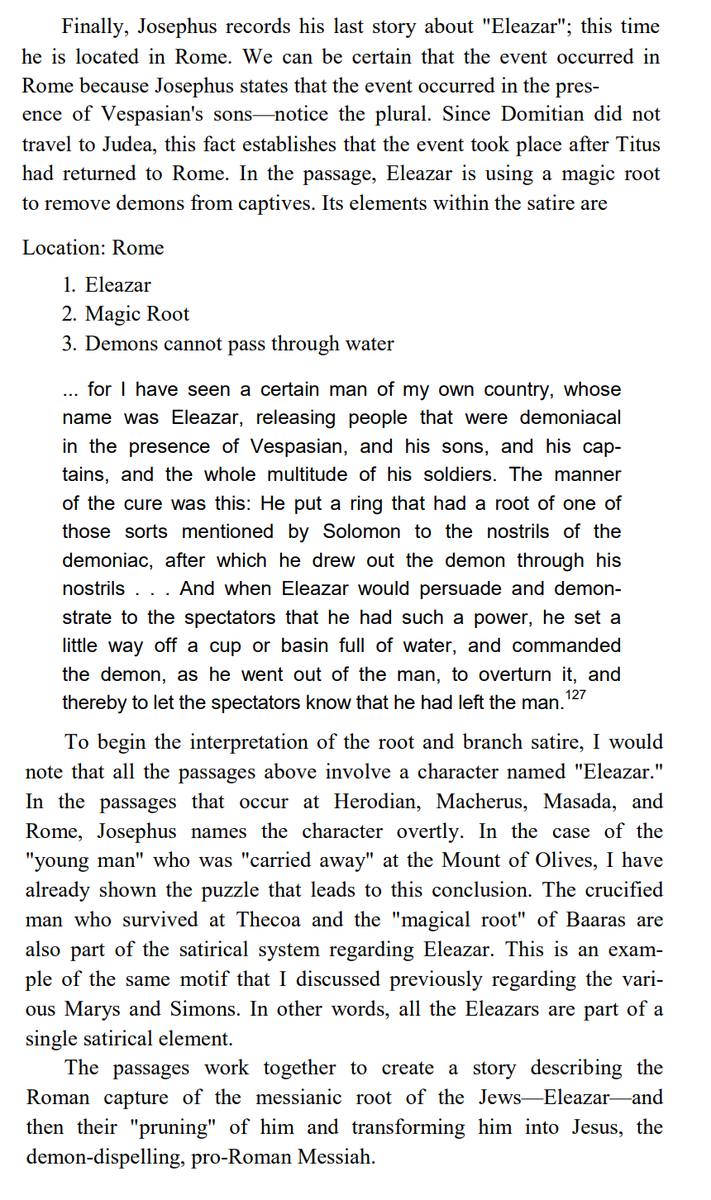
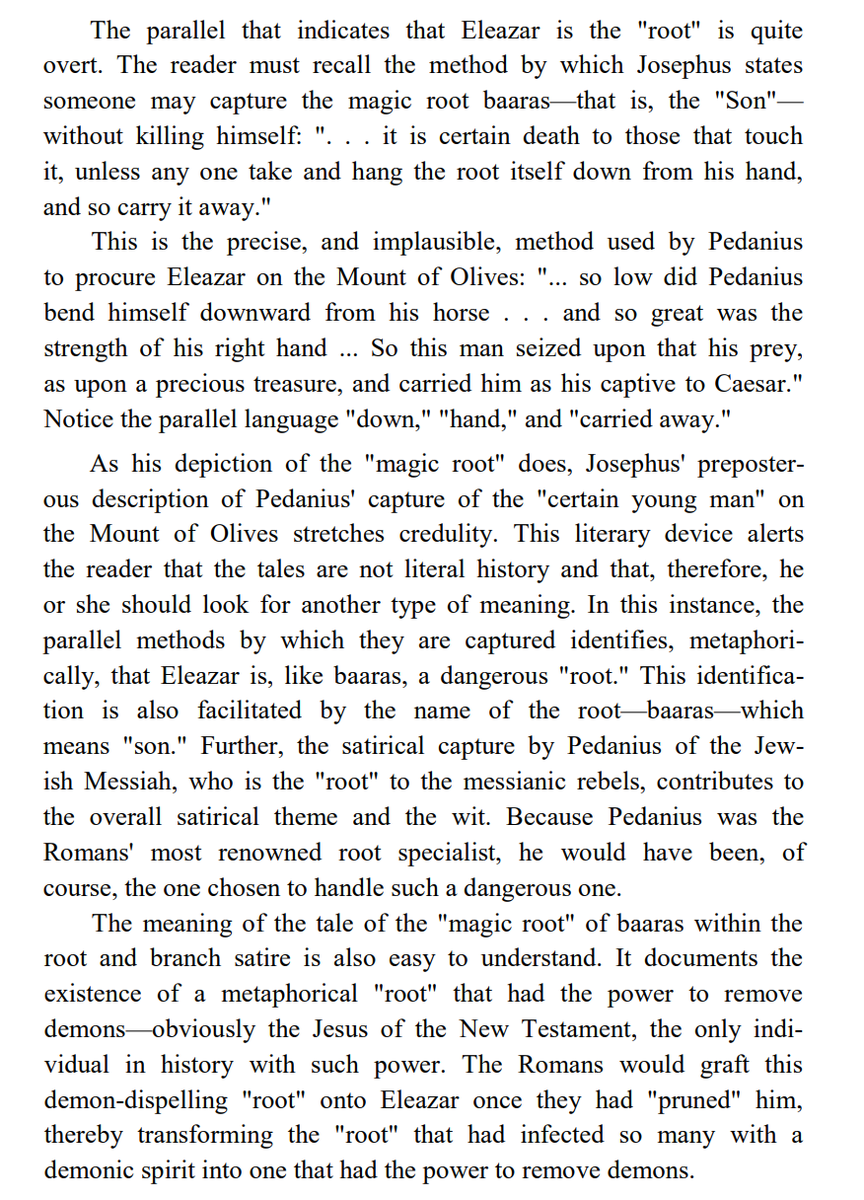
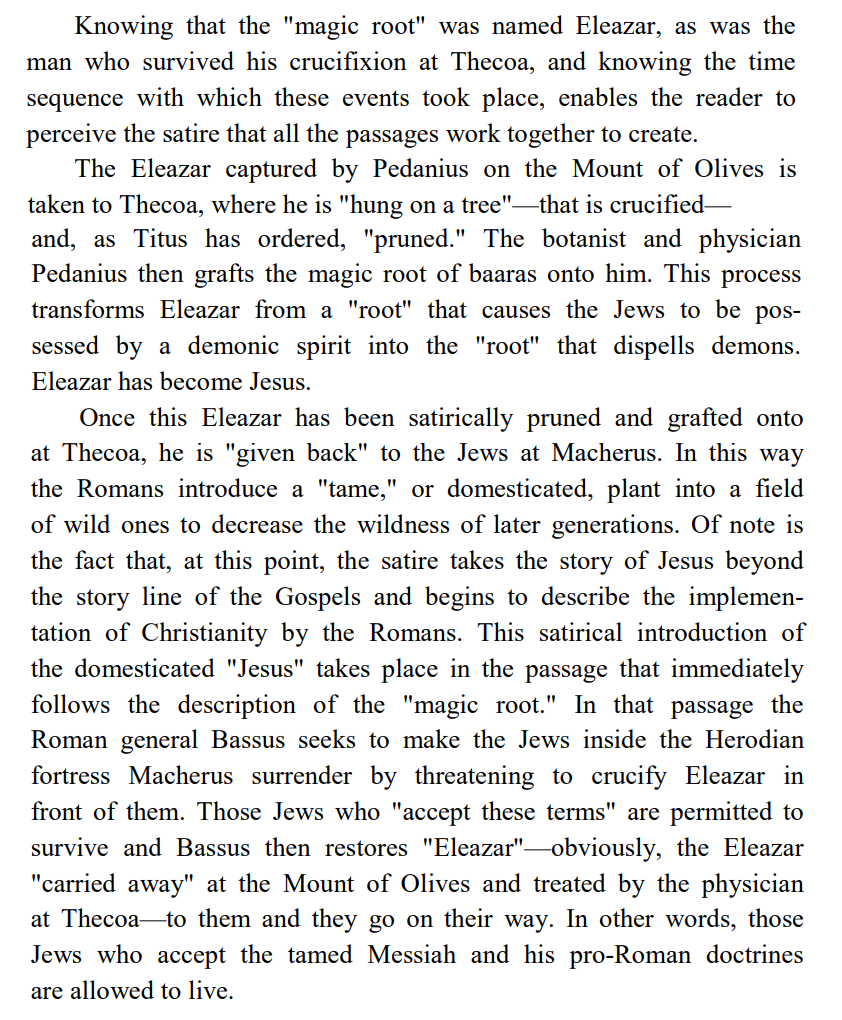
Alright, that is quite a bit of text – it is not my usual practice to insert so much from any source without commentary, but this departure is well deserved by the author.
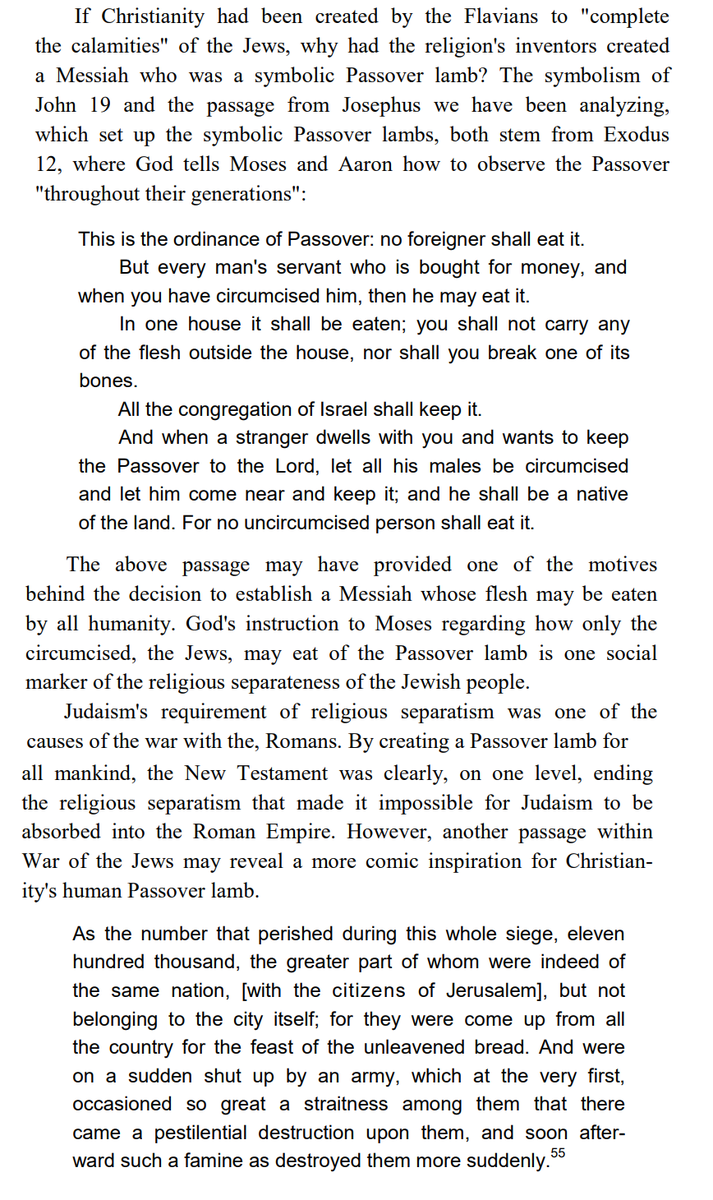
I think the ‘root and branch’ symbolism quite sums up the Roman operation and I have very little to add at this stage, other than that I found it quite worth my time to read the entire work. The last thing from it I will address is that:P
I believe that part of the goal of (including supplementary works such as Josephus’ autobiography) was to obscure the existence of the historical Jesus by implying through their intertextual work that there was no single ‘Jesus’ except for Titus.
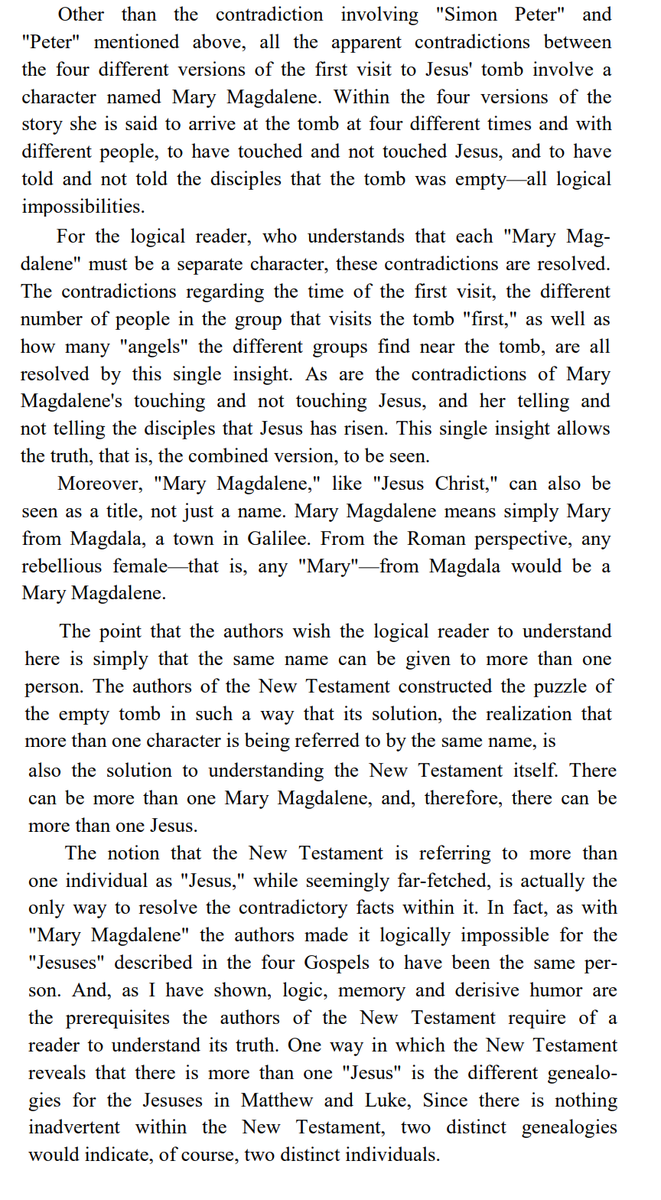
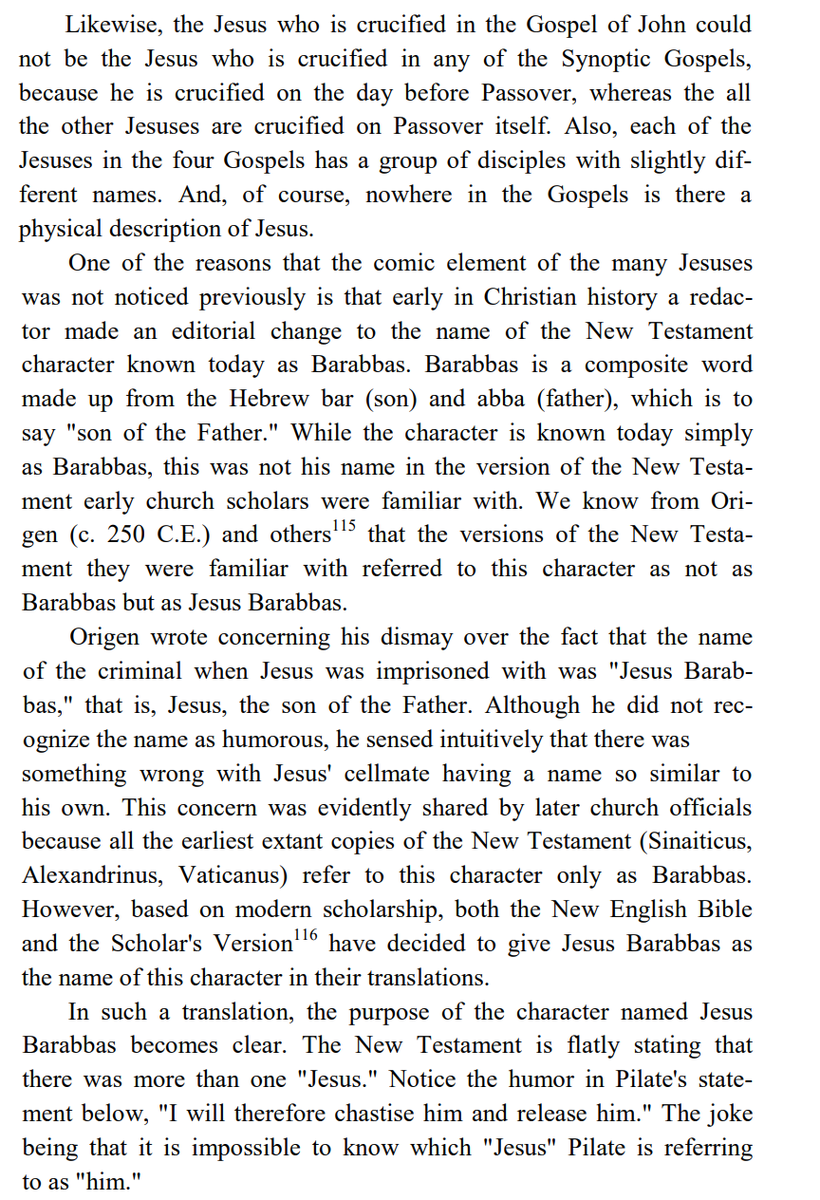
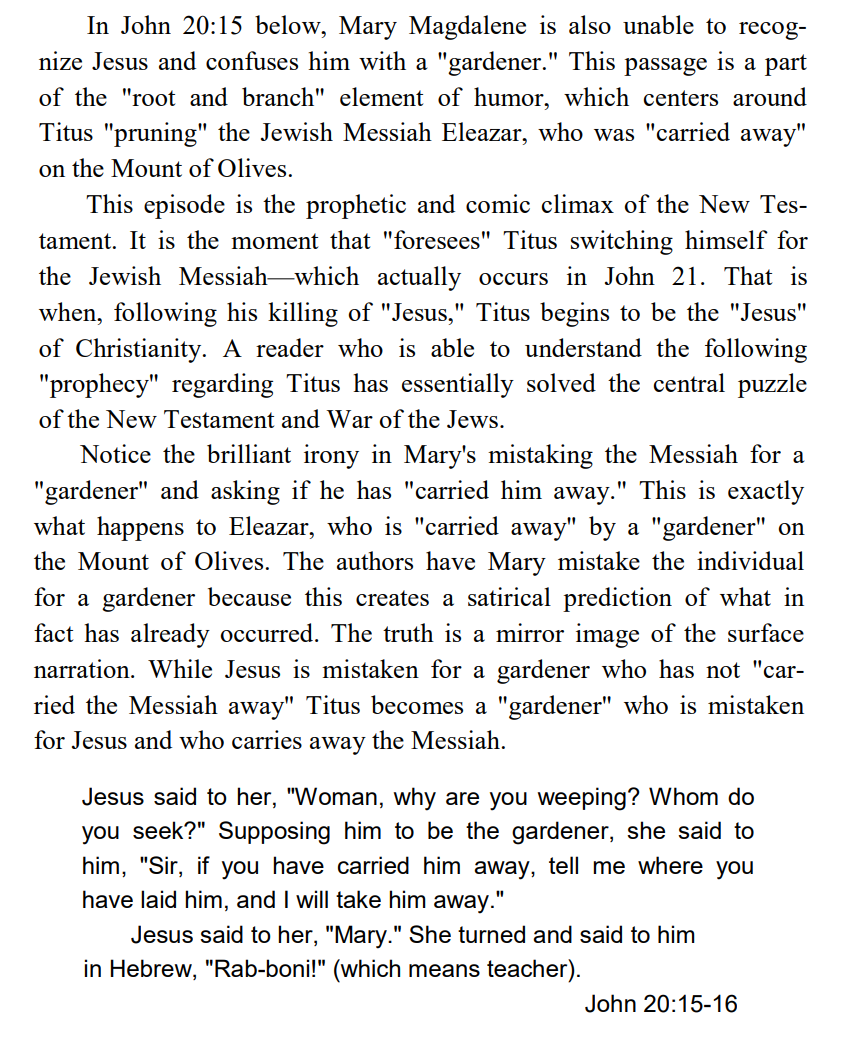
And that is all I will quote from this work. There is a very long way to go and we have not even reached the main subject of this thread. What remains however is an unsolved puzzle –
Namely, the Gospels and the War of the Jews form the basis of the mainstream timeline of this period, implying that the period of ‘Isa and his prophethood predated the war of the Jews by several decades… But it seems that in reality these two should overlap.
So I will cover the mainstream timeline roughly in order and simply add the caveat that I am skeptical of it and that this is a period where the historical truth was violently suppressed and destroyed by the Roman empire.
I have to add one more theological note here - ‘Isa, alayhis salaam, is al-masih. We believe – and I know there is some overlap going back to early Christianity, so this concept may not have been lost on the Romans – that he will be coming back in order to destroy al dajjal, also known as *al masih al dajjal*. The deceiving messiah. Far be it from me to honor such a pathetic figure as the Roman Titus as to compare him to a genuinely historically important figure such as al dajjal, but I think the Romans were drawing on this concept with what they attempted with the false Gospels and War of the Jews.
Furthermore, I thought that if one understands the genuine situation of prophet ‘Isa alayhis salaam and the deeply difficult conditions of the environment of his prophethood, which will be underscored by the tales about to come, it just makes the understanding of his eventual return at the also extremely difficult time of al masih al dajaal that much more poignant.
Moving on to a rough analysis of the timeline insofar as we can understand it, lets frame:
• The main goal of the Romans with regards to “Christianity” was to cut off Judaism – having just been sent ‘Isa, alayhis salaam, as their last prophet, with some degree of split over acceptance of his prophethood, from history. To end its stewardship of monotheism, to graft its own fabricated religion onto the monotheistic root. Therefore, separating their new religion from Judaism was of the utmost priority.
• The prophethood of ‘Isa alayhis salaam had already occurred, there were already Jewish followers of ‘Isa, and thus history as it actually occurred contradicted the history they wished to write. To achieve their desired pruning and grafting required violent disruption and extermination of this “history”, of the people who remembered it, of any written record of it, and of any social reverberations of it.
• Therefore, they would need to achieve a combination of: a genocide of the early “Jewish Christian” groups that remembered the authentic life and teaching of prophet ‘Isa alayhis salaam, and the seeding of replacement cults with a replacement ideology, the refinement of their replacement religion as a political mechanism, and a war against any contradictory historical materials and for ownership of this historical subject.
• All of this would eventually lead to a time period when the genocide was complete, the pretext of state persecution of the replacement religion could be lifted, and the replacement religion – in its properly created vacuum – could be adopted officially by the state.
As for the timeline, let’s start with the great fire of Rome:
I choose to start with the great fire because I believe that physical violence and disruption would necessarily precede the seeding of replacement cults, despite the official timeline indicating the reverse being true.
So while the corruption of the gospels is implied to have occurred earlier, I find it impossible to believe that the original disciples of ‘Isa could have tolerated the corruptions or would have stomached usurpers in their midst.
Rather, it makes more sense that the initial strike would be one of physical violence to reduce the resources of the genuine companions and followers to counter such a doppelganger.
This is just my speculation, it is possible that they initially seeded replacement cults in areas with very little or zero Christian presence – but I have misgivings about this for a number of reasons:
Chiefly that early on there was no division with Judaism, no contradiction of Judaic law and conversion requirements, etc. And it seems hard to believe that they would be able to insert the desired corruptions to a Jewish audience or spring up replacement cults that targeted the gentiles before disrupting the group of Jews that followed prophet ‘Isa, alayhis salaam. All of this is hard because we have no real information, reliable information, about the following of ‘Isa and its size and distribution.
Rather, the Romans chose this moment to try to seize hold of monotheism and would have an interest in fabricating a history that explained how their replacement cults were able to spring up and spread.
To me, the timeline of ‘corruption of gospels’ first, fire and persecution later, feels designed to minimize the friction – to say the least! - of what the Roman inventions such as ‘son of God’, elevating a human being to the level of worship, etc would have caused with the predominately or entirely Jewish early followers.
If it was not made clear by the above, the cult of the emperor – the worship of a human being – was one of the most severe incompatibilities with monotheism, and this is why it was so important for the Romans to enshrine some version of this pagan concept into their replacement religion. That is why I do not believe in any historical timeline where the followers of ‘Isa would have ever stomached this, or let usurpers insert ideas like this without consequence.
So I will begin with the great fire and we can throw the flag that already the revealed timeline has been adulterated.
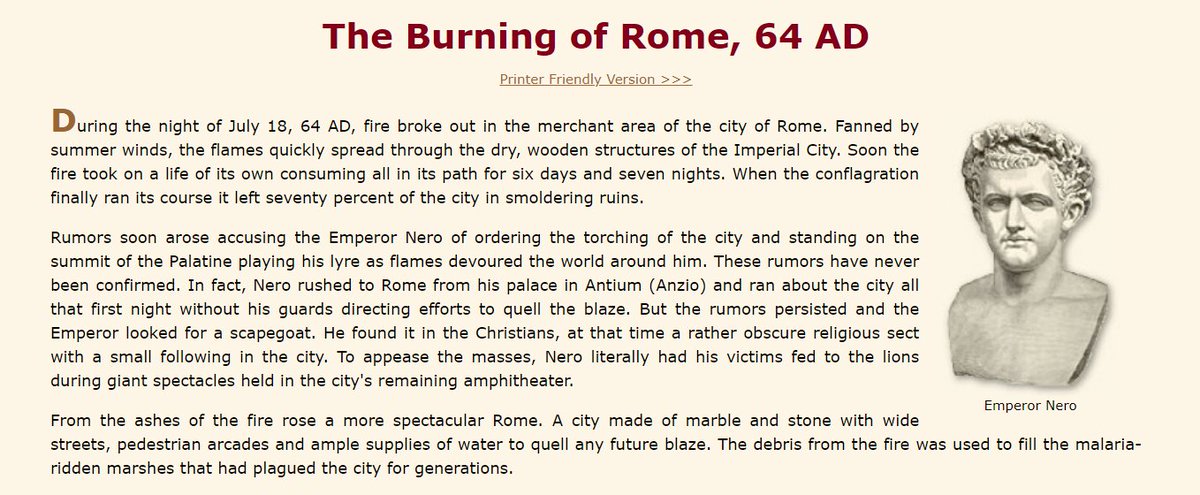
According to the historical record, in June of 64 CE a fire broke out in Rome. Nominally, this is the event that led to the infamous repression of the fledgling Christian sect “by” the emperor Nero – the Christians of Rome were blamed for the fire.
This event and the sequence it belongs to serve as the symbolic basis for the global war on terror. This event inaugurated the war of the Romans against what was at that time the uncorrupted religion of Allah.
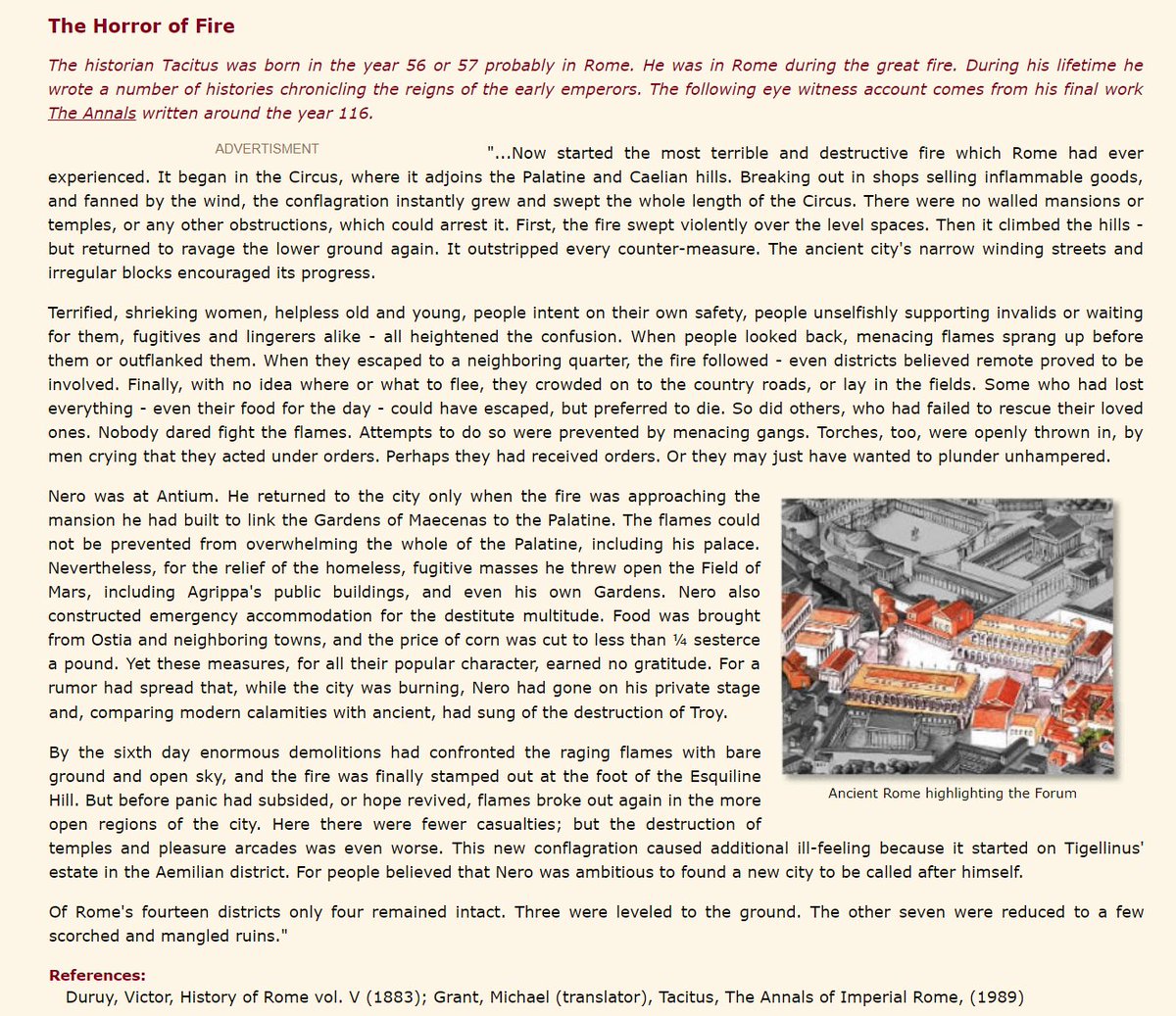
The fire was spectacularly, notably horrible – an event that would have a large psychological impact on those who witnessed it, and the coverage of the event similarly maximized the degree of the horror. Here the historian Tacitus transcribed a detailed “eye witness” account -
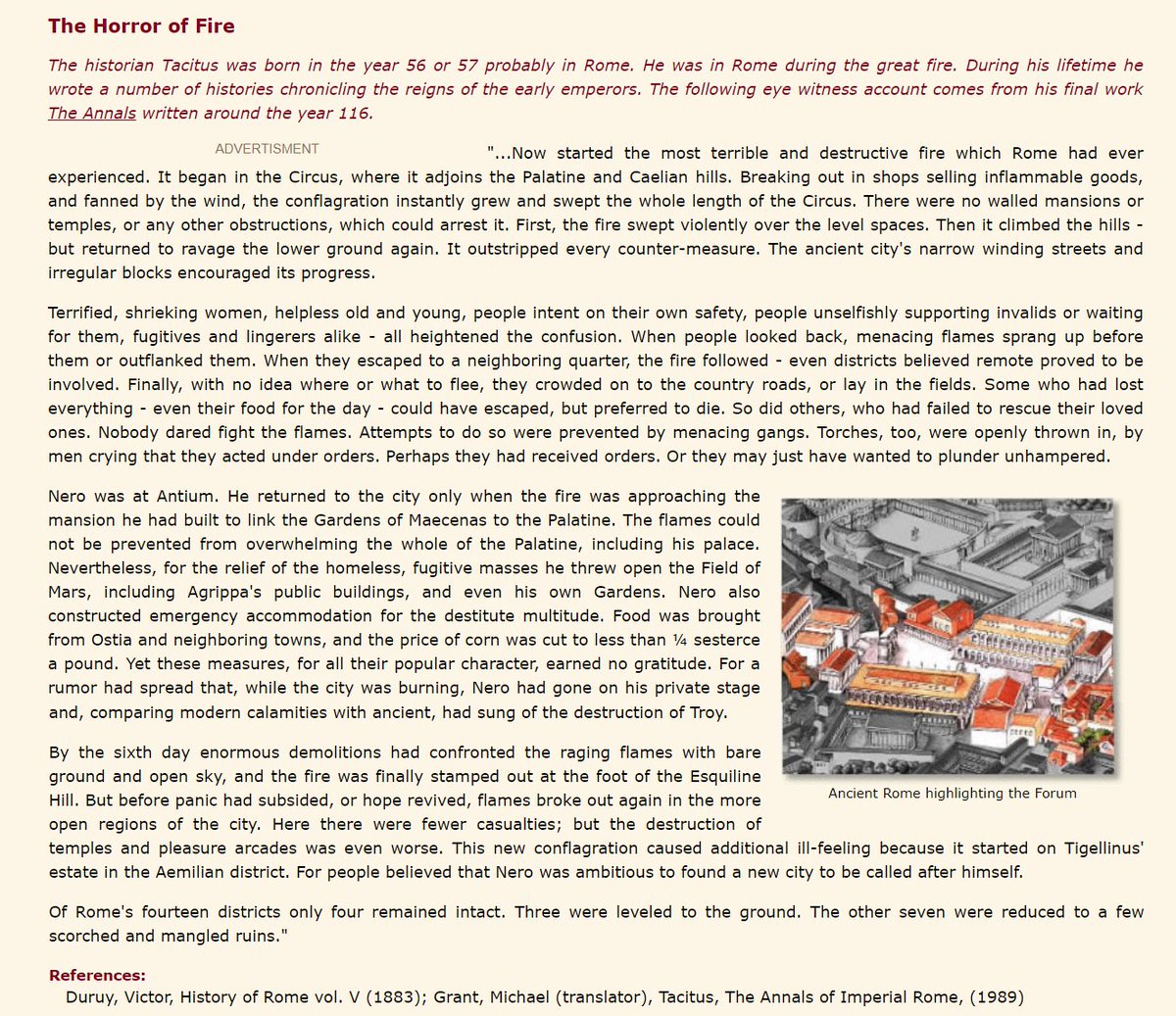
Note also that he records in the account the presence of mysterious gangs that would menace anybody attempting to put out the fire. A brief pause, Tacitus is one of if not the main historical source that directly accused Nero of having started the fire.
Not only this, but he pushes a framing of that – the Christians were used as scapegoats for the fire, that due to persistent rumors Nero needed to *find someone to blame*.
This is the framing of Tacitus’ annals, supposedly written in 109 CE. So, pause -
I have been framing this fire as a pretext to launch the operation against Judaism, especially including the followers of Jesus, ‘Isa, alayhis salaam.
If Tacitus is framing the fire of Rome as having been deliberately started by Nero, but that he “needed” a scapegoat in the form of the Christians, what then was the motivation suggested by Tacitus et al for Nero's starting of the fire? What would have led to the rumors?
The answer is that allegedly, Nero had very recently proposed to the senate to tear down a large portion of Rome in order to build a series of palaces called Neropolis. So the story goes,
Nero raged against the government and then miraculously the fire began and thus was the ground cleared for the ‘Domus Aurea’ -
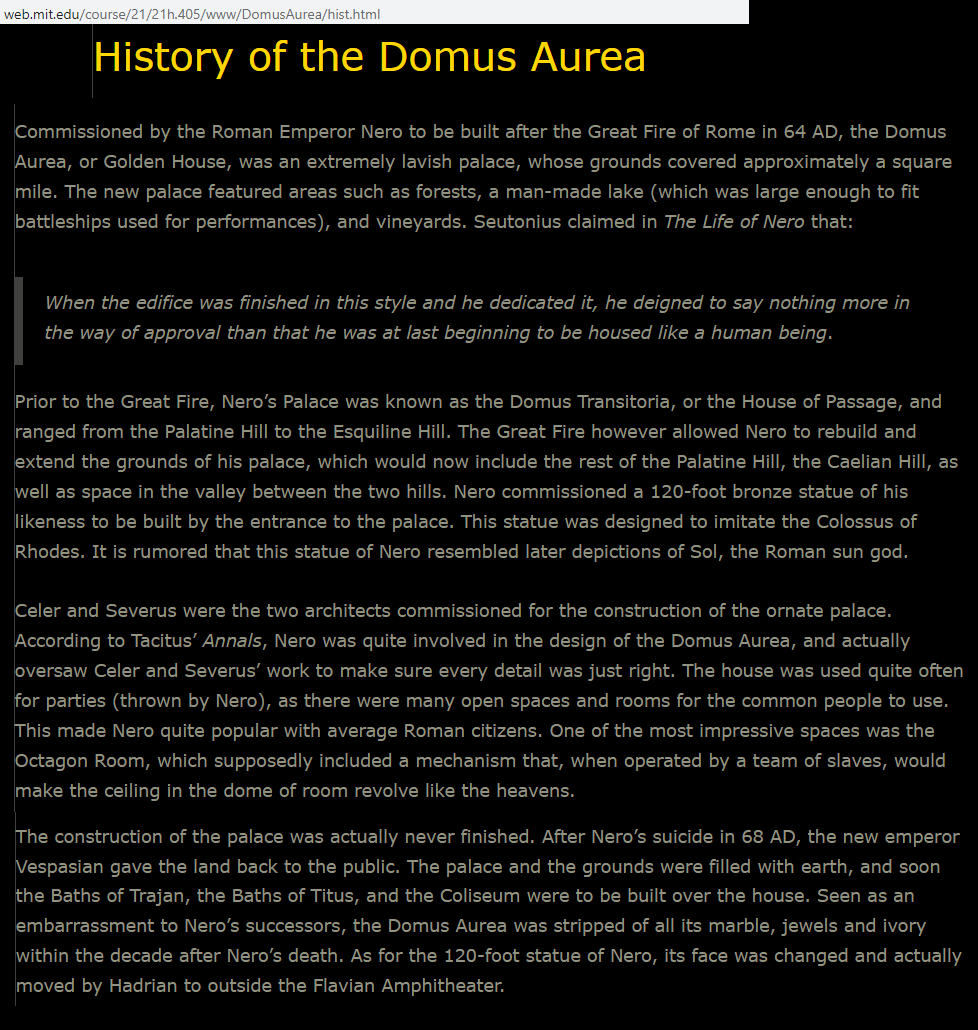
On the subject of Nero – note how much inspiration the character of Donald Trump takes from emperor Nero. Egotheistic tantrums, famously debaucherous, an obsession with monuments-to-self, rage against the “sober” political establishment, and on and on.
It is a kind of baseline political knowledge that the president of the united states is an empty figurehead, existing to promote a certain kind of superficial drama that obscures the genuine power structure and decision-making apparatus and its motivations.
So it is very easy to say, ‘Donald Trump was written as a character modeled off of emperor Nero’. Just as, in this body of work, we assert that the ‘richest people in the world’ are also fictions, created to smokescreen genuine wealth and power structure.
This theatrical obfuscation is the modern mode of politics – but I am starting to understand that this is also the Roman mode of politics. I don’t think Nero is merely a genuine personality that served as inspiration for a fake personality, I think that he is a fake personality that served as inspiration for a fake personality.
Or deeper still, Nero's personality isn’t just a blueprint for Donald Trump’s personality and Nero's political actions using this personality as a smokescreen aren’t just a blueprint for Donald Trump’s political actions using this personality as a smokescreen.
The Roman mode of politics isn’t merely obfuscating central decision-making via colorful characters and their coverage by the media and historians, but rather the *Roman mode of politics was to embed in every facet of itself a blueprint for itself*.
Their history is not written as non-fiction – it is not even merely written as a politically useful fiction for its time period. It appears to be written as a fiction that reveals and embeds their secrets, their political methodologies, their methods.
Here we are building on the conclusion and analysis of ‘Caesar’s Messiah’ – the intertextual relationship between the corrupted gospels and the War of the Jews was designed to reveal and explain the psychological operation itself.
But I think this is actually a small facet of a much broader mode of politics, of society. The Roman mode of politics is not just a system of class rule, but one that embeds the lessons and methodologies of class rule into its “history” – both as-written, and as it was physically acted out, through puzzles and performance, as if it is just part of its “being”. And it is this teaching that the modern ruling class have modeled “themselves” upon.
So – that’s a lot of, my opinion. Lets return to Tacitus. Tacitus argues, more or less, Nero wanted to build “Neropolis”, and responded to opposition in the senate by starting the fire. Then, when the pressure heated up – he found a convenient group to blame.
Rather I think that this is an obfuscation of the long-term planning of the Romans with regards to Judaism and their long-term aspirations to usurp monotheism. The war of the Jews was supposed to have been launched two years later in 66 CE – still within the reign of emperor Nero.
Josephus’ text was written roughly ten years after that, with the symbolism of the operation very clearly spelled out. According to the ‘official timeline’ the corruption of the gospels had already begun. At any rate, evidently the long term plan already existed at this point. Therefore, I believe that the fire was a means to launch the initial violence required to begin the disruption of the existing followers of Jesus and begin the replacement with the corrupted ideology.
On some level it is almost certain that violence against the true followers never ended, during and after the life of ‘Isa alayhis salaam. But at any rate, the fire is a symbolic marker – it marks the beginning of an era or phase of the broader operation.
Tacitus was written at a time before the Roman usurpation of Judaism was complete. Therefore, it “had” to reframe the actions of Nero.
But if one was familiar with the works of Josephus, which were decades old, one would see that the fire makes more sense as part of the plan to prune and graft. In this sense, one must be familiar with an even broader body of Roman works in order to read between the lines.
For the ruling class of the time this would have been easy – much like how the author of Caesar’ Messiah describes how this class would be familiar with the military details that reveal the corrupted gospels to be satirically interplaying with War of the Jews.
The point is that there is both a level of conceal and reveal in the body of Roman history, of a certain degree of contradiction that embeds some explanation of the underlying operation into the body of history.
And so while superficially Tacitus reads as a cover up, a redirect, belying the Roman intention to abandon polytheism, I think more deeply it also contains deliberate contradiction that – to what audience I’m not sure, because I am not familiar with the complexities of Roman society and it may have simply been directed at ‘posterity’ – indicate this intention before its “public” reveal with the edict of Thessalonica.
For comparison, consider the often-mentioned PNAC documents or the Donald Rumsfeld speech linked early on in this thread.
As for the resulting persecution of the followers of ‘Isa, we can examine some general summaries of their composition, ideas, and presence in Rome:
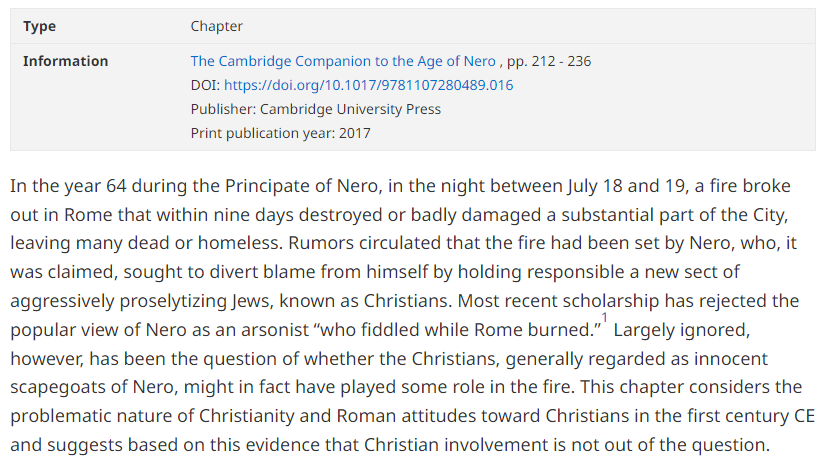
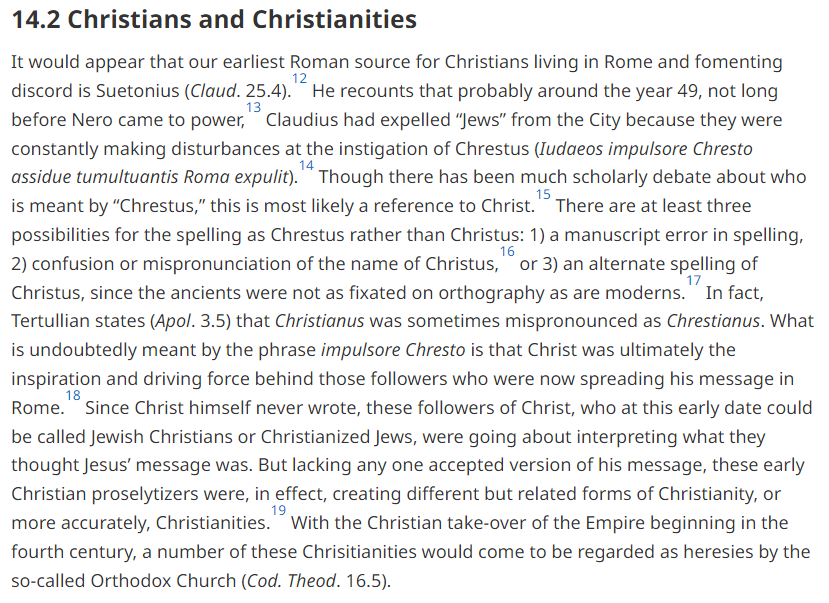
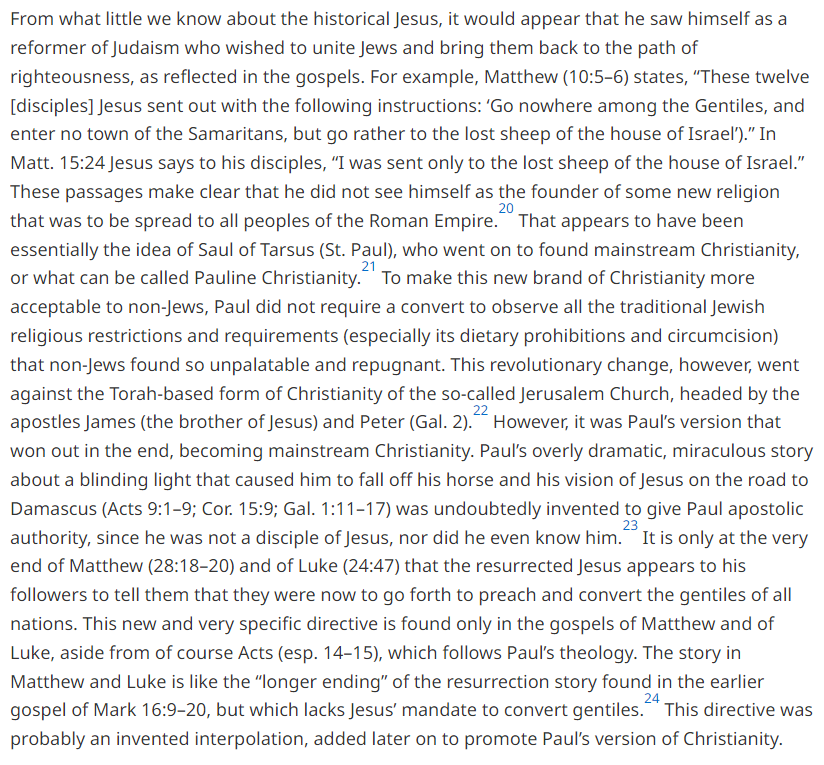
Note that the third image introduces the character of Paul, who rightly so is painted as a corrupter of the message of ‘Isa, alayhis salaam. And we will get to that.
But what we also see is that according to the author, there was already an aggressive contingent of “Jewish Christians” for lack of a better term (when I say this, in reality I just mean followers of ‘Isa) in Rome.
As for the location of the start of the fire,
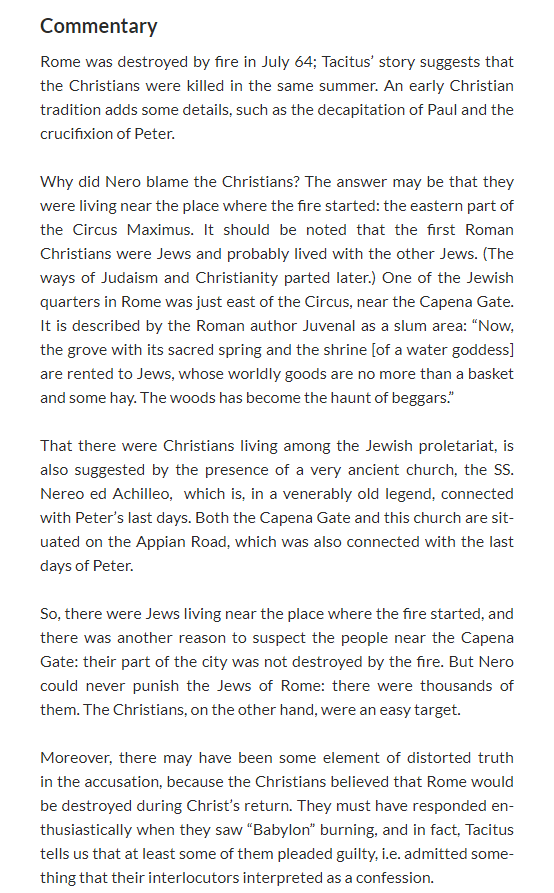
It appears to have been started in an area where the Jewish population of Rome would be highly impacted, i.e. it was itself an attack against the Jews more broadly and more specifically the followers of ‘Isa among them.
This also would belie Tacitus’ premise of the ‘convenient scapegoat’ rather than a targeted attack.
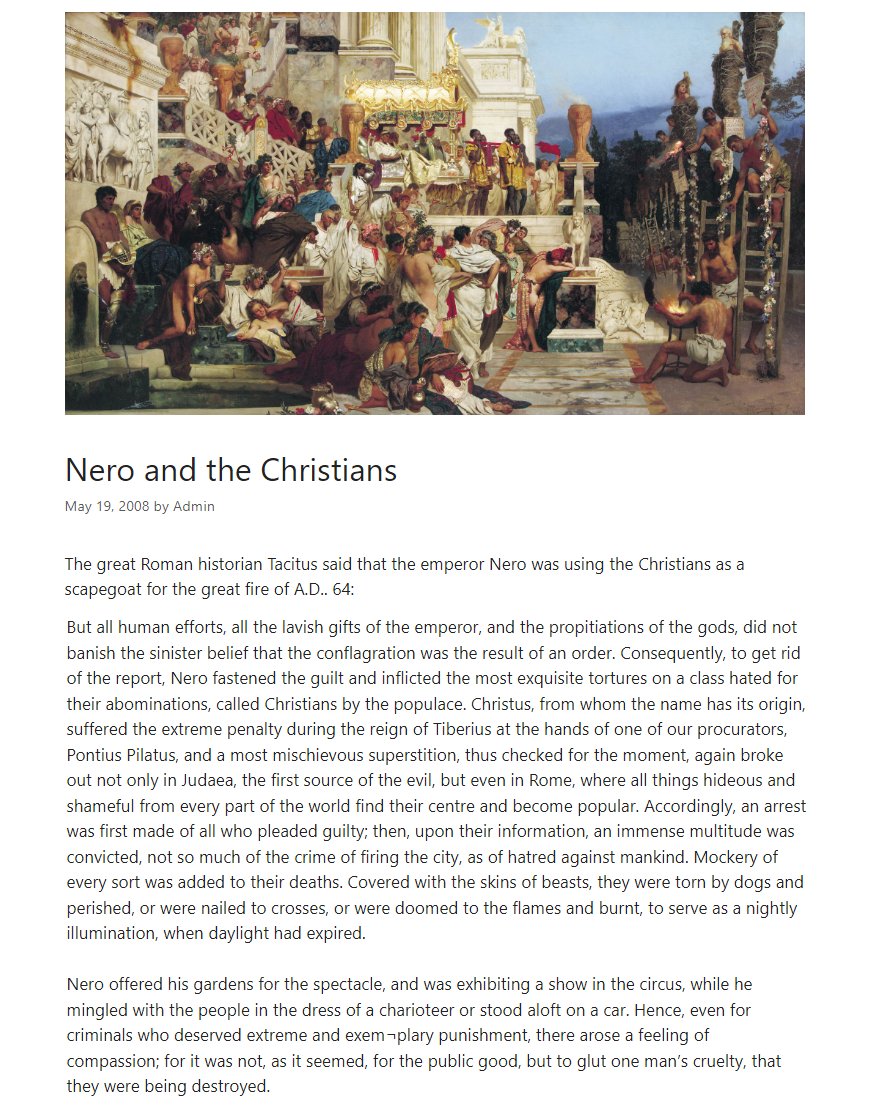
As for Tacitus’ description of the persecution itself, this much I believe is accurate. This is the sort of persecution that I think would be necessary across the Roman empire to disrupt the followers of ‘Isa and discourage this following from growing.
This is the sort of violence that I believe would create the necessary gap, the lack of defenses, against a replacement cult or a series of replacement cults.
And I believe that the entire Roman strategy of removal and replacement of the religion for the next few centuries would follow this model – violent suppression of any authentic groups, and the formation of and encouragement of impostor groups.
And the chief character with which the replacement cults can be associated is of course Paul.
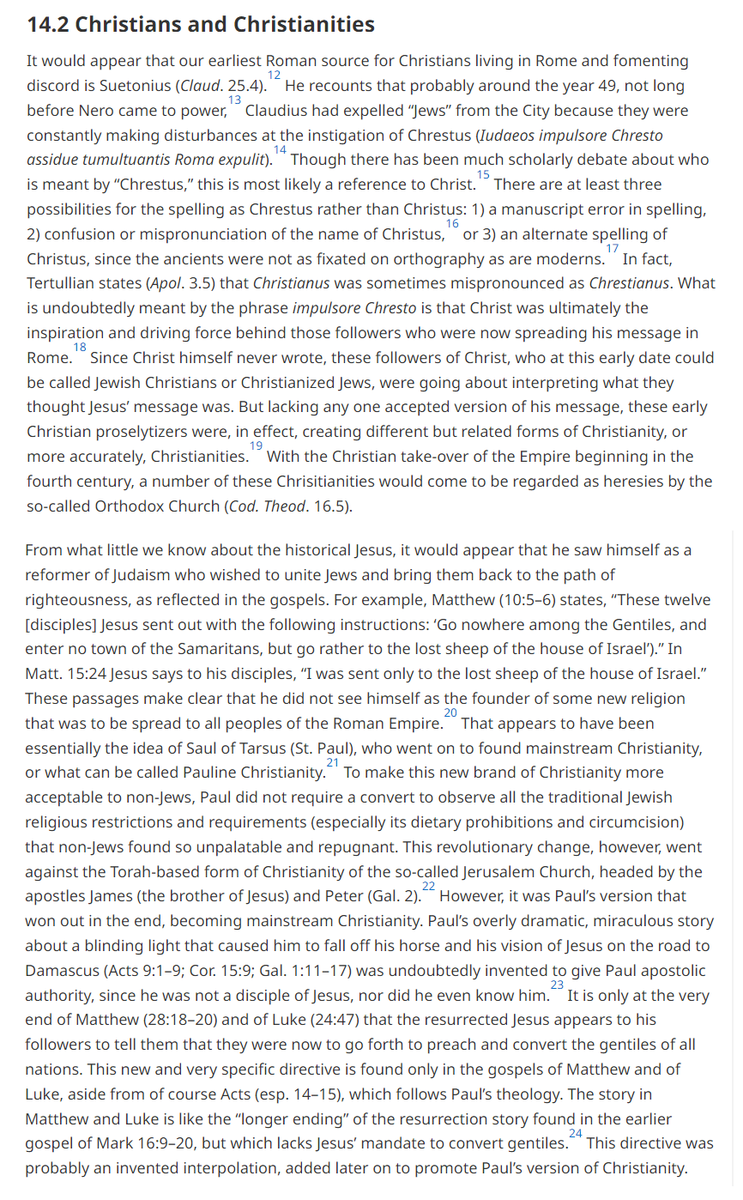
Paul was not an authentic disciple. In fact he was an ex-persecutor of the Christians on behalf of the Roman government, who then had a ‘miraculous’ change of heart and went on to try to “join” the Christians and inject beliefs that served the aims of the Roman empire.
And again this is where I think the Roman-sanctioned timeline is evidently tampered with – that Paul’s conversion, etc supposedly came before Nero's persecution began.
Here is a brief introduction to the figure of Paul, again I am not sure how widely he will be known to any readers who are not or were never Christians. These excerpts are from a book called ‘operation messiah’ – the previous book highlighted was called Caesar’s Messiah.
The full-form book is not available on libgen, however it was also published as a briefer paper at DOI: 10.1080/09592310500079940
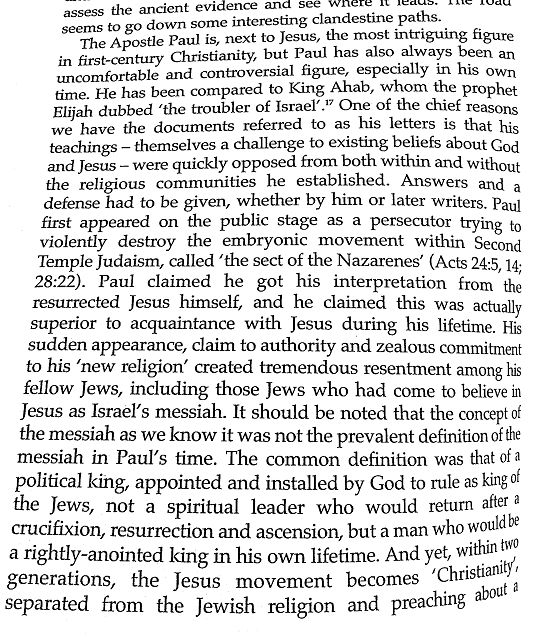
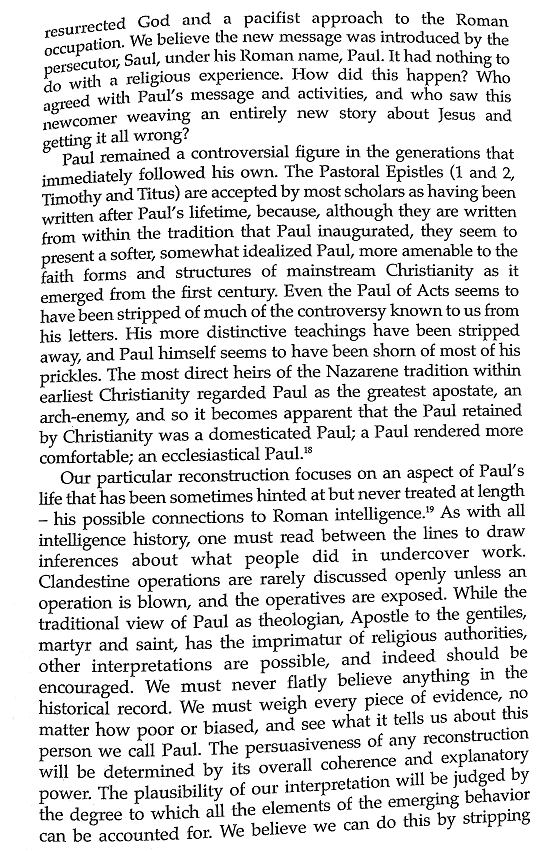
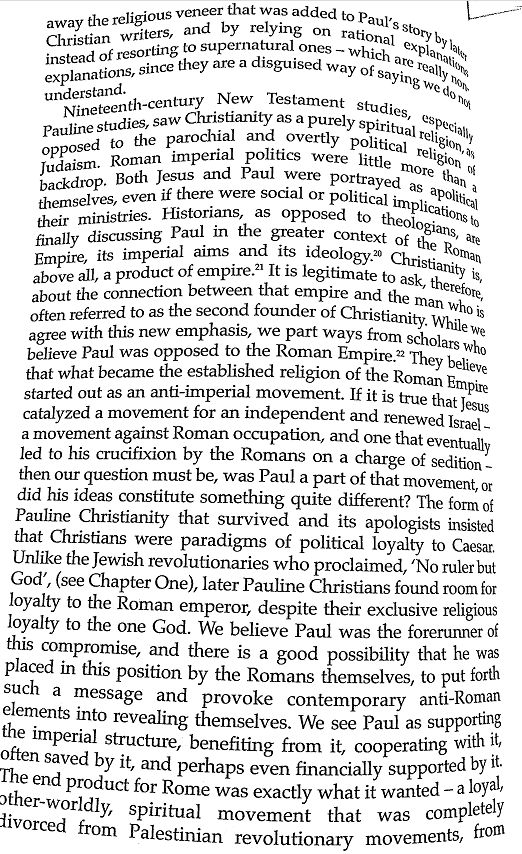
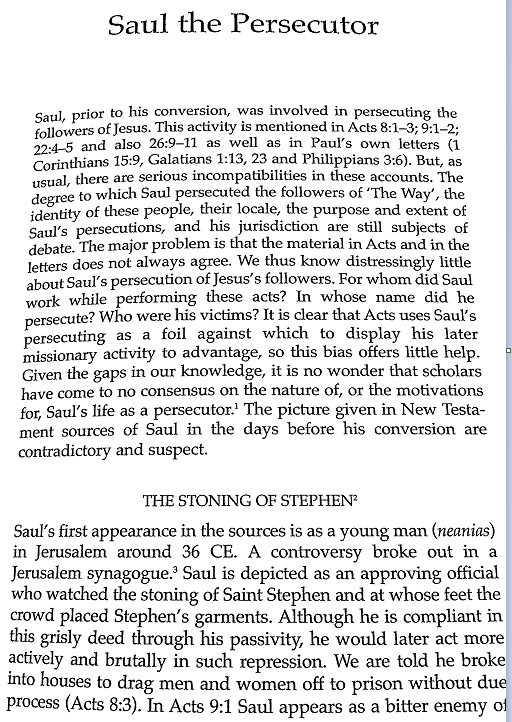
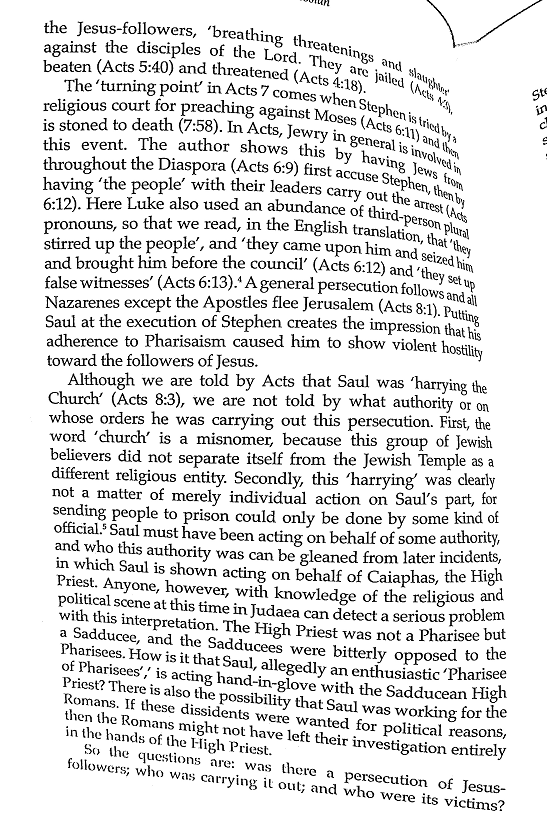
Scans are my own, thus the very low quality. I actually recommend this book for anyone interested in the period or subject matter, though I do think once you already agree with the main thesis it is less necessary to read through the author’s interpretation of some of the details unless it holds a strong personal interest.
The author suggests that Paul – formerly one of the arch-persecutors of the Christians – faked a very elaborate conversion story in order to get in with the “Christians”, by which I simply mean the Jews who followed Jesus, alayhis salaam.
As the book mentions, Paul was regarded as an apostate by many and his ideas were in my opinion such that the genuine followers would have never ever compromised or allowed this person to gain influence willingly.
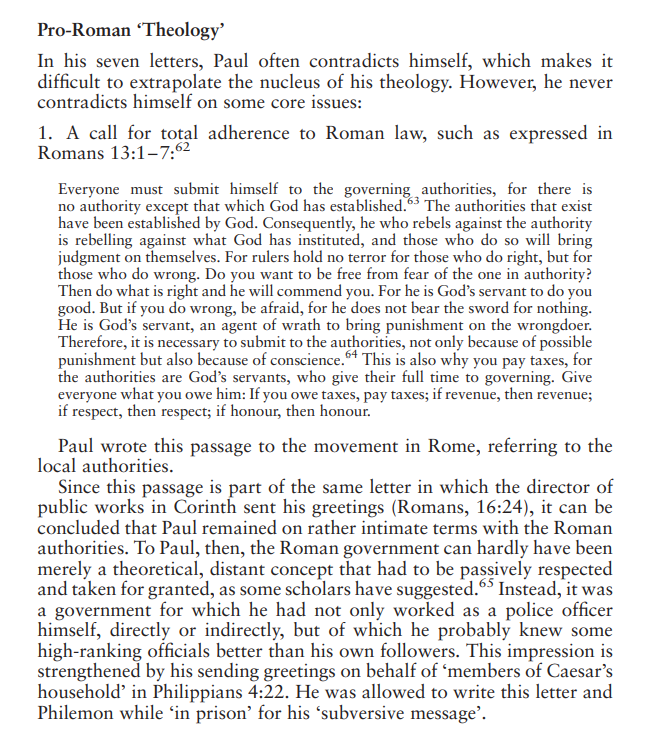
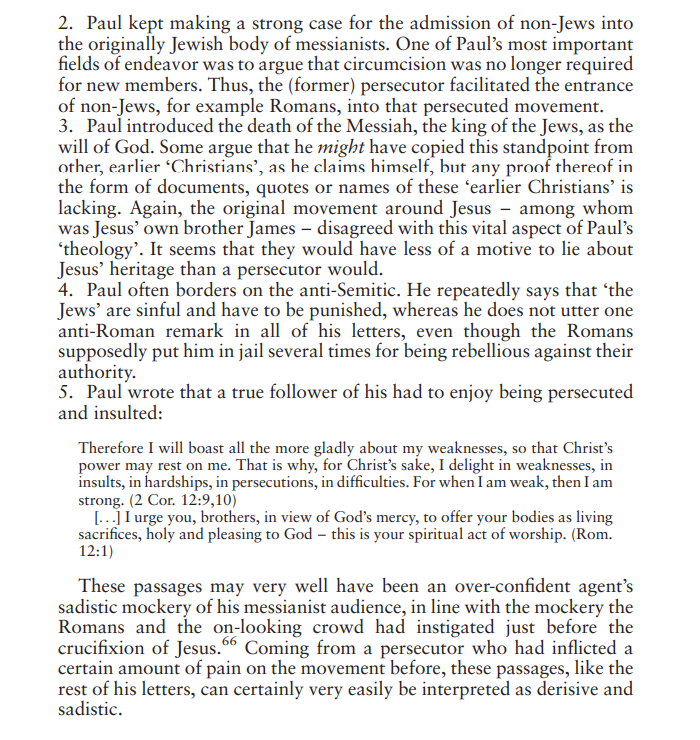
(These images are from the shorter form paper which is available via sci-hub as I mentioned)
So ,Paul was really the one said to be responsible for transforming Christianity from being an exclusively Jewish religion, adherent to Jewish law, to something easily accessible for the gentiles.
Note: *gentiles could convert to Judaism, could follow the message of Jesus*. But according to Paul, and according to what I believe is a fabricated event or at least a fabricated outcome if the event was real, the council of Jerusalem, the requirement of circumcision was too difficult for them.
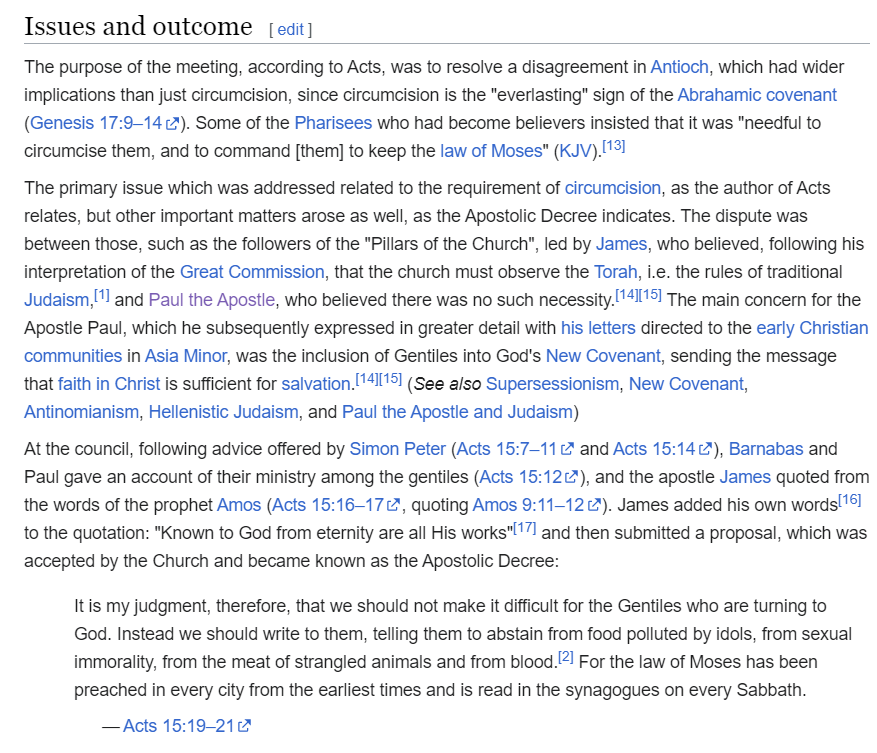
Without getting too deep – and we are already pretty deep – I have very serious reservations about the historicity of Paul *as described*. But he is the one, on paper, responsible for the replacement cults and replacement ideology.
This subject is fairly accessible and the source I mentioned, Operation Messiah the shorter paper, is a good starting place
What should be clear however is that, in keeping with the “root and branch” symbolism analyzed inter-textually between the gospels and the war of the Jews, in keeping with the concept of pruning and then grafting a false Roman religion onto the “root” of monotheism, and in keeping with what I believe was a very long-term plan to test, refine, and ultimately adopt monotheism as the Roman state religion,
1) Separating this religion from the Jews was an absolute imperative
2) Making it accessible for gentiles was not only necessary from this political perspective but would further the goal of separation from Judaism automatically
3) The message of Paul and his influence on the doppelganger religion are the earliest recorded beginnings of this effort, to exterminate the Jews and their authentic religion as most recently led by Prophet ‘Isa, alayhis salaam
And this, all of this really exposes just how absolutely diabolical, how insane, but also how intentionally humiliating “Zionism” is designed to be towards the Jewish religion. After all of this, they “made” a deal with the inheritors of Rome.
The final push to remove Jews from their land occurred early in the second century, there was yet another revolt in Judaea.
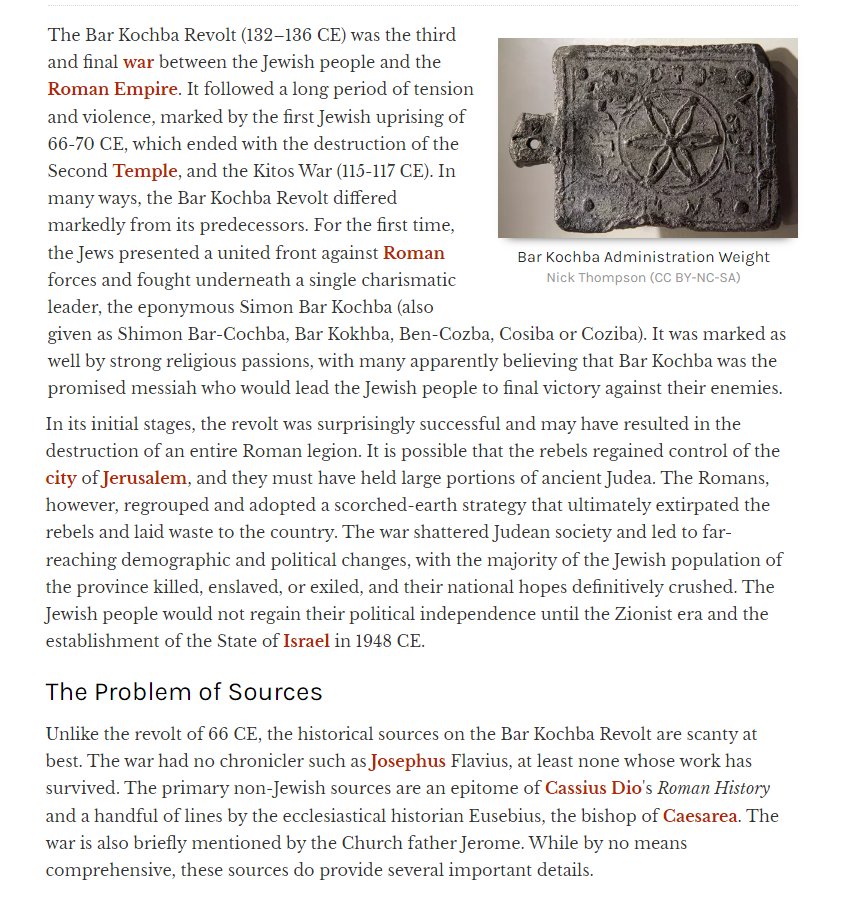
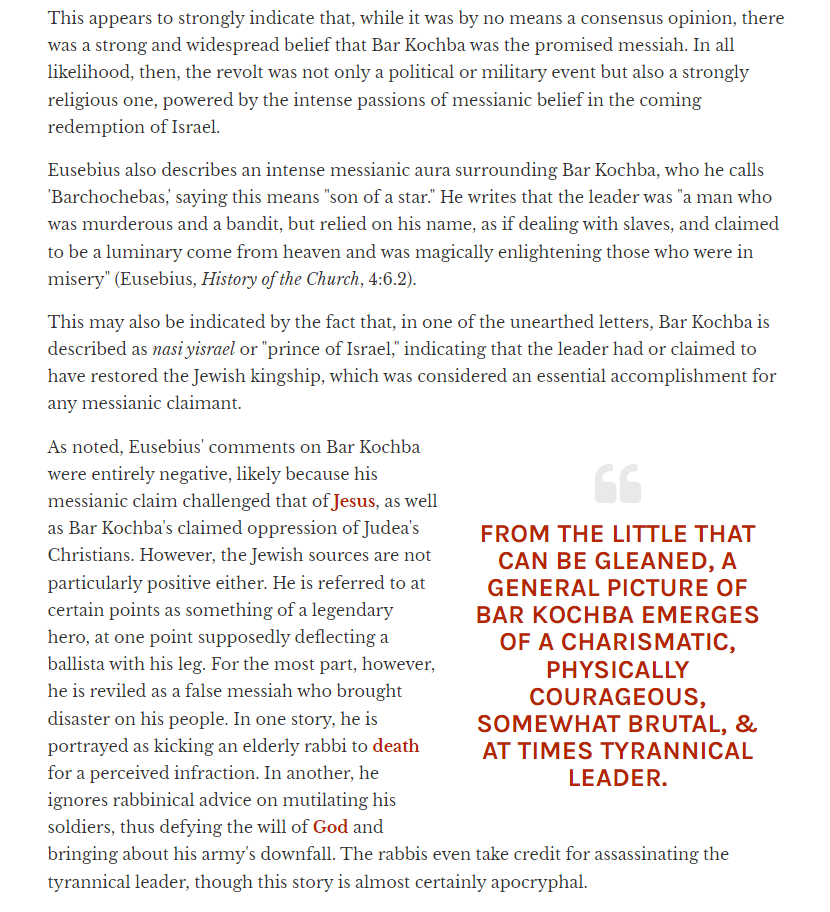
Note that one of the main historical sources is Eusebius, I will address the role of Eusebius and other “Church fathers” in this entire operation and then we are mostly finished with this subject.
But – tragically, the outcome of this revolt was a massive genocide, complete expulsion from Judaea, and the further blaspheming of their holy land with pagan idols.
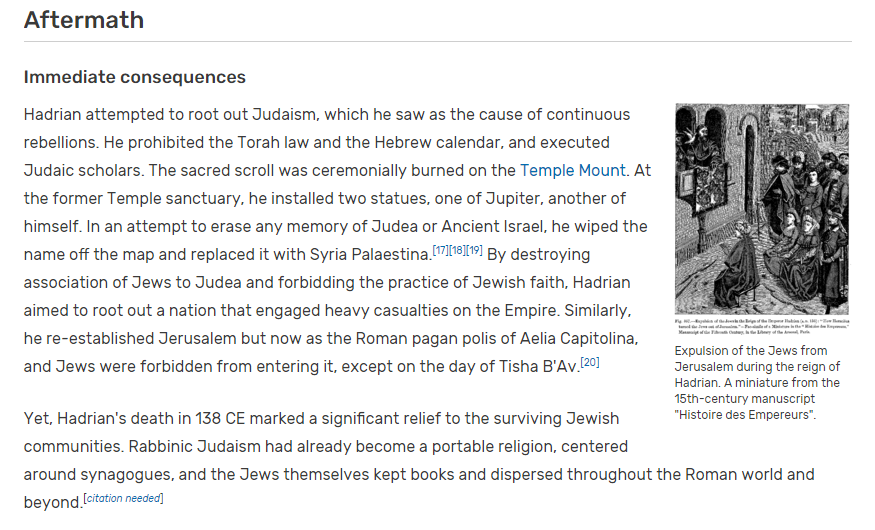
Such was the final military blow against Judaism, though the transition of the Roman empire to the new Roman monotheism was still far from complete.
Presumably this folded in with a persecution of authentic Christian groups that is, either lost to history or that I was unable to turn up in great detail. This era is shrouded in mystery.
At any rate, the initial ground was cleared for the Romans to further distance its doppelganger religion from and to defame Judaism, to make anti-Judaism a part of their religion.
And for what may be the only time in this body of work, we will now turn to the Jerusalem Post’s analysis of the anti Judaism of the early “Church fathers”:
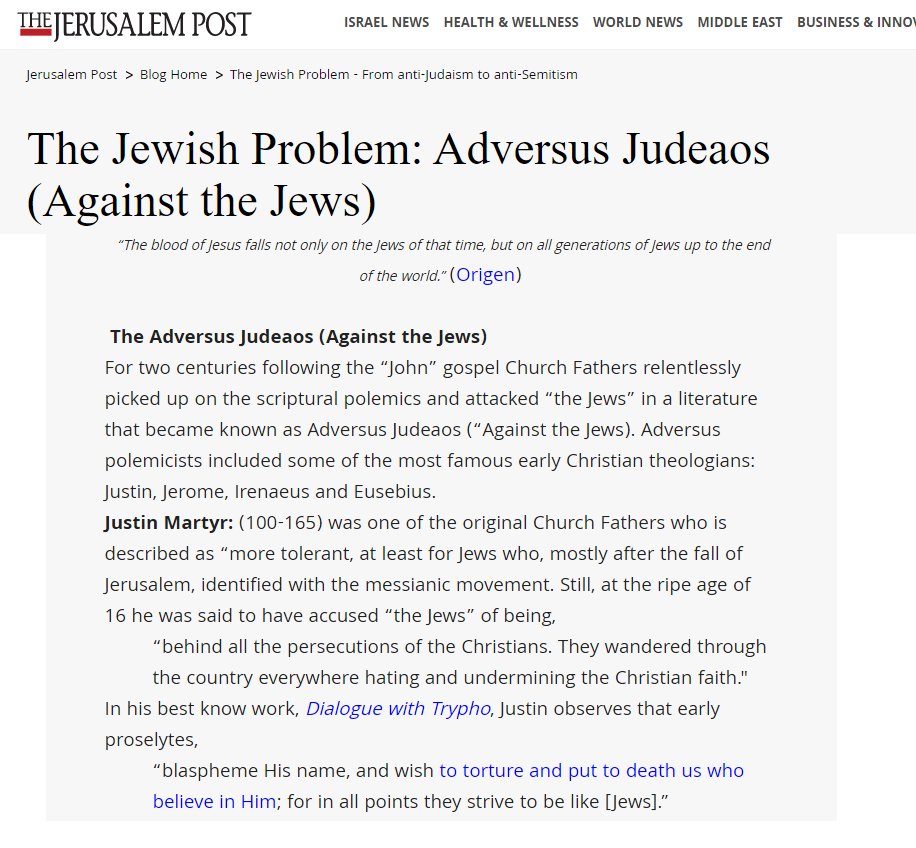
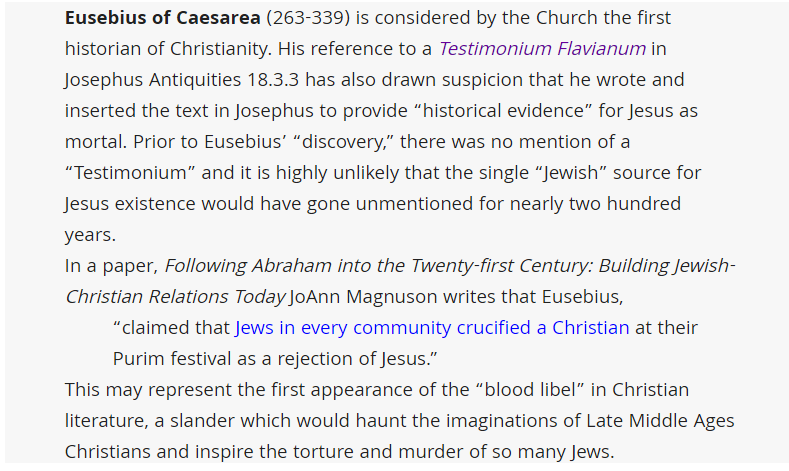
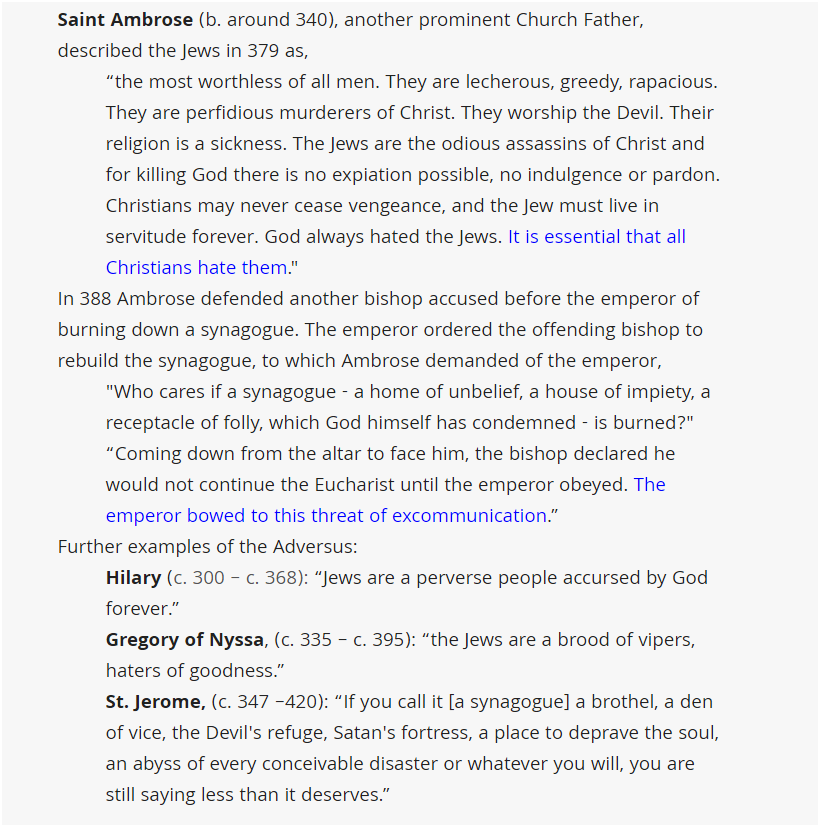
So – it is clear to see what is happening here after all of what has led up to it. With enough Jews and authentic Christians killed, removed, silenced, erased, the “Church fathers” were able to radically increase the anti-Judaic rhetoric of “Christianity” – despite the obvious truth that it was in fact the Romans who were the enemies of the true Christians. If we return to the symbolicism of Josephus, I believe one single idea among all of the anti-Judaic poison is the most poignant, the most ‘obvious’ intentional twist of the knife:
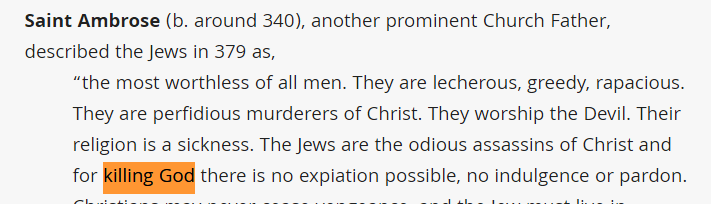
To charge the Jews with “killing God”, as if to say – by their defeat, they allowed the true religion to be destroyed, the real and true God to be usurped by this Roman phantasm. This in my opinion is the worst and most heavy-handed attempt to enshrine their mockery of the Jews for their defeat at the hands of the Romans.
Predictably, the persecution of “Christians” ebbed and flowed until the time of transition was ready.
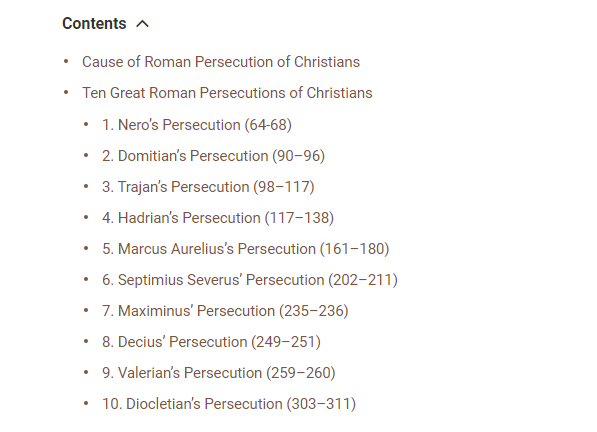
And for a few centuries, the religion of Allah was in chaos – the Jews scattered, the authentic Christian groups scattered, presumably hounded and eliminated by the Romans. But –
And this much we see in our (Islamic) sources, most notably in the incredible life story of Salman al Farsi, radi allahu anhu.
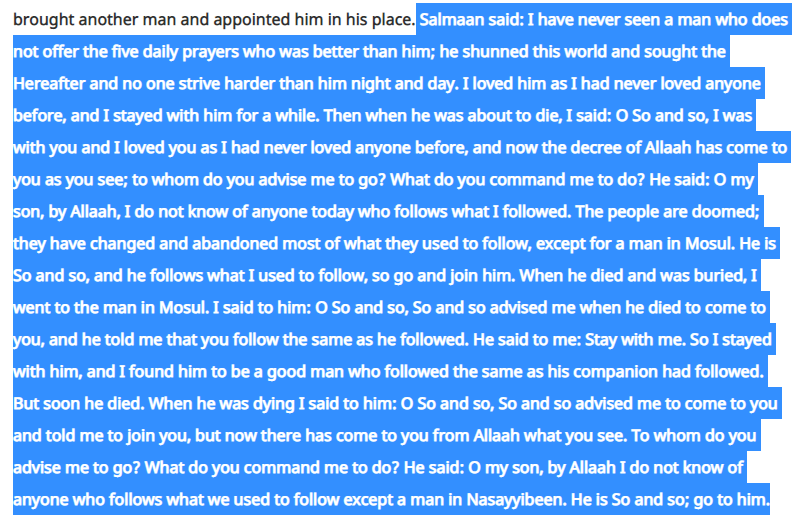
Allah, subhanahu wa ta’ala, sent another messenger to somewhere the Romans did not expect. And the rest, of course, is history.
But this, all of this, is what is being referred to by 9/11 and the “global war on terror”.
It is a symbolic nod to this Roman campaign against the religion of Allah, by the inheritors of the false Roman religion as they begun their modern campaign against the true and surviving religion of Allah, the religion of Islam.
And to be honest there is an element of this which is pathetic to me. Because it is so obvious that, this “war against Islam” is not a shred of a fragment of the Roman effort. This to me is a very cheap allusion, a joke.
The history and tradition of Islam is too well-preserved, its scholarship too well-rooted and its followers too many. InshaAllah. But I thought that it was worth qualifying this because I don’t believe it is common knowledge that this is the true intention of the “global war on terror”, and its true meaning.
And with that, we are almost ready to begin the coverage of the war in Iraq itself.
Ah, one more note about the Roman empire that got lost in the shuffle. We discussed the emperor Nero, and implied the transition to the Flavian dynasty – but we glossed over something I wanted to address.
I believe I have sufficiently illustrated the long-term nature of the Roman transition to monotheism, spanning at least back to Nero and then for several centuries onward. This implies a strong degree of political cohesion at least on this particular issue.
But if you were to read the history of the Roman empire, you will imagine it is in constant chaos and upheaval –
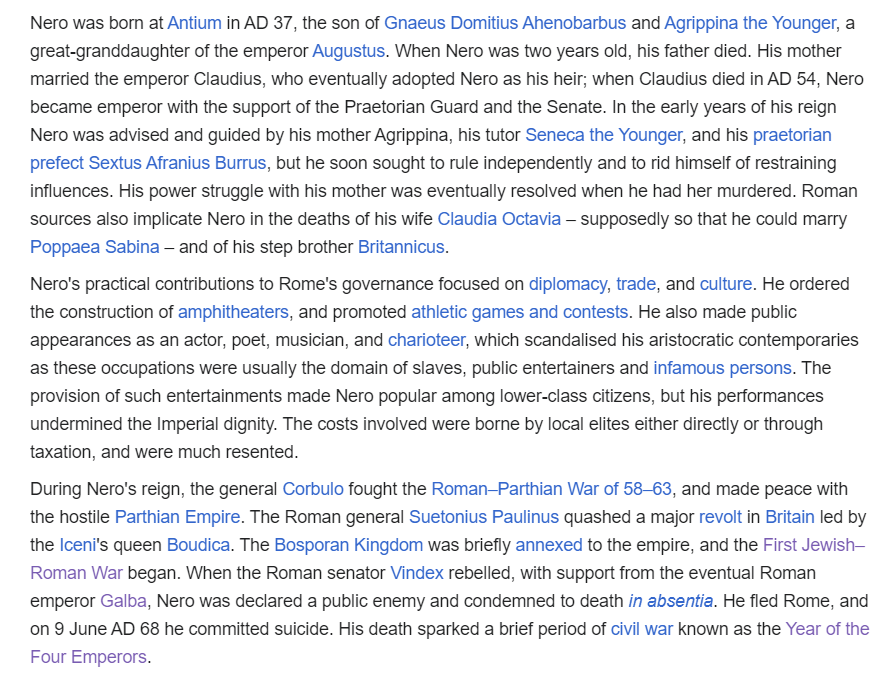
We are not criticizing any specific source but rather the general narrative, so Wikipedia will be just fine here. Note several things described in this image:
The sense of constant power struggle, even within his own family.
Nero's “theatrical” nature, his love of acting and entertainment.
His eventual suicide amid political chaos and usurpation, spawning a civil war known as the “year of the four emperors”.
During this chaos, Vespasian was already dispatched to Judaea and fighting the counterinsurgency against the Jews.
Of the four emperors, first we have Galba who eventually was assassinated by the Praetorian Guard.
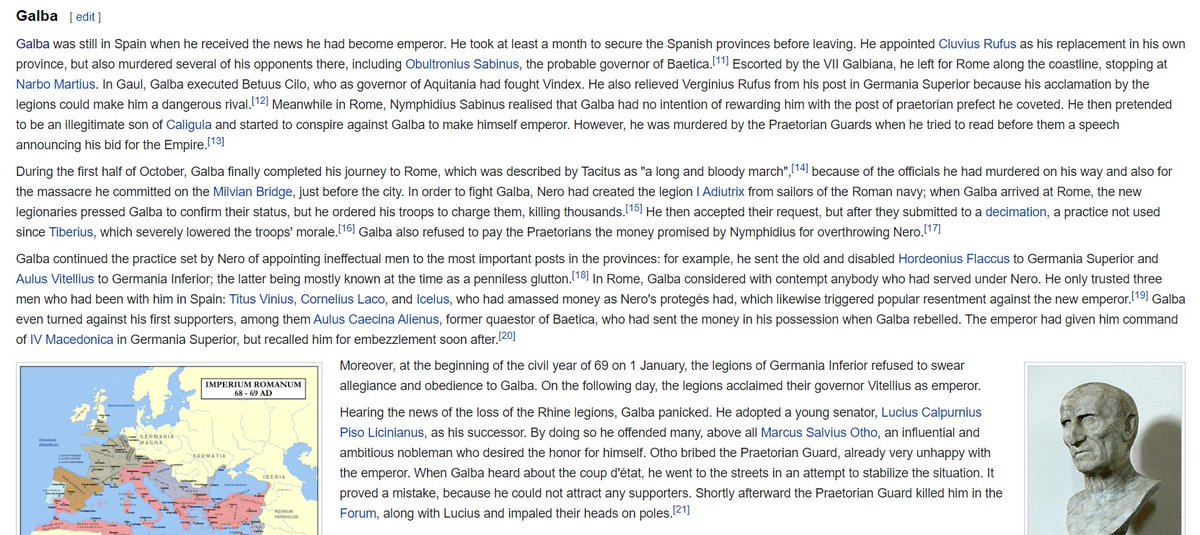
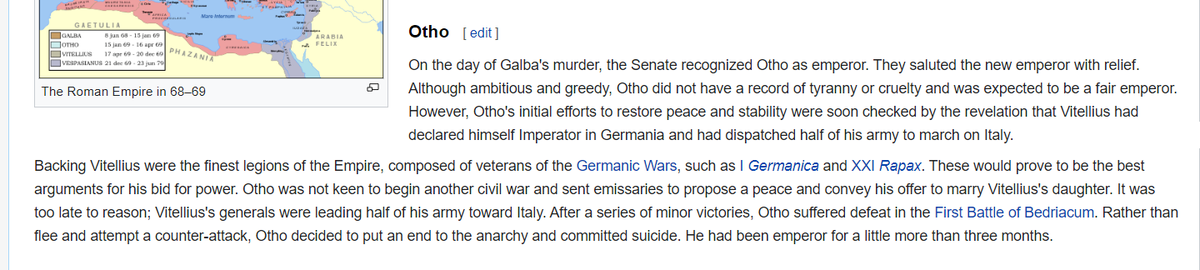
Otho, who committed suicide after three months.
Vitellius, who undertook a series of purges only to eventually be killed and captured by Vespasian himself.
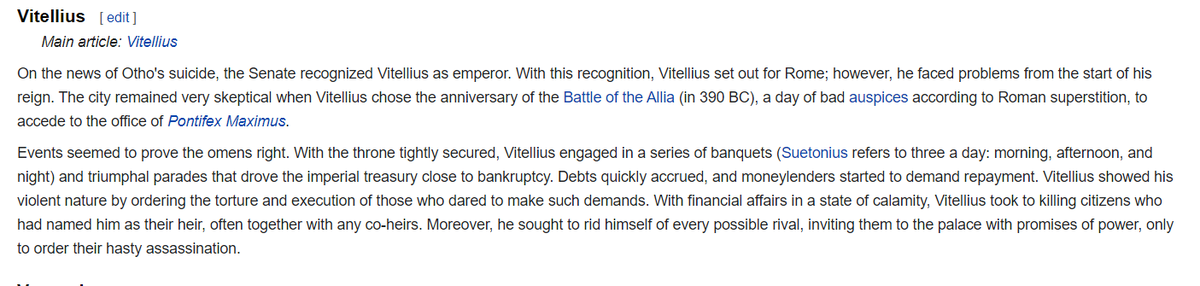
And finally Vespasian, the “father” in the corrupted gospels, who managed to stabilize the empire and found a dynasty that lasted three rulers.
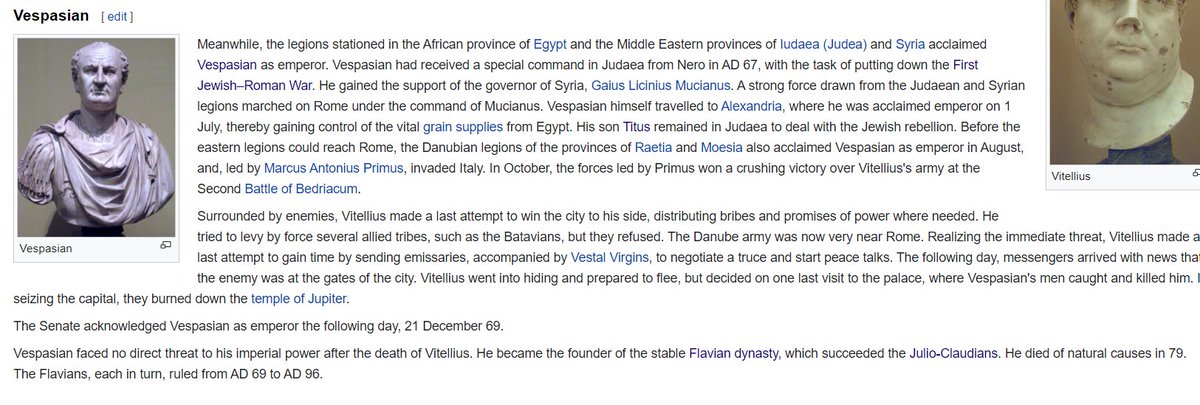
Vespasian (”father” in corrupted gospels) -> Titus (”son” in the corrupted gospels) -> Domitian
Domitian was also was assassinated in a ‘palace conspiracy’ by the Praetorian Guard, leading to the next dynasty –
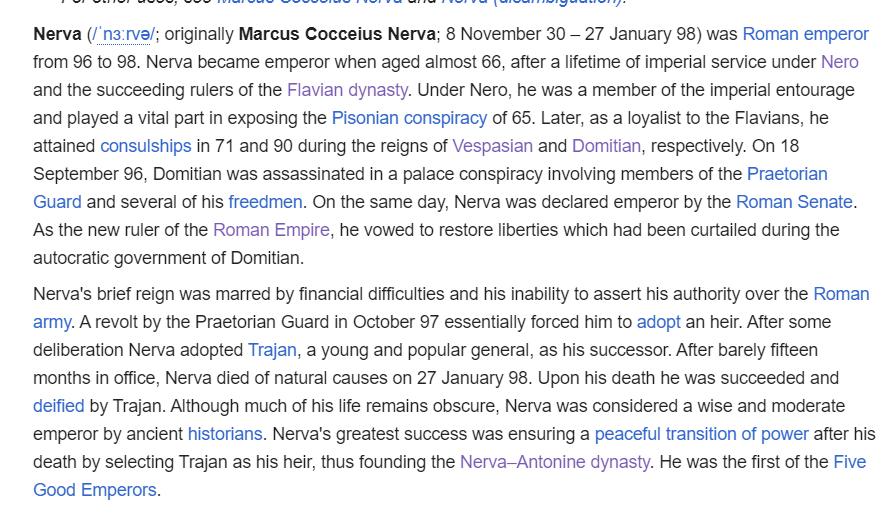
This was followed by a conflict known as the “year of the five emperors”, followed by the Severan dynasty, followed by more chaos and the “year of six emperors”.
Yet despite this constant upheaval, the course of religious transition was steady and well-planned and seemingly centrally planned. So, what was the central unit of control then?
What am I getting at – if Nero's personality and character was a form of political theater designed to obscure a deeper and longer-term design, and modern political drama and rivalries are similarly theatrical, why not extend this to the suicides, assassinations, and intrigue as well? Could these be distractions, staged spectacles, to obscure the true form and vulnerabilities and character of the rule? Why not see this as simply another feature of the Roman mode of politics?
And here no doubt the serious history understander crowd will turn up their nose, as if I'm implying that literally every aspect of existence is scripted when it should be very obvious that I am referring to the aspects which are the equivalent of modern-day television.
Here is an example, as if all of these details from an ancient assassination could be captured so clearly!
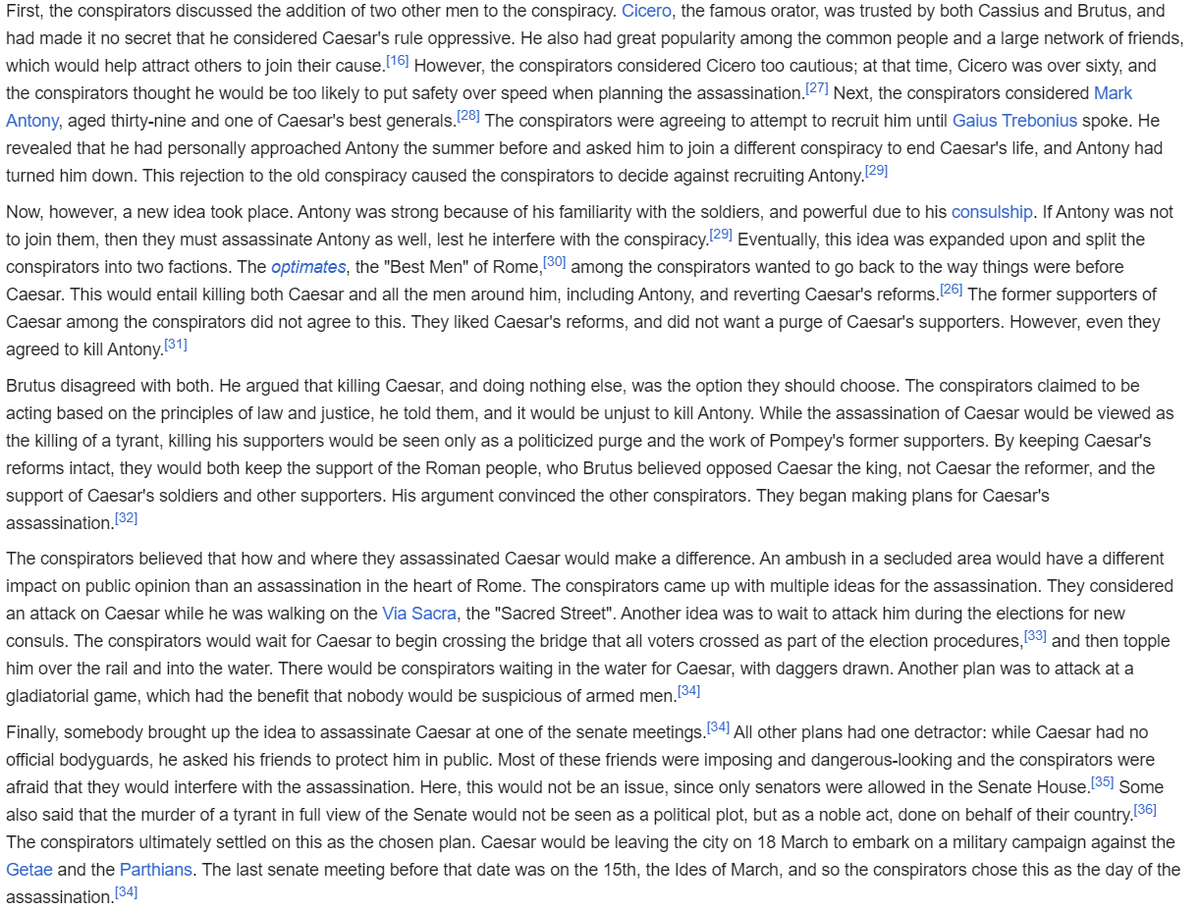
And this particular assassination, that of Julius Caesar in the theater of Pompey, marked the beginning of the Roman empire – it was an empire born under assassination and intrigue.
That it occurred in the theater is also no doubt is “interesting”, and brings to mind some of the more abstract or symbolic material of the analysis of Josephus – and the degree of sophistication of that effort I think should put “jokes” like this well within the realm of possibility.
The example of Augustus is almost too on the nose:
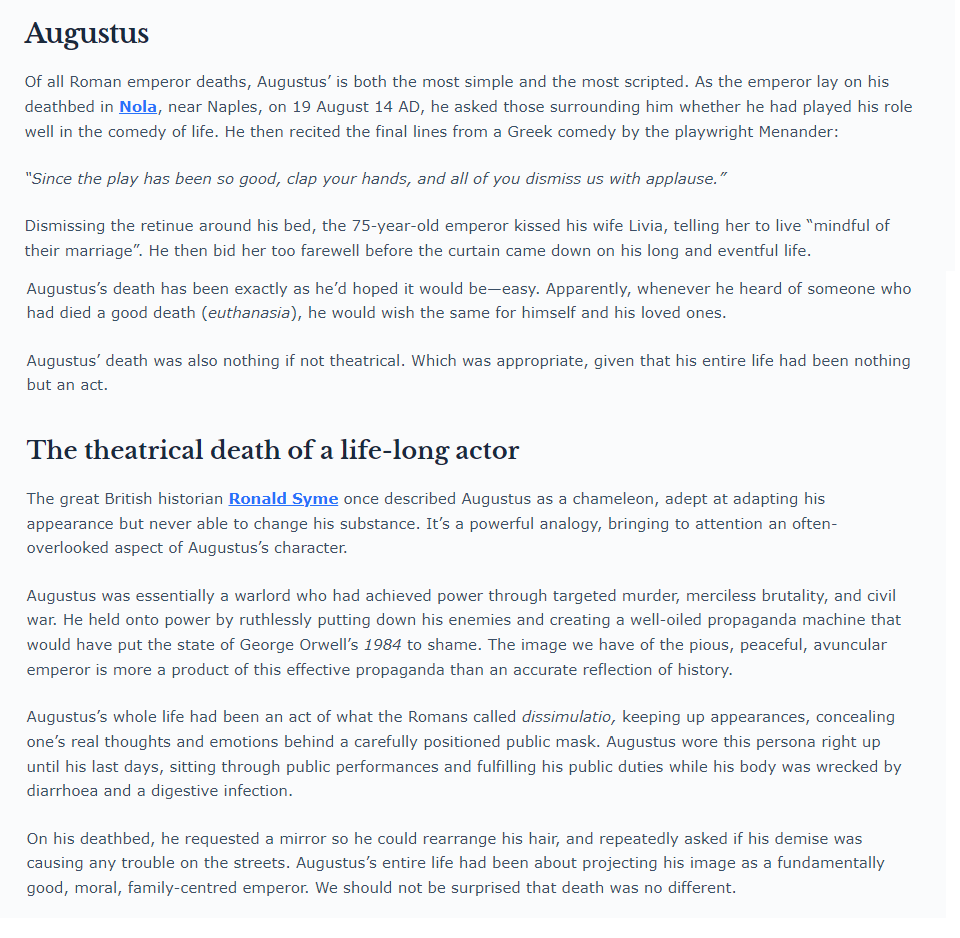
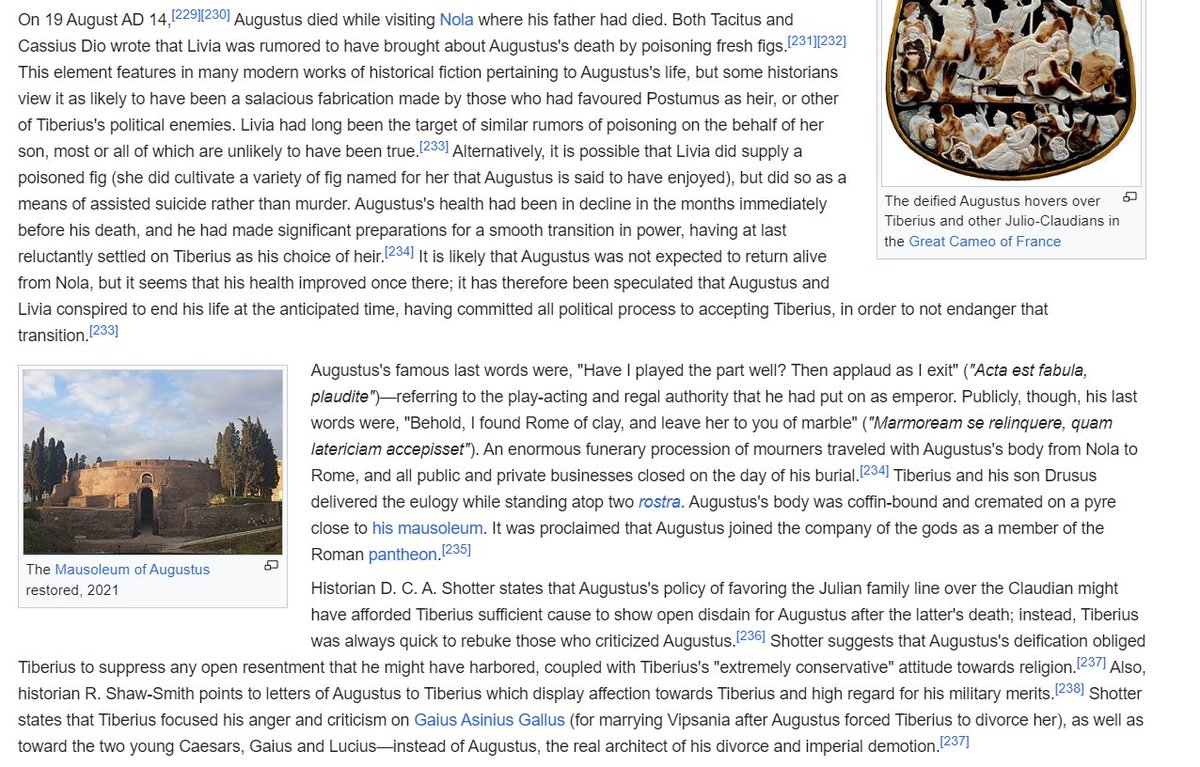
Caligula, also assassinated in the theater. “A character that belongs more to theater than history”
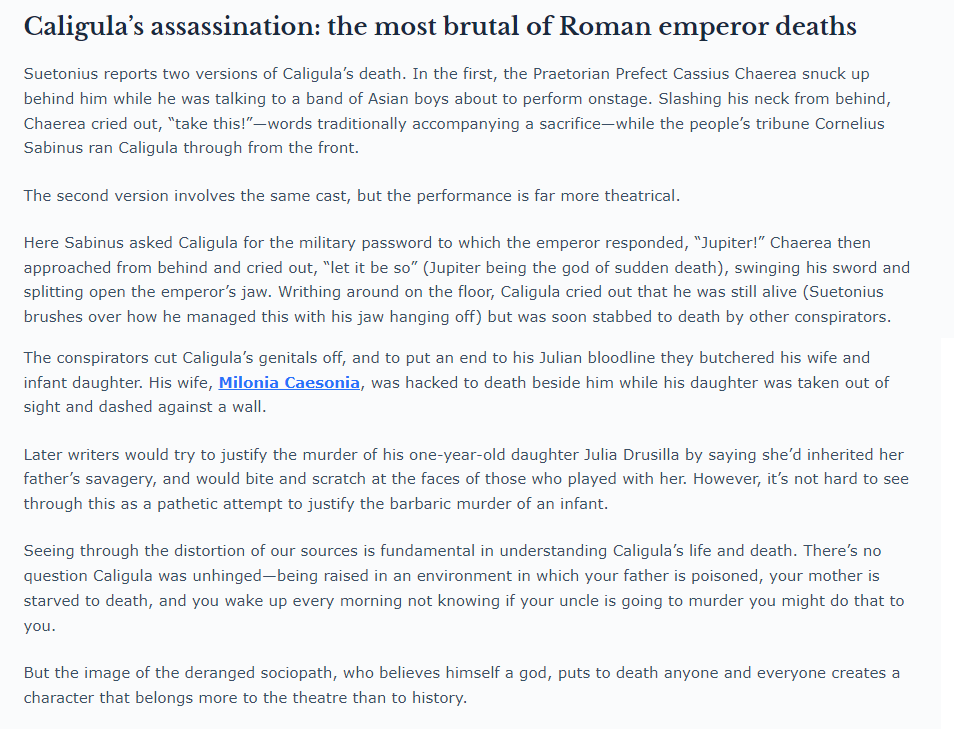
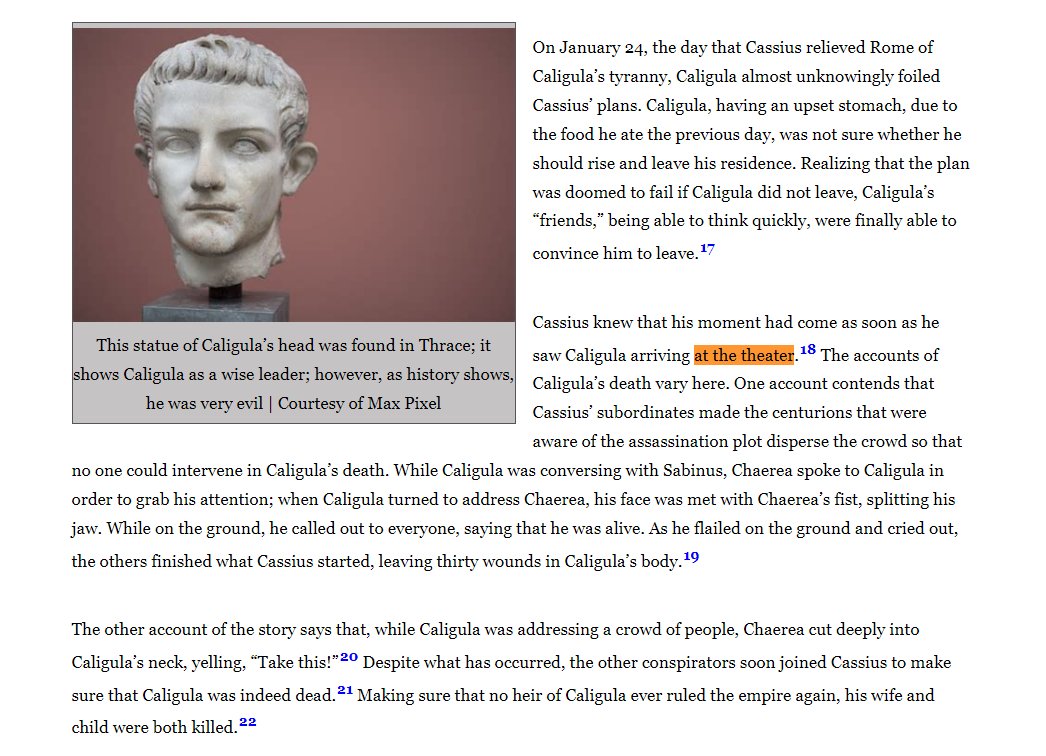
And here I will digress, this is a curiosity not our main point of investigation. But this should set off alarm bells for those who are able to read history critically, and the sophistication of all that we have seen with the Roman empire I think very much validates the approach to modern history and politics taken throughout this body of work.
At any rate – see how well the ruling class have studied and
understand history!
For a more modern precursor of the strategy deployed in the global war on terror, both domestically and in operations like the war in Iraq, we may learn something from the French OAS during the time of the Algerian war of independence –
And on this subject I will not get into much detail other than to say that, it was similar in the sense of it being a false insurgency, falsely “against” the French government proper, designed to give the French the ability to wage war as two distinct ‘persons’ with two different rule-sets and personalities.
In other words, it allowed them to wage war in two states (as in, states of being) simultaneously – for example to demand ceasefire and simultaneously violate it.
It allowed them to carry out attacks on civilians both in France and Algeria, including real or fake ‘friendly fire’ purge-style attacks on French officials and organs of force. This is a thread to pull on, since (fatal) purges are a near-constant phenomenon in the military and police and yet this is only touched upon as isolated incidents usually. “Suspicious suicides”, etc, but rarely if ever examined as a broader phenomenon.
And possibly, though I am not sure if this was the end goal, the OAS may have served as pretext for a prolonged occupation by ‘official’ France.
I found it difficult to find much information on this subject – interested readers can investigate more thoroughly and make comparisons themselves.
What is one of the obvious and key differences is that, though it was a false insurgency, it was not a doppelganger of a genuine Algerian insurgency. It is possible the machinery for such a strategy was not yet in place, machinery which was built up over the following decades –
But also I believe the goal at this time from the perspective of the West was much more limited, their global position much weaker than in the decades to come.
Perhaps this is “naive”, and certainly this comment deserves some exploration – it is perhaps not as simple as just saying the West is more powerful and capable of doing broader damage now.
Rather I think it is worth calling out that in some senses the West has never been able to achieve the degree of damage they caused during for example earlier phases of colonization ever again.
But, in terms of the OAS gambit specifically:
It was a retreating move, made once France had publicly admitted it had to exit Algeria, it seemingly was never intended to be a strategy of long-term occupation. In this sense, the OAS is a weaker iteration of the “false insurgency” strategy displayed in Iraq.
But, and I know we are comparing two different countries entirely, by various estimates that we can loosely call upon the war of independence in Algeria resulted in the deaths of over 10% of Algerians.
Whereas – and I do not believe any of the official estimates – the ongoing occupation in Iraq has supposedly resulted in less than this despite the advanced position of the West, their additional technology and firepower, etc.
Whereas again the initial French invasion of Algeria, according to what I stress are uninterrogated statistics that I have just loosely seen browsing around, resulted in something more like a 33% reduction of population.
What I am getting at here is that on some level I think there has been a reduction in the sheer death toll the West is able to achieve, over time. And so to simply say that their position is more powerful, their goals – again, as I framed, a war against the entire Islamic world – broader, I think this would be misguided.
And I think that in some senses this hearkens back to the main investigation of this entire body of work – that they've been up against this problem of, they simply can't eliminate enough of the human population, cannot persistently destroy human societies, and they’ve been ruminating on this problem for a long time.
I think soon inshaAllah I will be able to produce analysis of class rule over a longer view of time to clarify the current goals and also obstacles that we have been covering – simply by necessity, as this is all novel for me – in a modern vacuum.
And while I have dedicated much attention to a modern depopulation plan, a total and global and final solution, which can only be achieved with modern technology -
I think for me it has become quite clear that this is not a modern *goal*. It was just simply never achieved. And the headaches from the ruling class perspective, their successes and failures, over the longer view of history – these are due for analysis in these threads.
But that is not the subject at hand today -
And we are finally coming up on that subject, yes, finally. The only other preliminary item I would like to address is that of, the role of “biometrics” in the Iraq war -
What is a biometrics, try to imagine how much I hate this term. It is so meaningless. So, what do I mean by this then? I actually mean:
Identification technology as well as censuses and the storage of identification, biographic and ‘demographic’ information.
To put it very briefly - I will not rerun the sort of basic coverage of the census efforts commonly termed as a ‘biometrics database’, nor bother with tracing the technologies involved or anything like this.
That’s not the point –
Nor is my point that, the Iraq war served as an incubator for these types of technologies. All this is covered elsewhere.
The point here is that, this identification information was collected and identification technology developed in order to conduct a higher-precision war on Iraqi society, to measure the impact of attacks on the scale of specific individuals. By a “war on society” I mean that by and large the Iraq war was conducted against civilians rather than by and large against organized groups of resistance.
It was not a war that was designed to end, it had no conceived ending point or discrete goal.
Rather it was designed as a continuous process of the destruction of bonds and cohesion and productivity of Iraqi society.
In order to most accurately attack the social fabric, identification databasing enabled the attackers to target specific civilians, keep track of specific victims, and measure and come to conclusions about the specific social impacts of their attacks at that individual scale.
And this point should be kept in mind for more or less the remainder of the thread, as we begin to cover the events specifically – so that I do not need to remake this point again and again. This is the deeper meaning of ‘biometrics databasing’ in the war on terror.
This refinement of “warfare” to the scale of highly targeted murder as a tool to demoralize a society and destroy its stores of well-being and productivity, principally characterizes the war in Iraq and the global war on terror.
We will begin our examination of the war timeline with the final prerequisite concept, and we can introduce ourselves to it by examining one of the very first “events” of the war.
This event, which will be our starting marker, is the looting of ammunition and explosive stores in 2003.